Guitar Hero II
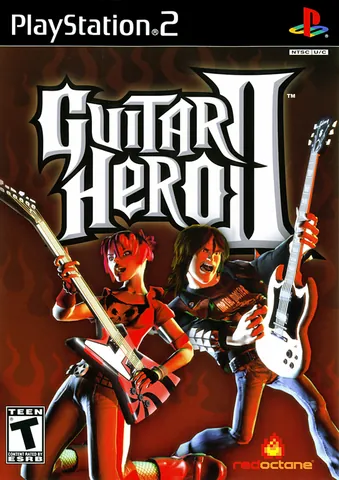
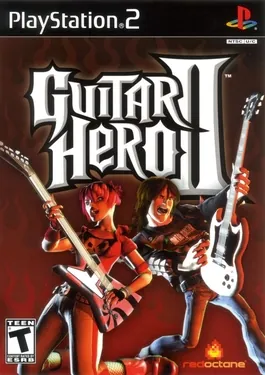
Guitar Hero II built on the success of the first game with an expanded roster of rock songs, played using a plastic guitar with five colored fret buttons, a whammy bar, and the need to strum in perfect rhythm at the exact right moment. The career mode took players from small clubs all the way to a huge festival stage, added a guitarist-versus-guitarist duel mode, and the game became one of the flagship titles of the mid-decade rhythm game genre, which was just beginning to conquer living rooms and draw in players who otherwise paid no attention to video games at all.
The game arrived on Xbox 360 a full year after its PlayStation 2 debut, in an expanded edition featuring several bonus songs missing from the PS2 version. The graphics and online features benefited from the console's more powerful hardware, including the ability to download additional songs through the Xbox Live Marketplace as paid extra content, something unavailable on the PS2 version that extended the game's playability long after release. The package also included a wireless guitar, while the PS2 version was stuck with a wired model plugged into the controller, which made a noticeable difference in comfort when playing standing up or with a partner. The console edition's publisher was already Activision, which had recently acquired RedOctane and was gradually taking control of the entire Guitar Hero brand, whose popularity was growing rapidly across all platforms at the time.
At the time of its release, the Xbox 360 version was thus the most technically capable edition of the game, even though it reached the market only after the PS2 version had already won over most of the popularity and the fan base for the entire rhythm game genre. For many players on Xbox 360, this was their very first time holding a plastic guitar and feeling that even a living room could turn into a small stage — an experience PlayStation 2 owners had already enjoyed a year earlier.
Why play it: For players who first picked up a plastic guitar on Xbox 360, this was the most technically capable version of the game, albeit a year behind PS2, where the rhythm game genre built its core fan base.
Game 161 of 259 for Xbox 360