Franchises
Guitar Hero
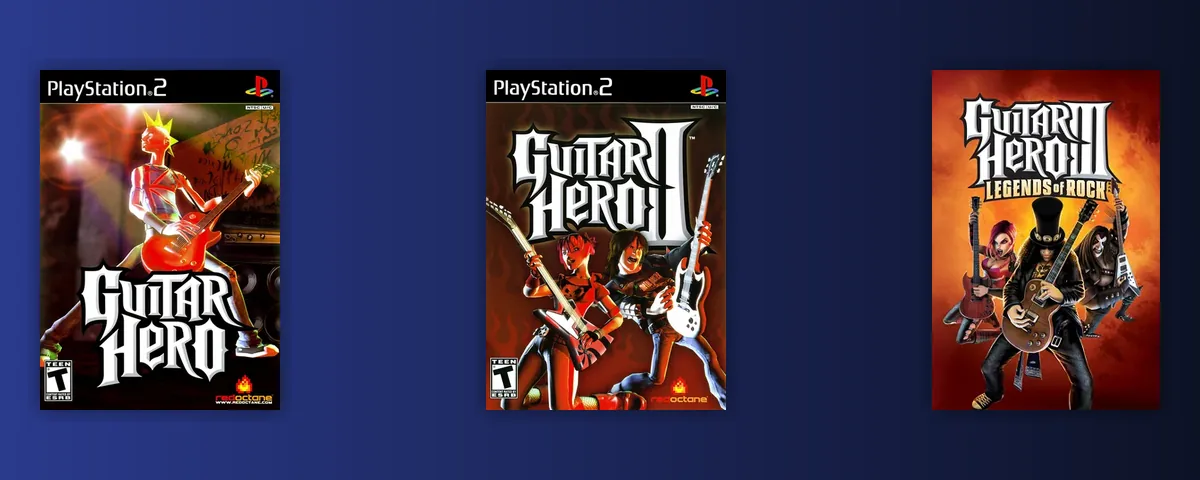
Guitar Hero arrived in 2005 and brought the rhythm-game genre into living rooms with a plastic guitar controller shaped like a Gibson SG, its coloured fret buttons pressed in time with real rock songs. The concept came from developer Harmonix and publisher RedOctane, and the game rested on a simple idea: the more precisely a player hit the notes scrolling down the highway, the higher the score and the longer the combo, making it ideal party fun as well as a challenge for players chasing the hardest difficulty. Unlike earlier rhythm games, which often relied on cover versions, Guitar Hero used original recordings by well-known artists, an unusual move at the time that made its soundtrack far more appealing.
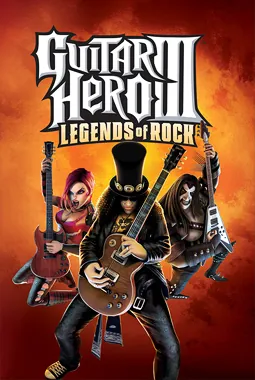
The sequel, Guitar Hero II, added more songs and cooperative play with separate guitar and bass parts, but the real turning point was Guitar Hero III: Legends of Rock, developed by Neversoft after Harmonix left for publisher Activision. With playable characters like Slash and Bret Michaels, a broader mix of genres, tougher songs, and massive popularity among players, this entry is often regarded as the series' peak — the moment music games with plastic peripherals became a phenomenon on PlayStation 2, PlayStation 3, Wii, and Xbox 360.
Guitar Hero also opened the door for rival series Rock Band, from Harmonix itself, and for a few years kick-started an entire genre of music games built around instrument-shaped controllers, with stores struggling to keep up with demand for plastic guitars. Interest gradually faded as the market became saturated with similar titles and releases, but the series had already defined, for a long stretch, what a mainstream music game looked like, and it even inspired living-room tournaments and competitions among players.
Entries in the series (3)
-
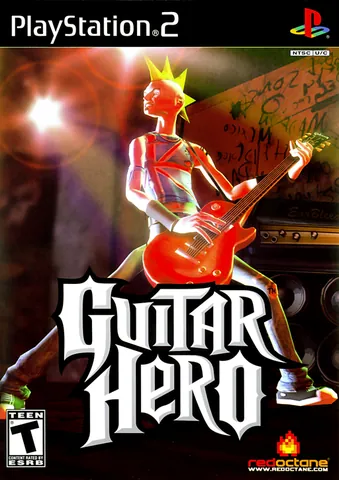
Guitar Hero · 2005
-
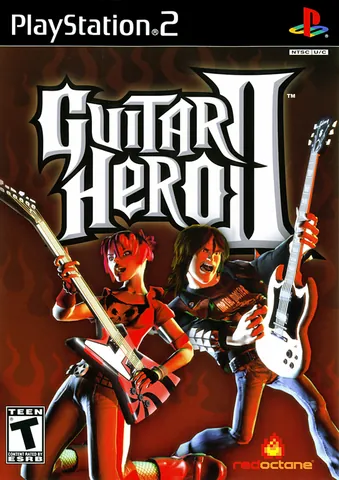
Guitar Hero II · 2006
-