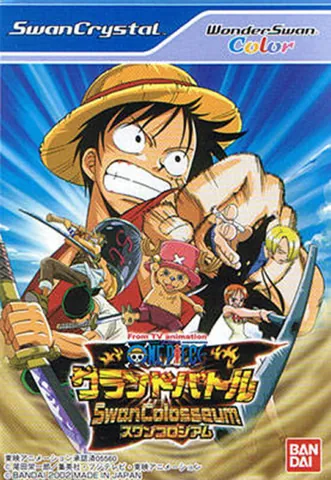
From TV Animation One Piece: Grand Battle Swan Colosseum
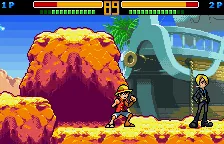
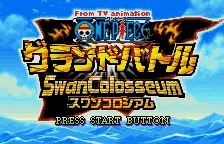
From TV Animation One Piece: Grand Battle Swan Colosseum brings to WonderSwan Color an arena fighter based on one of the most popular manga and anime franchises of all. Instead of a classic single-plane fighting game, this one takes place in more open arenas where you can move around, dodge, pick up items, and use the environment. Characters from the pirate crew and their opponents each have their own set of attacks and special abilities referencing what they're famous for in the source material, and the matches are short, loud, and built more on chaotic fun than on precise mastery of a fighting system.
Porting such a large genre to a handheld console required simplification. Arenas are smaller, the number of on-screen effects at once is limited, and the roster of fighters is slimmer than in the console versions of the series. What remained, though, is the basic feeling fans loved this branch of the franchise for: fast matches, over-the-top gestures, and the chance to play as your favorite character. The color display of the WonderSwan Color is useful here, since the characters are defined in the source material by strong coloring, and in black and white they would lose half their identity. The music leans on simple, energetic motifs that give the matches the drive they need.
At the time, this was a typical licensed game, the kind Bandai released in quantity on its own platform. It didn't try to rewrite the rules of the genre and relied on the source material's popularity to do the work. Precisely for that reason, though, it fits into the WonderSwan library as evidence of how much the console lived off Japanese franchises, and how strongly its lineup was shaped by TV series. Today it's more of a curiosity for fans of the series than a game anyone would boot up for its fighting system. In short bursts, and ideally with two players, it still holds its own as fun, and as a handheld companion to the era's pirate-crew mania it makes perfect sense. Collectors, moreover, treat it as a reminder that the franchise was already huge long before it broke through outside Japan.
Game 26 of 27 for Bandai WonderSwan