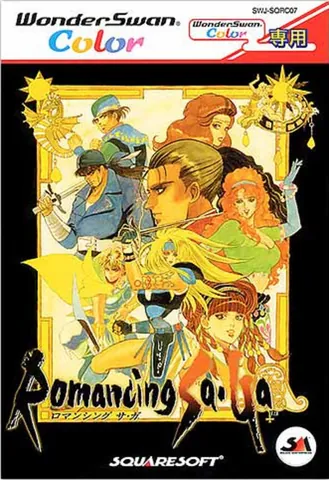
Romancing SaGa
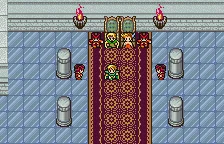
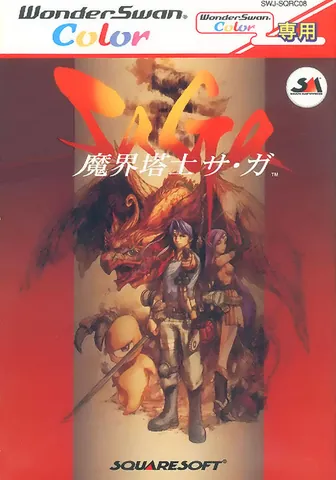
Romancing SaGa ranks among the most open-ended games you can play on a handheld console. The player chooses one of eight heroes, each with their own starting environment and reason for setting out into the world, and from that point on nobody holds their hand. The continent is open, quests can be completed in any order or skipped entirely, party members are recruited in taverns and ports, and the main plot about gods and fate only comes together from what the player discovers on their own. This so-called free scenario system was, at the time the series began, something that practically didn't exist anywhere else.
Character progression is just as untraditional. There are no experience levels; instead, individual stats increase after battles, and new techniques suddenly appear in combat like a flash of inspiration, when a character mid-attack figures out on their own how to turn an ordinary slash into something stronger. This mechanism turns every battle into a small lottery of tension and rewards experimenting with weapons. The WonderSwan Color remake builds on the foundations of the sixteen-bit era release, redraws it in color, and adjusts the interface for two screen orientations; the world has a cold, slightly harsh edge, and Kenji Ito's music lends the journey a gravity you wouldn't expect from such a small device.
At the time, it was one of the titles that showed Square didn't treat the WonderSwan as a dumping ground but as a full-fledged platform. The SaGa series has a reputation for being demanding and uncompromising, and this entry confirms it: the player easily gets tangled up, runs into enemies far beyond their strength, and has to learn from mistakes. Precisely because of that, though, it has aged better than many of its more linear contemporaries. Freedom, nonlinearity, and the emphasis that the world keeps moving regardless of the player are common ambitions for big RPGs today, and Romancing SaGa was already doing this on just a few megabits of memory. The only real obstacle remaining is Japanese, because without understanding the characters' hints, the player navigates the world by instinct and map alone. Whoever gets past that barrier gets a game that can be completed eight times and looks different every time.
Game 4 of 27 for Bandai WonderSwan