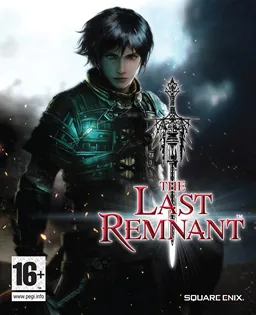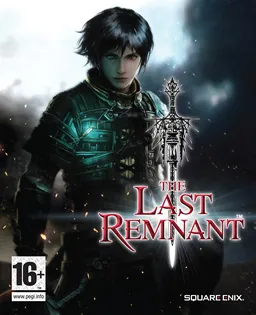
The Last Remnant
The Last Remnant first launched in November 2008 exclusively for Xbox 360 and introduced an unconventional battle system based on so-called Unions - groups of fighters that the player assembles and deploys into battle as units rather than individual characters, with the outcome of combat also partly influenced by chance hidden beneath the surface of tactical decisions. With this experimental JRPG, Square Enix tried to reach a Western audience beyond its traditional Final Fantasy series, offering a vast world, dozens of side quests, and a fairly demanding battle system that gave only limited direct control over individual characters.
The PC version didn't arrive until April 2009, several months later, becoming the first major Square Enix title released primarily for the Western PC market via what was then still a relatively young Steam. It brought higher resolution, adjustable graphics detail, and the option to enable bonus content that was only available on Xbox 360 as paid DLC. At the same time, however, it suffered from significant performance problems - the game had high hardware requirements, and frame rates dropped even on then-above-average rigs, which the publisher had to address with additional patches released in the months after launch.
Despite these technical shortcomings, the PC version allowed players who didn't own an Xbox 360 to play the game, and it broadened the audience for this unusually designed JRPG beyond the console community, even though the reputation of imperfect optimization followed the title for the rest of its lifespan.
For Square Enix, this was also an important step - the company was at the time still learning how to approach releasing its games on computers, and it later drew on its experience with The Last Remnant when preparing further PC ports of its console titles.
The publisher also continued to add patches to the PC version even months after release, trying to correct the initial bad impression - the performance problems did gradually ease, but the title's reputation as an imperfectly polished port remained.
Why play it: Anyone trying the game today will appreciate that later patches gradually eased the performance problems - but the reputation of an imperfectly polished port has stuck with it to this day.
Game 319 of 583 for PC / moderní (64bit a GPU)