Frontier: Elite II
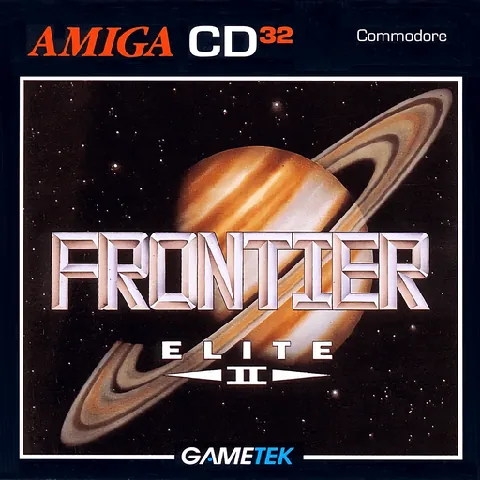
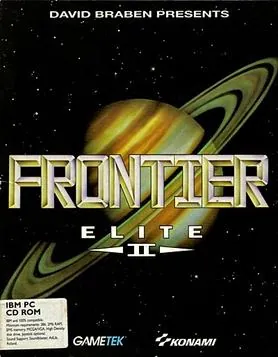
Frontier: Elite II is the sequel to the legendary Elite, and it expanded the open space-game world to a scale no one else was attempting at the time. The player gets a ship, a little money, and an entire galaxy in which to decide for themselves what they'll become. Trading commodities between systems, ferrying passengers, smuggling, bounty hunting, working for military factions, or simply exploring distant stars — all of it is a legitimate way to play the game, and no storyline pushes the player in any particular direction.
The biggest difference from its predecessor is the physics. Ships move according to Newtonian principles, so inertia, braking, and maneuver planning all play a crucial role, and landing on a planet or docking with a station is a genuine skill. On top of that come planets with and without atmospheres, gravity, orbits, and a timeline that can be sped up, since travel between bodies takes days or even weeks. The galaxy is largely procedurally generated, but the region around the Solar System is based on real stars, giving the game an unexpectedly realistic touch. Visually it relied on clean shaded polygons, and the silence of space underscored by classical music created a very distinctive, cold atmosphere.
At the time, Frontier stirred enormous expectations, and its reception was mixed. The scale and the physics were astonishing, but the game was hard to grasp, awkward in places, and buggy in its early versions. Looking back, it's clear how strong an influence it had on the entire genre of open space games, which two decades later picked up exactly where Frontier left off. Today it's a title for the patient: anyone who accepts the slow pace and lets themselves be drawn into the idea that space really is empty and vast will find an experience newer games rarely offer. The degree of freedom in the details is worth appreciating too. The ship can be swapped, rebuilt, gone into debt over, or sold off so you can start again somewhere else, and the game never pushes the player toward any of it. It's exactly this absence of guidance that produces both the best and the most demanding thing Frontier has to offer.
Game 88 of 204 for PC / DOS (XT až 486)
The same title elsewhere (1)
Frontier: Elite II is extremely demanding on processing power, since it calculates the entire galaxy and every ship in real time using software-rendered 3D — and that shows in the difference between platforms. On a standard Commodore Amiga with its base 68000 processor the game visibly slows down, especially in the filled-polygon graphics of cities and stations, so many players switched to the simpler wireframe view just to keep things smooth. The PC/DOS version, run on a faster 486, handled even the filled graphics considerably more smoothly and offered a sharper VGA picture. Anyone wanting to explore the galaxy without stutter should reach for the PC version today.