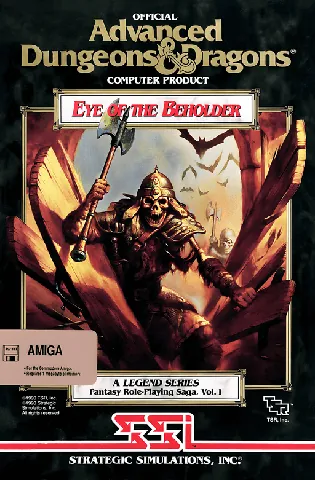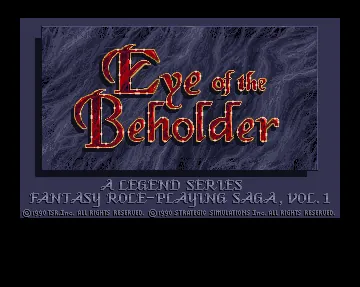
Eye of the Beholder
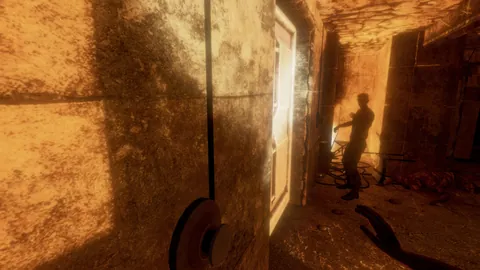
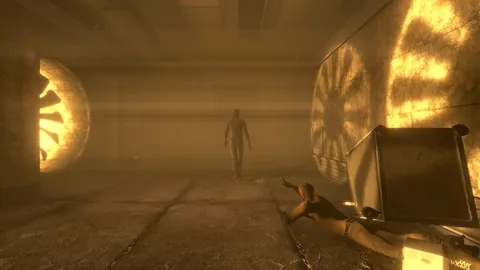
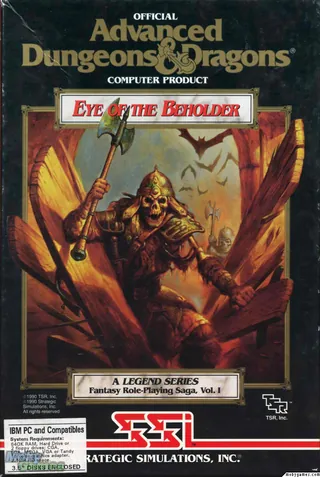
Eye of the Beholder brought AD&D rules into the sewers beneath Waterdeep and turned them into a tight dungeon crawler controlled with the mouse, needing no rulebook or dice to play. A party of four adventurers is sent to investigate the evil lurking beneath the city, and the very first cave-in cuts off their way back; from there only one path remains, and it leads down, level by level, to a final confrontation with the creature that gives the game its name. Along the way, further characters can join the original four, so the expedition can eventually reach a full party of six adventurers.
It's played from a first-person perspective on a square grid, but combat runs in real time: the player clicks the weapons in the characters' hands, waits for the attack to recharge, and meanwhile backs away, circles around, and lures enemies into corridors where they can't surround the party. That little dance is what makes an otherwise simple system genuinely tense. The levels are full of pressure plates, hidden switches, teleporters, and puzzles that require placing the right item in the right spot, and the game keeps a journal log, though you have to draw the map yourself, or rely on memory and marks on the walls. Supplies don't replenish on their own, so it's necessary to watch your food and rest regularly to recover spells.
Technically, in 1991 this was cutting-edge: detailed VGA graphics with well-rendered monster portraits, smooth redrawing, and sound that, on cards like AdLib or Sound Blaster, added footsteps, clanking, and growling to an otherwise silent darkness. The lack of music for most of the game paradoxically helps, because the silence beneath Waterdeep is unsettling. Critics received the game very well, and it opened the door for Westwood to sequels and later to the Lands of Lore series. Today Eye of the Beholder is still an excellent entry point into the genre: it's shorter and clearer than its successors, doesn't punish needlessly, and its puzzles have a fair logic to them. It was also released on other computers of its day, including the Amiga, and to this day it's among the first things recommended to anyone interested in old-school dungeon crawlers.
Game 47 of 204 for PC / DOS (XT až 486)
The same title elsewhere (1)
Eye of the Beholder was built primarily for PC/DOS, where it ran in VGA graphics with support for sound cards like AdLib or Sound Blaster and offered smooth transitions between the dungeon's corridors. The Amiga port reached the European market a little later and had to cope with a different machine architecture — frequent disk reloading led to longer pauses between screens, and moving through the maze felt somewhat less snappy than on DOS. The Amiga's audio, thanks to its Paula chip, sounds pleasant and adds to the atmosphere, but because of slower loading and less fluid mouse control the PC/DOS original is generally regarded today as the definitive version.