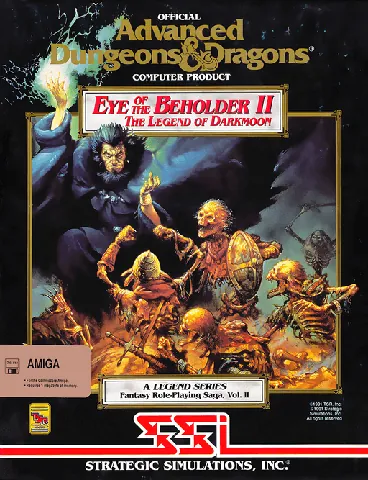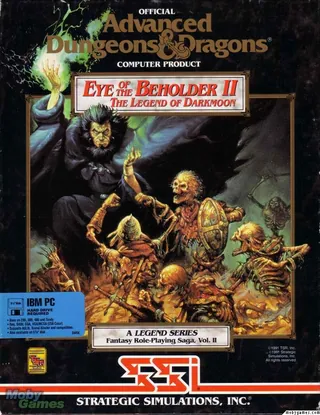
Eye of the Beholder II: The Legend of Darkmoon
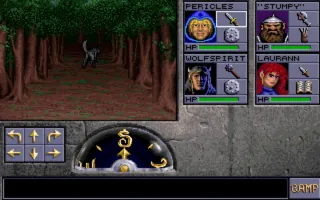
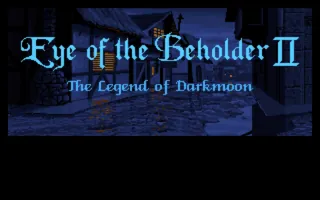
Eye of the Beholder II: The Legend of Darkmoon took the proven foundation of the first game and expanded it exactly where the original felt sparse. The party heads to the Temple of Darkmoon near Waterdeep, from which rumors of a dark cult are spreading, and this time they're not just creeping through sewers: the path leads through forest, temple halls, towers, and catacombs, each differing from the others in mood, color, and traps. The party from the first game can also be carried over along with its equipment and experience, giving the sequel a pleasant sense of continuity.
The system stayed true to AD&D rules and real-time combat on a square grid, but it gained features that shook the dungeon up. Windows you can see out of, levels that change over time, enemies attacking from a distance, and the need to watch supplies and rest to recover spells all give the expedition a different rhythm than the first game. It's noticeably longer and trickier, with puzzles that often require paying attention to details in descriptions and writing on the walls, and with several moments where the player has to decide who from the party to send into harm's way first. Along the way you can also meet characters who join the expedition, though not all of them have intentions as clean as they claim.
On the technical side, Westwood pushed the presentation another notch further: a more colorful VGA environment, animated sequences framing the story, and sound design that in the temple weighs on you more than any music could. At the time, the second game ranked among the best-received dungeon crawlers of its era, and many players still consider it the high point of the trilogy; the third sequel was made elsewhere and never reached this level. Today the game works as a textbook example of pacing: alternating open spaces and claustrophobic corridors, the slow reveal of the temple's full scale, and a constant sense that something your party isn't yet ready for waits behind the next door. It's worth adding that without notes and the occasional trip back through already-visited levels, the player will have a hard time getting by.
Game 48 of 204 for PC / DOS (XT až 486)
The same title elsewhere (1)
Eye of the Beholder II: The Legend of Darkmoon stuck to the first game's recipe, and here too the PC/DOS version with VGA graphics and support for AdLib or Sound Blaster sound cards is the baseline, running smoothly even in demanding fights. The Amiga port arrived later and ran into the same pain points as its predecessor — disk-based loading stretches out transitions between screens, and mouse control feels less snappy than on a faster PC. Music and sound effects on the Amiga sound atmospheric thanks to its Paula chip, but because of the slower pace the PC/DOS original is still generally regarded as the smoothest, definitive version.