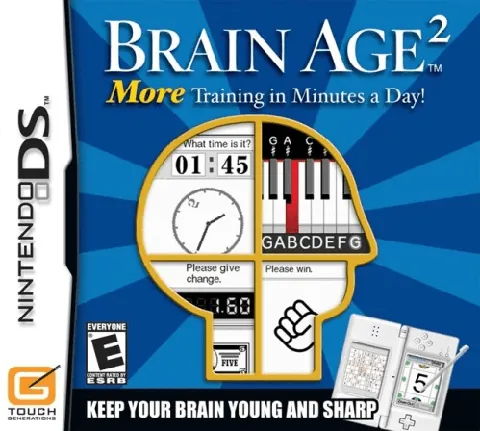
Brain Age 2: More Training in Minutes a Day!
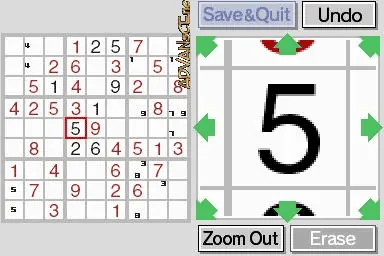
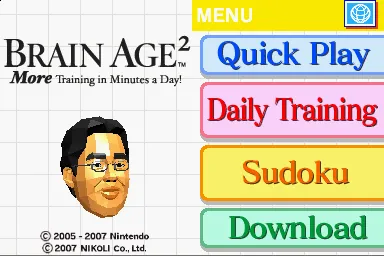
Brain Age 2: More Training in Minutes a Day! builds on the successful first installment and expands the concept of daily mental exercises designed under the supervision of Japanese neuroscientist Ryuta Kawashima, whose stylized digitized head guides the player through individual tasks and comments on their performance. Every day, the game offers a short set of exercises - counting from memory, reading aloud into the microphone, drawing shapes, memory tasks, or recognizing colors and words - and converts the results into a brain age, which decreases with regular training and is displayed in a clear calendar history.
Compared to the first installment, new types of exercises were added, including bonus sudoku puzzles, as well as a multiplayer mode where several players take turns on a single DS and compare their results, which made the game a frequent part of family evenings. The controls rely on a combination of the stylus for writing digits and shapes and the microphone for voice tasks, with handwriting recognition being surprisingly reliable given the capabilities of the console at the time. The presentation is plain and clinically clean, matching the game's character as a daily ritual rather than an entertainment show for long play sessions.
Brain Age 2, together with the first installment, helped the Nintendo DS gain a mass audience of older and casual players and became part of the wider brain-training trend of the mid-2000s, which brought many people who had never played video games before to Nintendo consoles. Today it feels like an interesting document of its time and still works as a pleasant, low-demand daily routine for maintaining attention and numerical dexterity. The format of short, daily exercises also proved to be a forerunner of later mobile brain-training apps that appeared a few years later. The regular repetition of the same types of tasks also lets the player genuinely track their own improvement over time, a feeling that most classic video games don't provide.
Game 99 of 150 for Nintendo DS