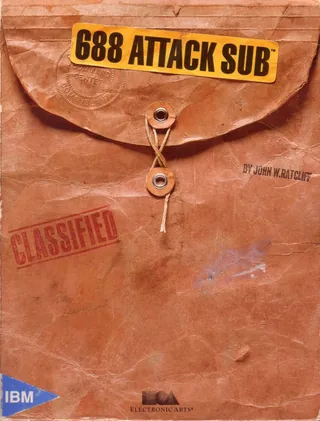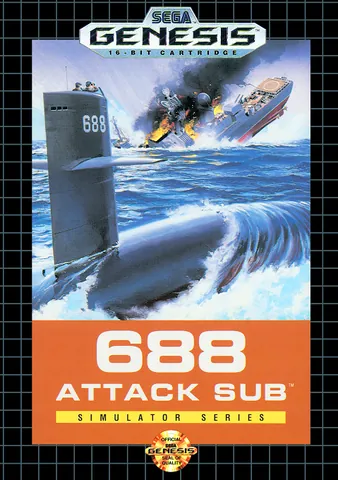
Silence. Just the hum of the engine room, the ping of the sonar, and the awareness that the enemy is out there somewhere in the dark, listening just as intently as you are. That is the atmosphere 688 Attack Sub managed to squeeze into a sixteen-bit console at a time when most players expected a torrent of pixels and fast action from the Mega Drive, not a patient game of cat and mouse beneath the surface.
The game puts you in the command section of an American Los Angeles-class attack submarine (type 688, hence the name) and later even a Soviet adversary. The core of the gameplay is not spectacular explosions, but working the sonar, managing depth and speed, and the tactics of silence. Sailing too fast means noise, noise means detection, and detection often means a torpedo heading straight for you. The player juggles between passive listening, active sonar, and timing their own torpedoes so they strike before the opponent can pull off an evasive maneuver or launch decoys.
The title was created as a console adaptation of the computer game of the same name, originally designed by John W. Ratcliff and published by Electronic Arts at the turn of the eighties and nineties. The Mega Drive version was distributed by Sega and was one of those rare pieces that took the simulation genre on a console seriously, instead of dumbing it down beyond recognition. That very ambition makes the game an interesting document of a time when publishers were still learning just how much a console audience could handle.
What makes 688 Attack Sub stand out is its decision to prioritize tension over spectacle. Battles play out on maps and instrument panels, where the meters of closing distance are measured in minutes and where one misjudgment of the enemy position decides the entire mission. This slowness is deliberate, and for fans of submarine simulators it is exactly what makes the genre so addictive: it is not about reflexes, but about anticipating your opponent's thinking.
Today we see the game more as a curiosity and proof of the breadth of the Mega Drive library than as a mass hit, but that is precisely where its charm lies. It reminds us of an era when even an action console dared to reach for a depth we would sooner expect from a PC.
Why play it: If the tension of a submarine duel where patience and a cool head win the day appeals to you, this is a rare and honest piece of console simulation.
Game 57 of 151 for SEGA Mega Drive