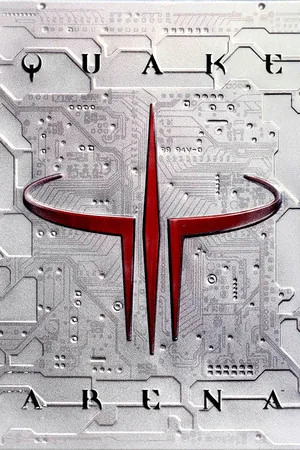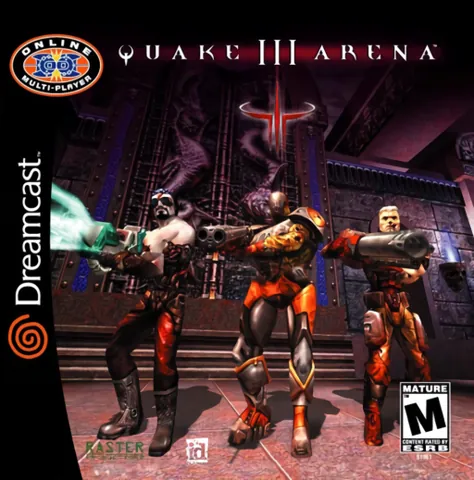
Quake III Arena
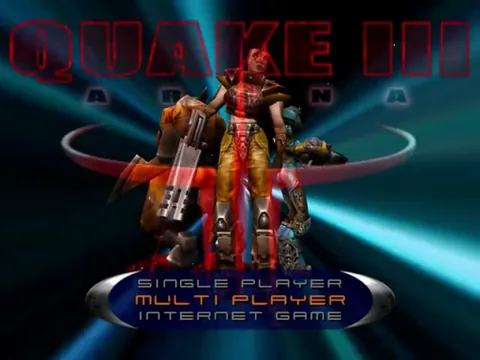
There are games that tell a story, and then there is Quake III Arena - a game that needs no story, because the only thing that matters is whether you are faster and more accurate than the other guy. In 1999 id Software threw out the single-player campaign and built the entire title around a single idea: multiplayer arenas where players (or bots) face off in a merciless deathmatch. And the Dreamcast received this pure distillate of competitive FPS in the year 2000.
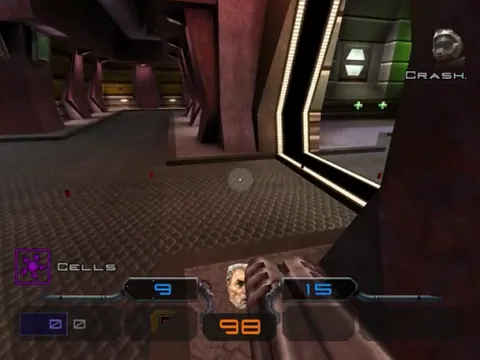
The mechanics of Quake III are a textbook of the genre to this day. Movement is lightning-fast, mastering the art of strafe-jumping and rocket-jumps, the maps are designed around control of key items and a brutal arsenal from the railgun to the rocket launcher. There is no room for hesitation - what wins is reflex, knowledge of the maps, and the ability to anticipate the opponent. It was precisely this ruthless purity that made Quake III a pillar of the early esports scene.
The Dreamcast version was remarkable for several reasons. As one of the first consoles, the Dreamcast offered a built-in modem and online play, so Quake III Arena could be played over the network against other players - at a time when console online was still an exotic thing. The game moreover supported a keyboard and mouse connected to the console, which made it one of the few ways to play an FPS on a console with true PC precision.
The development context is a legend in itself. id Software, under the lead of John Carmack and company, was the studio that literally invented the modern FPS - Doom, Quake, technological revolutions in 3D engines. Quake III ran on the new id Tech 3 engine, which was later licensed into dozens of other games and raised the bar in rendering curved surfaces and lighting.
Its cultural significance is enormous. Quake III, together with Unreal Tournament, which came out at the same time, defined the era of arena shooters and laid the foundations of organized competition from which today's esports grew. For the Dreamcast, the port meant proof that the console took online and hardcore gaming seriously - a shame only that SEGA ran out of time before this vision could fully unfold.
Why play: For pure, timeless multiplayer deathmatch that has not aged - and on the Dreamcast, with mouse and keyboard support for true precision on top of that.
Game 36 of 54 for SEGA Dreamcast