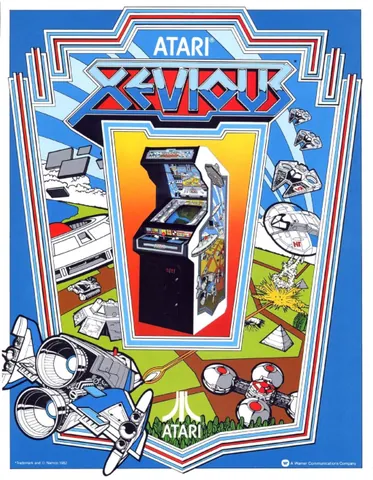
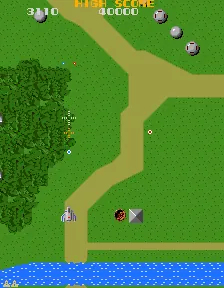
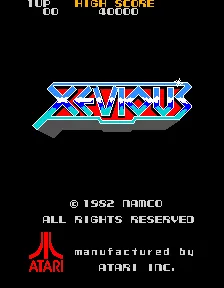
Xevious, from Namco and designer Masanobu Endo, is one of those games that quietly rewrote the rules of the genre. When it arrived in arcades in 1983, it offered something vertical shooters had never known before: two separate weapons. With the Vulcan you mow down aerial targets, and with the Blaster bomb you aim at ground units, forcing you to constantly switch between two planes of combat at once. This idea became a cornerstone of practically every later shmup.
But Xevious didn't captivate through mechanics alone. Namco created a mysterious, alien world inspired by the Nazca lines and ancient civilizations, with smooth scrolling over forests, rivers, and concrete fortresses. That atmosphere of mystery — the feeling of flying over an alien planet with its own history — was unheard of for its time. The game hid secrets quite literally too: legendary hidden bonuses like the Sol tower and the Special Flag rewarded curious players and fueled rumors around the world.
For retro gamers, Xevious is an icon not only because of its influence but also because of how well it ages. It's a clean, elegant, still-demanding game. In Japan it became a cultural symbol of the early arcade era and one of the first games to be granted the status of a true design classic.
Game 77 of 258 for Arcade
The same title elsewhere (1)
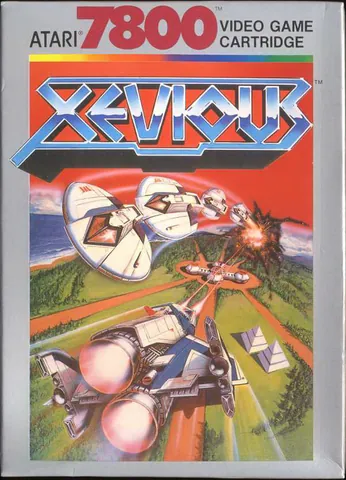
Namco's 1983 arcade cabinet built its reputation on densely detailed underground and ground targets and smooth vertical scrolling that felt like flying over a living world. The Atari 7800 port from 1986 was a solid conversion for its generation, but the console's hardware couldn't match the same number of colors or the same smooth background scrolling as the original, so both the visuals and the world's motion had to be simplified. Even so, the core gameplay — the Vulcan cannon against aircraft paired with bombs against ground targets — survived intact, making it one of the 7800's more ambitious titles. Anyone wanting the full experience in its original glory should reach for the arcade version.