Pole Position II
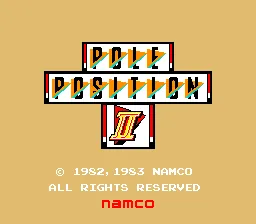
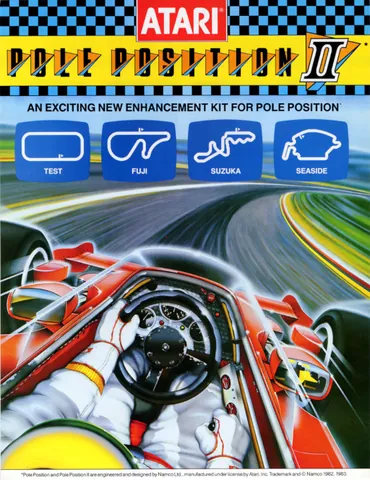
When a proven recipe is refined and fine-tuned, you get a sequel that takes the best and adds more. Pole Position II did exactly that: it took the iconic format of its predecessor and expanded it so players felt they were getting a fuller racing experience. For arcade-goers it meant more tracks and more reasons to feed the machine another coin.
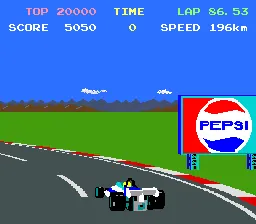
The core of the gameplay stays faithful to the original. You still start with qualifying, where you have to fight your way onto the grid with a good lap, and only then do you throw yourself into a race full of rivals, slalom between slower cars and a relentlessly ticking clock. Crashing doesn't pay off, and every corner taken decides whether you'll make the next checkpoint.
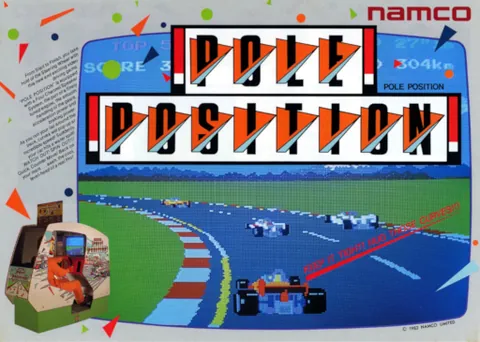
The main change from the first game is the choice of multiple circuits. Instead of a single track, the player picks from several environments, which brought greater variety and longer replayability. The visuals stayed true to the signature pseudo-3D view behind the car that gave the series such a strong sense of speed and depth.
Culturally, Pole Position II confirmed that the qualify-and-race format wasn't a lucky fluke but a genuine cornerstone of the genre. It strengthened the whole brand's position as one of the pillars of arcade racing and helped spread its popularity to the next wave of players.
Today we see both Pole Position games as communicating vessels, proof that a good sequel doesn't have to turn the rules upside down; it's enough to cleverly expand on what worked. For fans of retro racing it's a mandatory stop.
Why play: For an improved and more varied version of the classic that defined arcade racing, now with a choice of multiple tracks.
Game 69 of 258 for Arcade
The same title elsewhere (1)
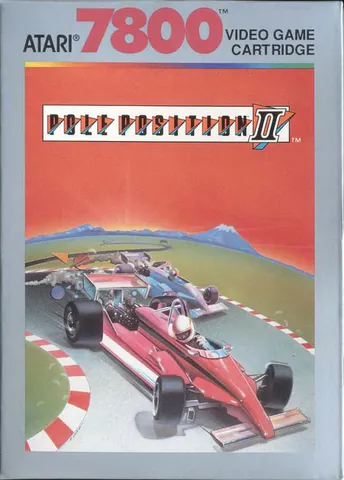
The arcade cabinet offered a real seat with an actual steering wheel and pedals, making the driving feel physical and immediate, and its own graphics board drew the track and rival cars smoothly at a high frame rate. The Atari 7800 had the capable MARIA graphics chip, built precisely for handling many colorful sprites, which made this port one of the more visually faithful arcade conversions of its generation — but control ran through an ordinary joystick, so the physical connection to the cabinet's wheel and pedals is naturally missing. The console's sound is also simpler than the arcade machine's dedicated sound board. Anyone wanting the real feel of racing should sit at the cabinet; anyone wanting the game at home, fast, should reach for the 7800.