Franchises
Metal Slug
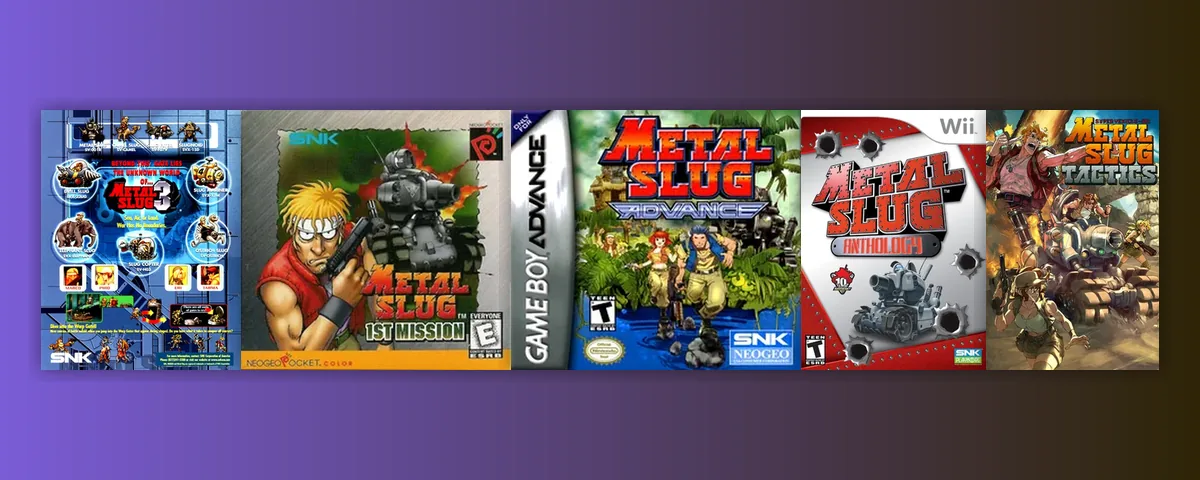
Metal Slug began in 1996 as an arcade title from Nazca Corporation, released under the SNK banner for the Neo Geo hardware. The series became one of the defining names in the run-and-gun genre, built from the start on hand-drawn pixel-art graphics, exaggeratedly detailed unit animation, and a sense of humor that contrasts with its military setting of fighting the rebel General Morden and his army. Playing as soldiers Marco Rossi or Tarma Roving, the player fights through linear levels, mows down dozens of enemies, rescues captured prisoners of war for bonus points, and climbs into the iconic Metal Slug tank that gave the series its name and became its visual trademark.
The second entry, Metal Slug 2 (1998), expanded the roster of enemies and vehicles and introduced an alien invasion subplot that later became a permanent thread alongside the earthbound military conflicts. The enhanced Metal Slug X (1999) fixed the second game's technical rough edges, notably the slowdown caused by too many enemies on screen, and became the preferred version for many players. Metal Slug 3 (2000) is widely regarded as the series' high point, adding branching paths, temporary transformations into zombie and spider forms, and an even richer bestiary — a combination of finely tuned difficulty, varied settings, and crafted artwork that makes it one of the most acclaimed titles in the genre.
After 2000, studios beyond SNK itself took on a growing share of development, which showed in the uneven quality and reception of the later entries. Metal Slug 4 (2002) was made in cooperation with Mega Enterprise and Noise Factory and met a cooler response from fans, while Metal Slug 5 (2003) returned closer to the spirit of the earlier games. Metal Slug 6 (2006) landed on the Atomiswave arcade board and introduced new mechanics including a pilotable mech, and Metal Slug 7 (2008) on the Nintendo DS combined content from the sixth game with new material — an expanded version, Metal Slug XX, followed a year later on the PSP.
Alongside the main line, the series also spread to handhelds with spin-offs such as Metal Slug 1st Mission and 2nd Mission on the Neo Geo Pocket Color, and Metal Slug Advance on the Game Boy Advance, plus ports to Java-powered mobile phones that reached players who had no access to arcade cabinets. The Metal Slug Anthology (2006) collection gathered the first six games for the PS2, PSP, and Wii, introducing them to a new generation of players. Despite the irregular release schedule and shifting development teams, Metal Slug kept its reputation as one of the most craft-driven series in its genre, prized above all for its artwork and for a difficulty curve that rewards patience and learning enemy patterns.
Entries in the series (13)
-
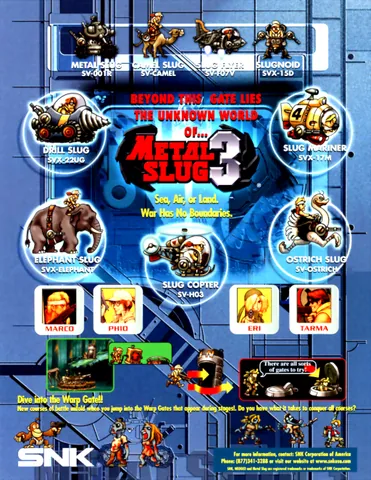
Metal Slug 1–X / 3 · 1990
-
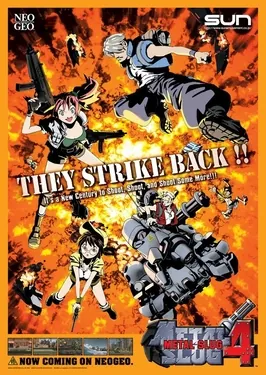
Metal Slug 4 · 1996
-
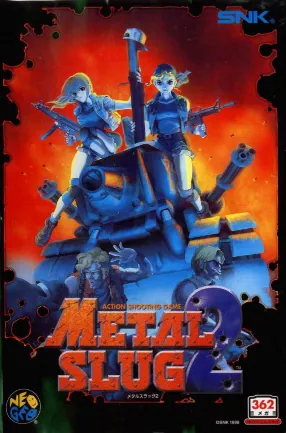
Metal Slug 2 · 1998
-
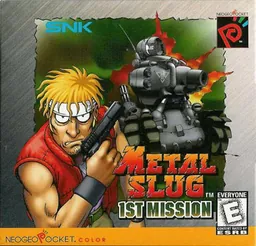
Metal Slug: 1st Mission · 1999
-
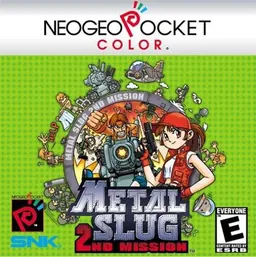
Metal Slug: 2nd Mission · 2000
-
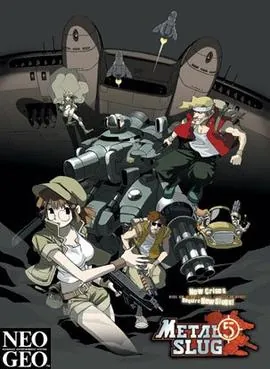
Metal Slug 5 · 2003
-
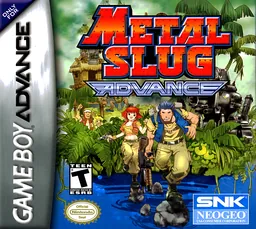
Metal Slug Advance · 2004
-
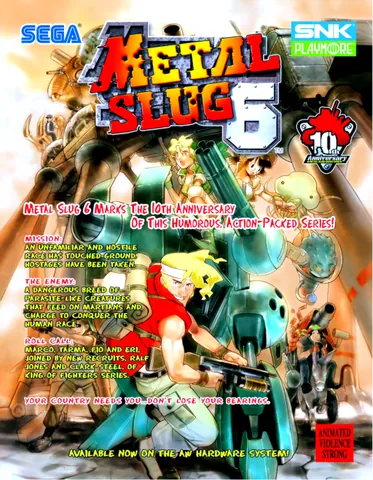
Metal Slug 6 · 2006
-
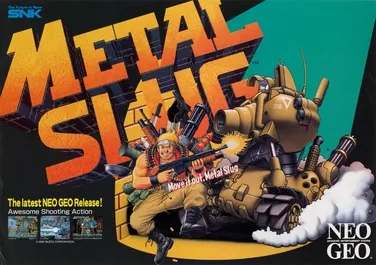
Metal Slug Mobile · 2006
-
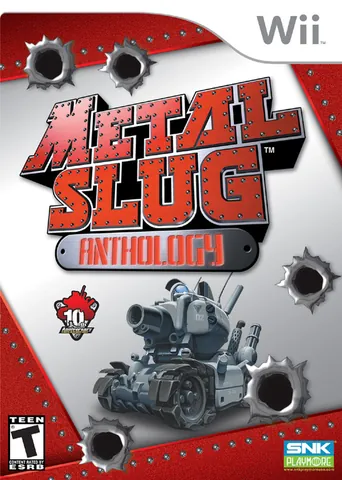
Metal Slug Anthology · 2007
-
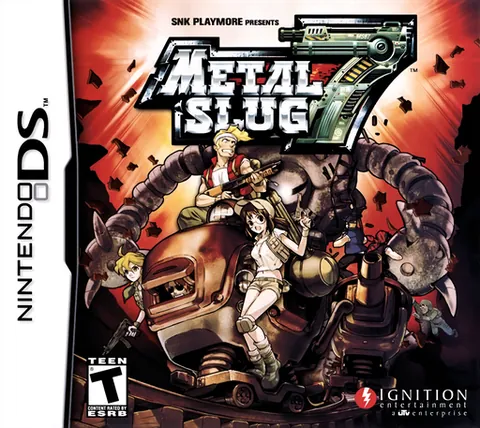
Metal Slug 7 · 2008
-
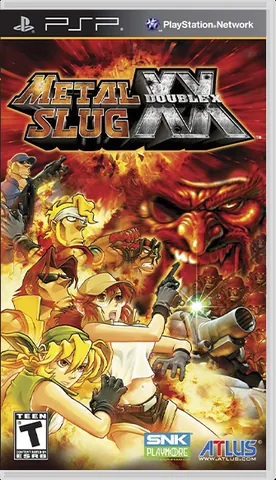
Metal Slug XX · 2009
-
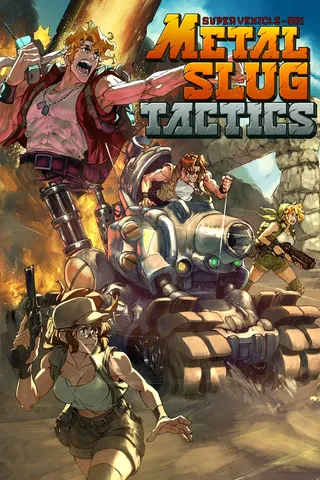
Metal Slug Tactics · 2024