
L.A. Noire
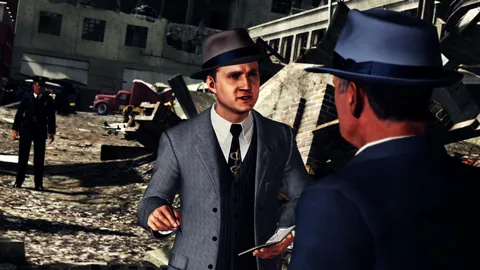
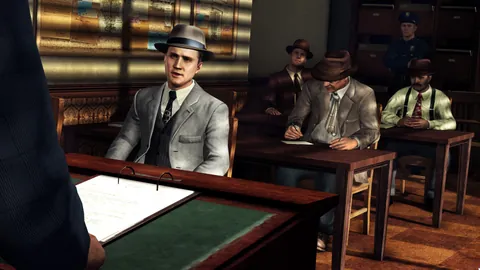

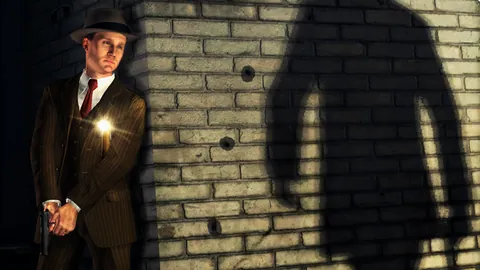
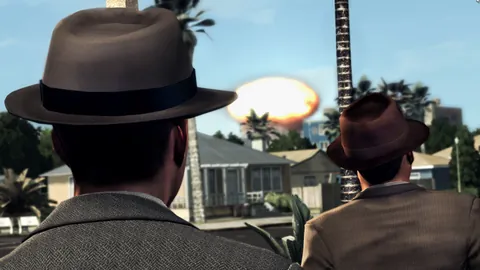


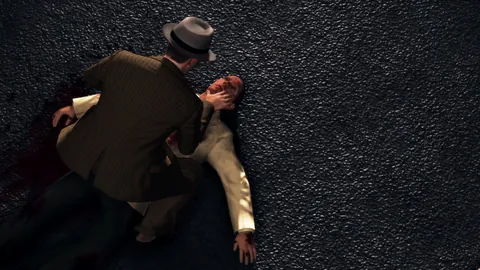
L.A. Noire placed the player in postwar Los Angeles in 1947, in the shoes of detective Cole Phelps, a war veteran who gradually works his way through the departments of the Los Angeles Police Department, from traffic violations through homicide to arson and vice. Developed by Team Bondi in partnership with Rockstar Games, the game was built on the then-revolutionary MotionScan technology, which captured professional actors' facial expressions from multiple angles at once and transferred them onto in-game characters with unprecedented fidelity. Thanks to this, interrogating suspects became a central gameplay mechanic - the player watches the interviewee's facial expression and decides whether to believe them, doubt their words, or confront them with a lie using evidence gathered at the crime scene.
Besides detective work, the game also offers an open world of a painstakingly reconstructed Los Angeles, with free driving in period automobiles, shootouts, and chases that form a more action-oriented counterpart to the slower, observational investigation. Individual cases loosely draw on period newspaper headlines and real crimes from postwar Los Angeles, lending the story a sense of authenticity. On Xbox 360 the game shipped on three discs due to the large volume of data for facial animation, which, along with a somewhat lower resolution and frame rate compared to PlayStation 3, was among the more frequently mentioned technical compromises. The atmosphere is rounded out by a jazz soundtrack, period radio broadcasts in the car, and carefully reconstructed city architecture.
Critically the game was received extremely well, especially for its technological innovation and cinematic storytelling, and it is still cited today as one of the most ambitious attempts to combine the detective genre with facial-capture technology. Although the sequential structure of the cases may feel repetitive to today's player and some of the final chapters drag in pacing, it's a title that significantly advanced how video games can work with acting performance and nonverbal communication, and it later received a remastered version for newer platforms.
Why play it: For its technological innovation in facial capture and cinematic storytelling, it's one of the most ambitious attempts to combine the detective genre with technology, despite the repetitive case structure.
Game 120 of 259 for Xbox 360