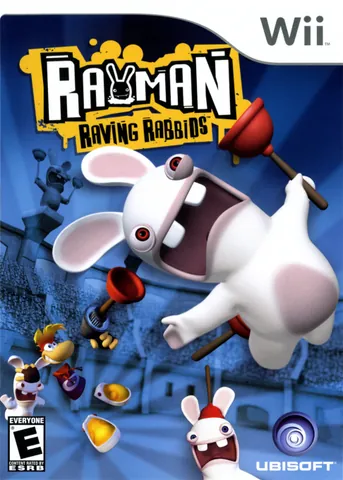
Rayman Raving Rabbids
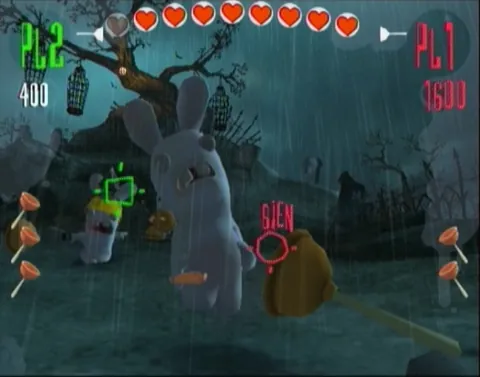
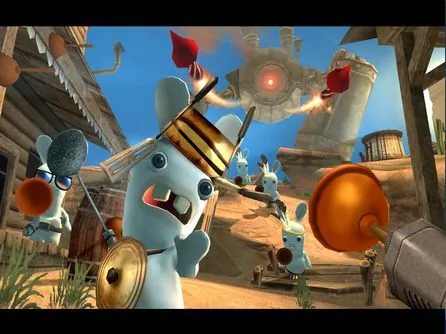
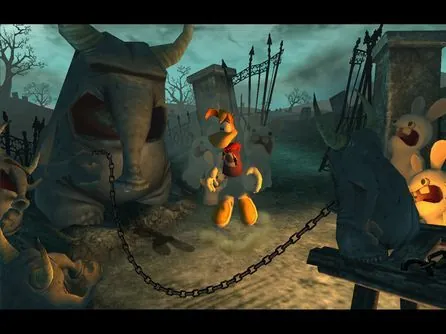
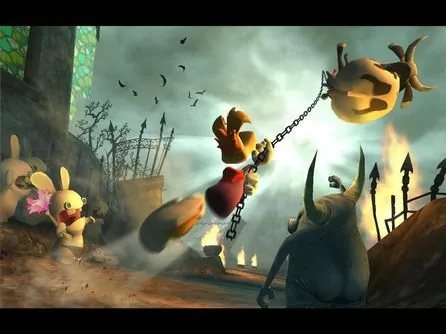
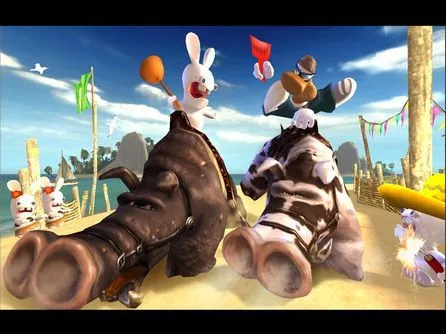
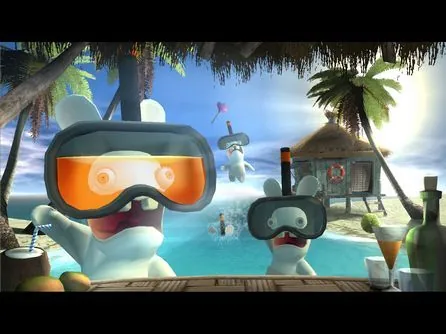
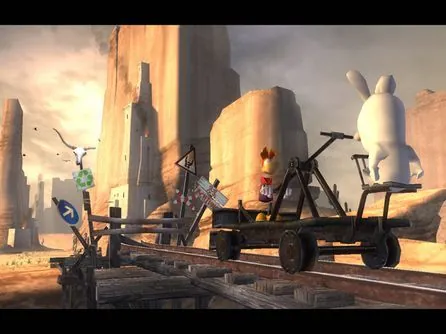
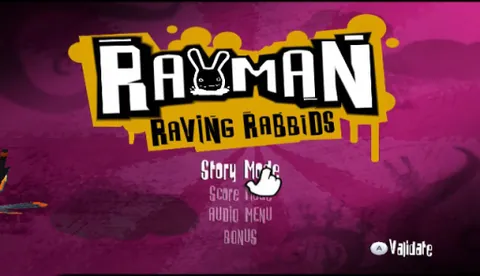
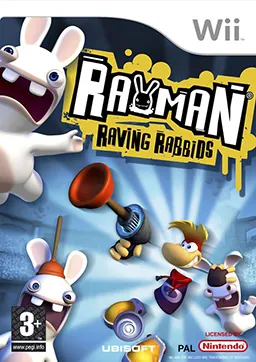
Rayman Raving Rabbids launched alongside the console and almost immediately rewrote the fate of the entire franchise, because in the end the attention wasn't captured by Rayman but by hordes of shrieking rabbids, who turned from minor villains into stars. The game abandoned the series' platforming roots and turned into a set of microgames framed by a story about Rayman held captive in an arena, where he must complete several events each day to earn a chance at escape. The structure is simple and addictive: finishing a round unlocks the next day, a new costume, and another batch of absurd tasks.
The minigames use the controller across its entire repertoire. In one you pull an imaginary rope, in another you balance, milk a cow, throw a cow for distance, or pound a drum in rhythm. Shooting-gallery sequences take up a prominent place, where the Wiimote is used as an aiming device and rabbids are picked off with bells, alongside music events where the player must hit the beat of well-known songs in rabbid arrangements. The multiplayer mode is built on direct competition at a single screen and is clearly where the game shines brightest, since the campaign itself tends to slide into repetition over time.
Visually it's a fast-running, cartoonish game with bold colors and excellent rabbid animation, whose facial expressions and screeches became the series' signature. The sound is deliberately exaggerated, and a single rabbid shriek managed to define the entire series. Contemporary reviews praised the inventiveness and the fun in a group, but criticized the uneven quality of individual events and the amount of repetition. Today the title is interesting mainly as a period document of the first wave of Wii games, and at the same time as a reliable party pick that nobody needs to learn for longer than ten seconds. In hindsight it's also easy to see how pivotal a decision this was for Ubisoft: the rabbids broke off into their own line of sequels, while Rayman didn't return to a classic platformer until several years later. That's exactly why the game is remembered with mixed feelings, though few would deny it was a lot of fun.
Game 34 of 140 for Nintendo Wii
The same title elsewhere (3)
From the same series Rayman →
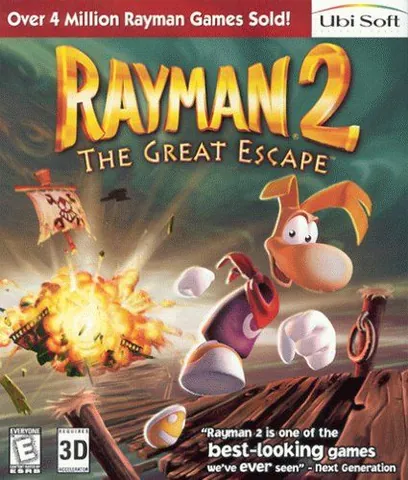 Rayman 2: The Great Escape Win9x · PS1
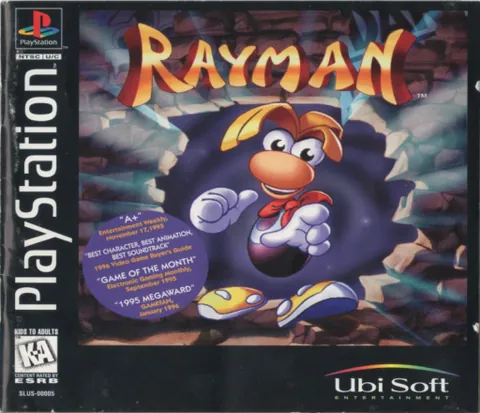 Rayman PS1 · Jaguar · DOS · Saturn · GBC · 1995
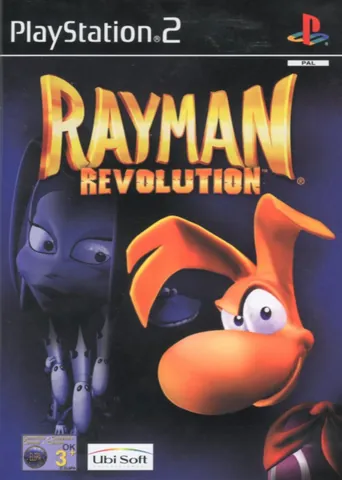 Rayman Revolution PS2 · 2000
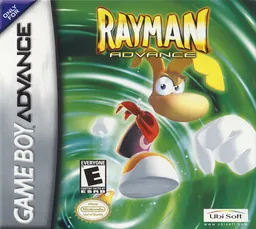 Rayman Advance GBA · 2001
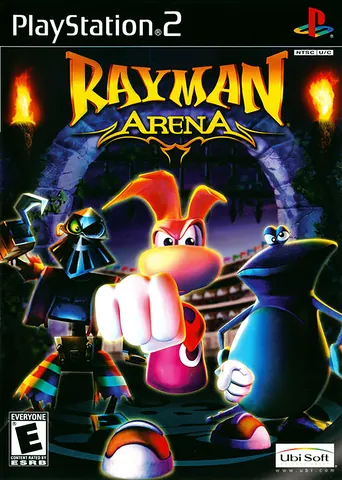 Rayman Arena PS2 · 2002
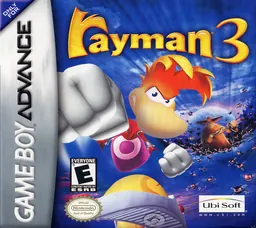 Rayman 3: Hoodlum Havoc GBA · PS2 · GCN · Xbox · 2003
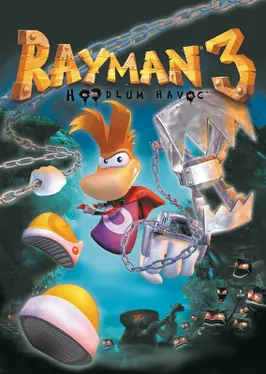 Rayman 3 (mobile) Java ME · 2004
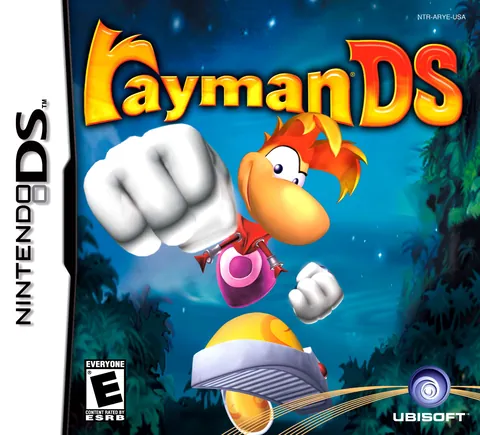 Rayman DS DS · 2005
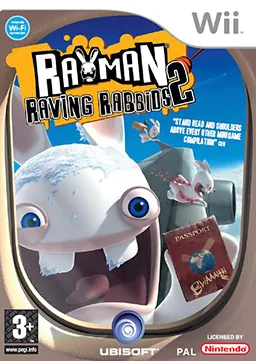 Rayman Raving Rabbids 2 Wii · 2007
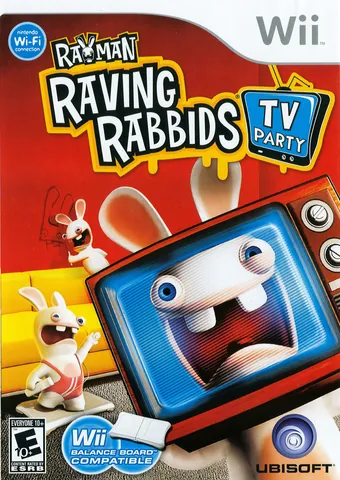 Rayman Raving Rabbids: TV Party Wii · 2008
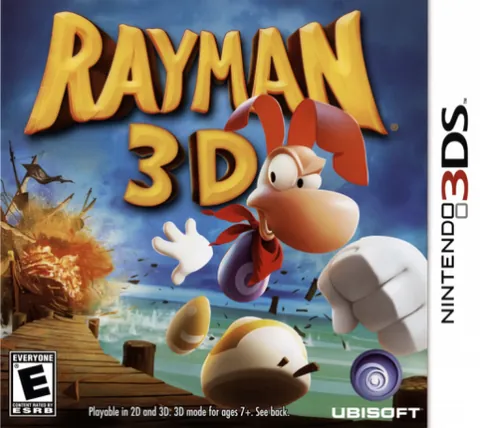 Rayman 3D 3DS · 2011
 Rayman Origins Wii · X360 · PS3 · 3DS · Vita · 2011