Killzone 2
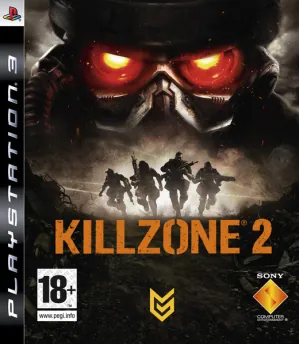
The invasion of the home planet of the brutal Helghast regime hit like one of the most technically impressive shooters of the decade's turn, with dark industrial aesthetics and a heavy, realistic feel to the shooting. Guerrilla Games built the game around the slower, more deliberate movement of soldier Sevchenko, which was initially controversial but gave combat a sense of weight and tactical caution, unlike the more arcade-style shooters popular at the time. Weapons kick upward on their own when fired, forcing the player to constantly correct their aim back onto the target, and a first-person cover system forced players to peek out and pull back rather than charging headlong.
Visually, the game ranked among the PS3's technological flagships, with destructible environments, dense lighting, and detailed models of Helghast soldiers in their iconic, glowing red masks. Critics and players debated the controls above all, but agreed on the exceptional graphics and sound design, which ranked among the best on the console. Killzone 2 helped establish the series as Sony's answer to Halo, a flagship military shooter exclusive to the platform, and it became a showcase title presented at trade shows as proof of the Cell processor's power.
Multiplayer, with its elaborate class system and unlockable abilities, drew a loyal community for several years, partly thanks to a mode in which match objectives shifted on the fly, forcing the team to smoothly transition between defense, offense, and sabotage. The game significantly boosted Guerrilla Games' reputation as a studio capable of competing with the best Western shooter developers. Developers spent years fine-tuning the feel of the shooting and weapon recoil, which became a reference point in discussions of so-called gunplay design, and the game's technical showcase at E3 2005 sparked a widespread debate over the difference between pre-rendered demos and real in-game performance.
Game 11 of 293 for Sony PlayStation 3