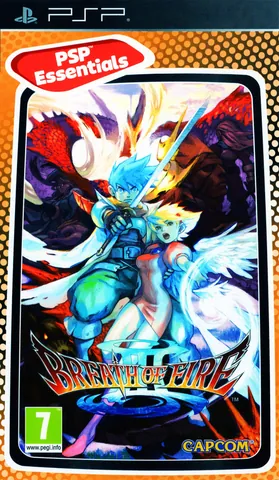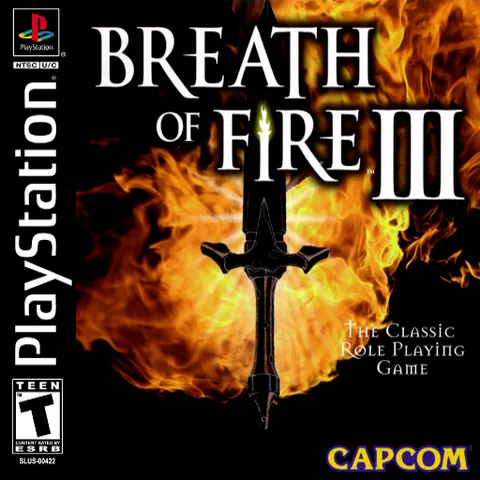
Breath of Fire III
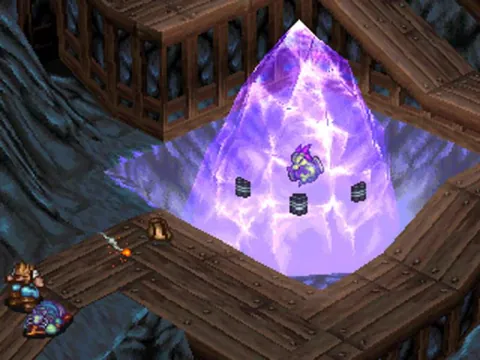
Breath of Fire III moved Capcom's series from the 16-bit era into the 3D generation, and did so with great visual ambition – it combined richly painted backgrounds with 2D character sprites and sensitively animated battles. The story follows a dragon named Ryu, who awakens from a long sleep without memories and gradually discovers his origins and the fate of his people, with the game accompanying him from childhood to adulthood, its narrative style changing along with him. The game entices with a dense web of side activities, including a minigame for breeding and improving fauna on a farm, fishing, or a system for learning skills from defeated enemies, which gave battles extra motivation beyond simply advancing the story. The game world also contains numerous hidden locations and optional dungeons that reward thorough players with rare equipment and additional pieces of story.
The combat system remains true to the series' turn-based tradition but enriches it with character formations that affect attack effectiveness and with the gradual unlocking of dragon transformations, which give Ryu a decisive combat advantage at the right moment. Yasuaki Iwata's music underscored the game's melancholic and adventurous passages, and together with the carefully crafted world, it contributed to a sense of a truly lived-in fantasy universe full of distinct cultures and settings. Technically, the game made full use of the PlayStation's capabilities, including smooth transitions between exploration and combat and finely detailed cities whose architecture varied significantly across different parts of the world.
Breath of Fire III was praised at release as one of the most sophisticated JRPGs of its generation, though its difficulty and branching side systems might not have suited every player accustomed to more straightforward titles. It is still sought out today by fans of classic Capcom RPGs for its atmosphere and for how effortlessly it combines a serious story about identity and loss with lighter gameplay elements and exploration, and it is often cited as one of the peaks of the series overall.
Why play: For the atmosphere and the effortless blend of a serious story about identity with lighter gameplay elements, even though the difficulty and branching systems may not suit everyone.
Game 106 of 215 for Sony PlayStation