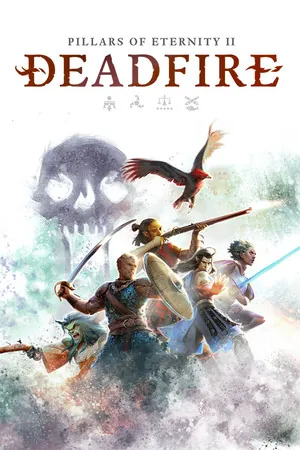
Pillars of Eternity II: Deadfire
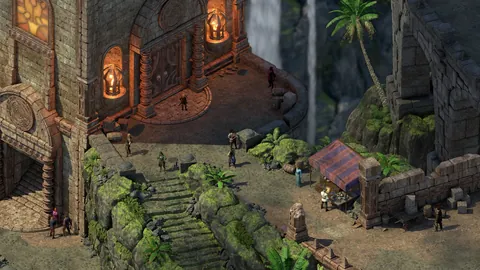
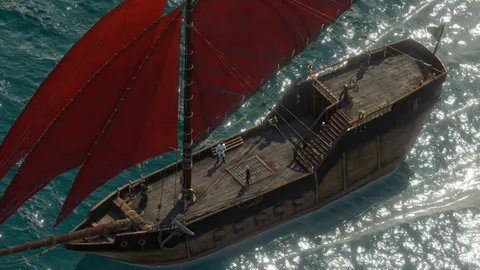
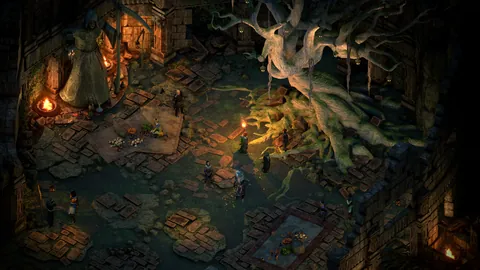
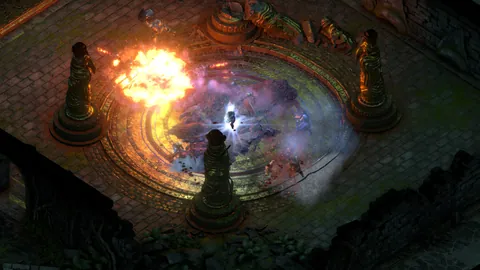
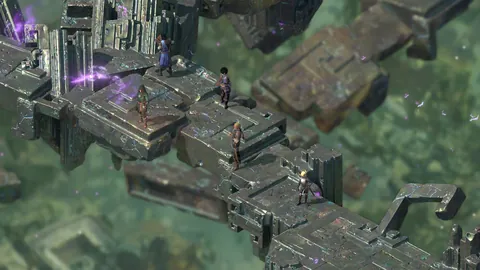
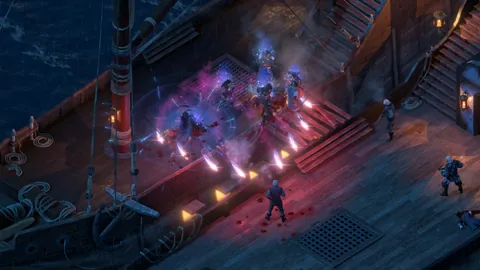
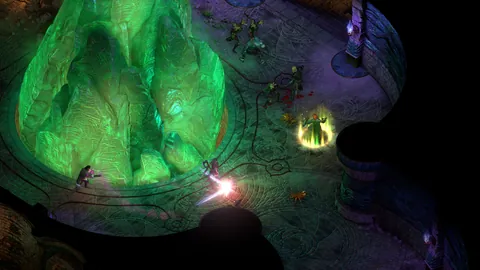
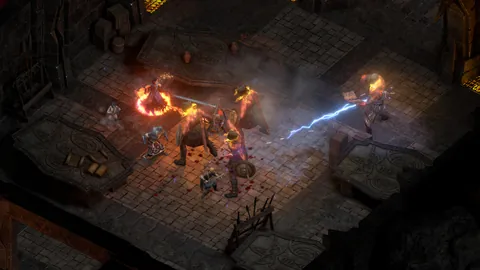
Pillars of Eternity II: Deadfire continues the story of the Watcher from the first game, who, after the awakening of the ancient god Eothas, sets sail across the Deadfire archipelago to prevent the threat this god poses to the entire world. The game from Obsidian Entertainment retains the systemically deep approach of classic isometric RPGs like Baldur's Gate, but this time sets the story in a more open space that the player explores aboard their own ship among islands, factions, and pirates. The game was preceded by a successful crowdfunding campaign, much like the first entry, and a number of companions from the previous game, such as Eder and Aloth, return in Deadfire with their own continuing personal stories.
The combat system offers a choice between turn-based and fluid real-time-with-pause modes, allowing players to adjust the game's pace to their own preferences, while character and party creation offers a wide range of classes, races, and subclasses with many possible combinations. The world of Deadfire is politically divided among several factions vying for control of trade and power in the archipelago, and the player's decisions about alliances impact how the story and the game's ending unfold. Visually, the game builds on the hand-painted environments of its predecessor, complemented by naval combat between ships.
Deadfire was received very positively by critics for the depth of its systems, its writing, and the freedom it gives players in resolving conflicts, even though it did not sell as strongly as the studio had hoped. For fans of classic, dialogue-rich RPGs, it remains one of the most complex representatives of the genre on PC today and a demonstration of how a traditional isometric RPG can be expanded toward a more open world. The turn-based combat mode, originally added as an optional update only after release, became the preferred way to enjoy the game for many players.
Why play it: For fans of dialogue-rich isometric RPGs, Deadfire remains one of the most complex representatives of the genre on PC, especially with the later turn-based combat mode.
Game 149 of 583 for PC / moderní (64bit a GPU)