Papers, Please
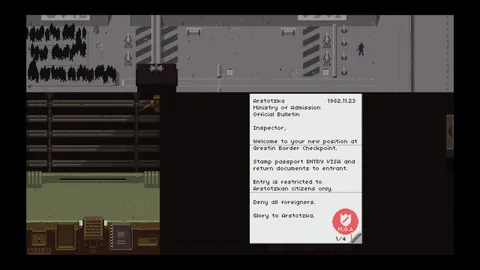
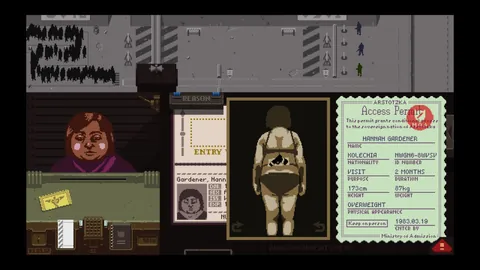
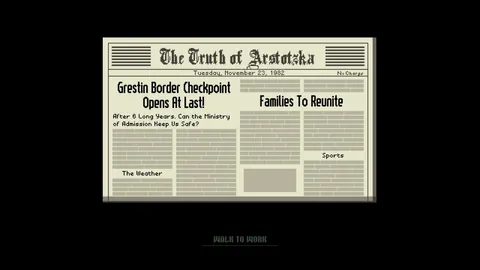
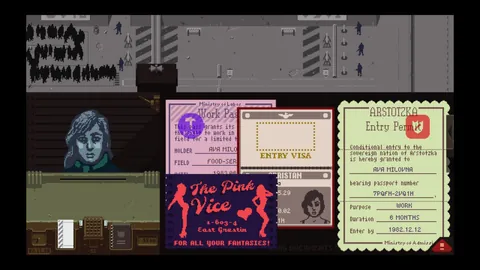
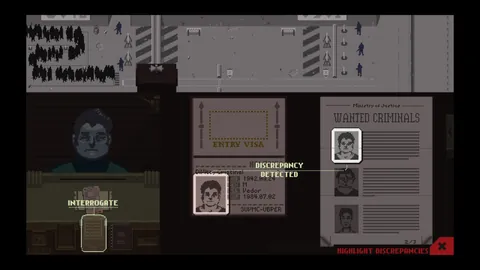
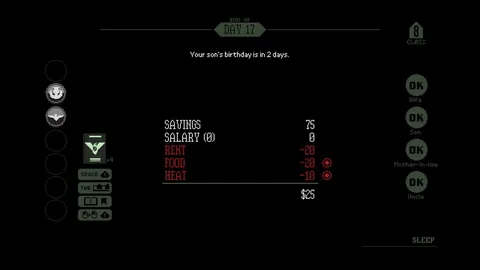
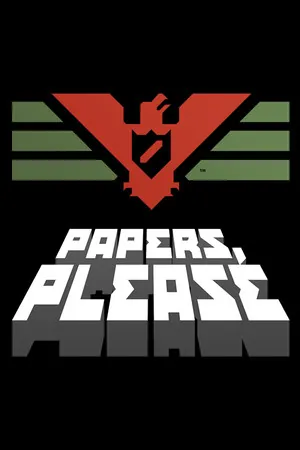
Papers, Please puts the player behind the border-control window of the fictional totalitarian republic of Arstotzka, and turns bureaucratic routine into a surprisingly tense and morally charged game. The task is to check the passports, visas, and other documents of arriving travelers, detect forgeries and discrepancies, and decide who to let through and who to detain. Every decision has a cost — literally, since the salary depends on the number of people processed per day, and it's from that salary that rent, food, and medicine for the family that depends on the player are paid.
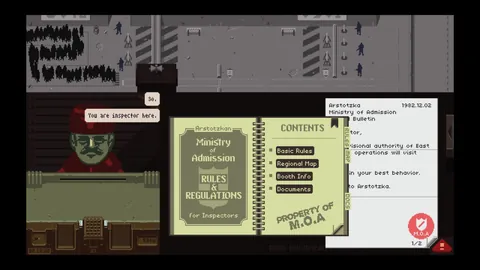
The gameplay rests on gradually increasing rule complexity: at first it's enough to verify a name and photograph, later fingerprints, metal detectors, changing lists of banned countries, and ever more elaborate forgeries are added. The game skillfully combines mechanical precision with moral dilemmas — refugees with invalid papers, smugglers offering bribes, secret-service agents demanding exceptions. Visually the game relies on a stark pixel-art aesthetic and a gloomy color palette that perfectly matches the atmosphere of Cold-War-era bureaucracy and omnipresent surveillance.
The game also includes a hidden plotline involving an underground organization called EZIC, which gradually contacts the player through messages smuggled between the documents and offers them the chance to actively rise up against the ruling regime — one of a total of twenty different endings the game offers. Government propaganda on posters in the background, gloomy music, and the cramped composition of the window only reinforce the feeling that the player is merely a cog in an enormous state machine.
After its release the game received an exceptionally positive response for the originality of its concept and for how it manages to extract genuine tension and ethical questions from what at first glance looks like dull administrative work. It became one of the most frequently cited examples proving that video games can tell powerful stories through purely systemic gameplay without a single cutscene. Even years after release, it is still referenced as a pioneering work of the "bureaucratic simulator" genre and has inspired numerous successors. Even after all this time, it still functions as a chilling reminder of how easily an ordinary person can become a tool of a repressive system.
Why play it: For players open to unconventional storytelling, it's a chilling reminder of how easily an ordinary person can become a tool of a repressive system, built entirely on administrative gameplay.
Game 244 of 583 for PC / moderní (64bit a GPU)