Panzer General

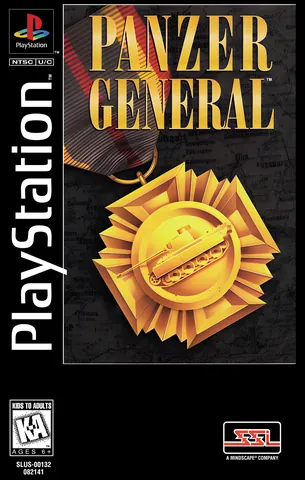
Panzer General achieved what hex-based wargames had been attempting for years: turning slow, complicated World War II simulations into fun you can grasp during the first mission and won't stop playing until sometime after midnight. The player commands German forces across a war campaign that starts in Poland and, depending on individual battle outcomes, branches into different scenarios. Every map has an objective, a time limit, and a number of turns within which key cities or mountain passes must be captured, otherwise the advance stalls and the campaign veers elsewhere.
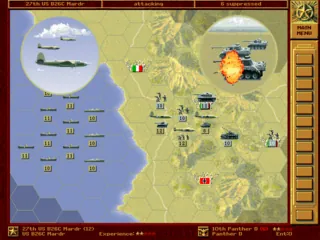
The core of the game is the system of so-called core units. Divisions the player buys with prestige points accompany him through the entire campaign, gain experience, become more accurate and resilient, and can be re-equipped with more modern technology as research progresses. Losing a battle-hardened tank battalion therefore hurts far more than losing freshly conscripted infantry. Combat takes place on a hex map, where terrain, weather, supply, and above all weapon combination all matter, since tanks without infantry and artillery support bleed out in cities, and without fighter cover the advance is slow. Prestige is also spent on repairs and replenishing losses, so every turn is simultaneously a budgeting decision.
Technically, it was a very pleasant DOS game, controlled entirely with the mouse, with a clean VGA map, easy-to-read unit icons, and period photographs and film clips between missions that give the campaign momentum. The music is spare and march-like; the atmosphere is carried more by combat sounds and battle-result reports. Panzer General became the most successful title in its line, launched an entire series of "General" games in other eras and settings, and its veteran-unit system was adopted by many later turn-based games. Today it's the easiest entry point into the world of wargames — the rules fit into a few paragraphs, yet it still offers plenty of room for tactics.
Game 64 of 204 for PC / DOS (XT až 486)