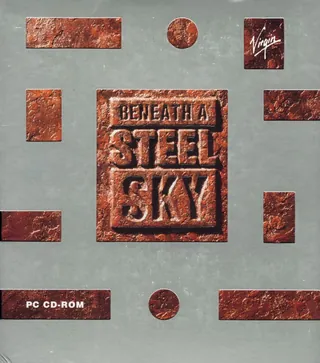
Beneath a Steel Sky
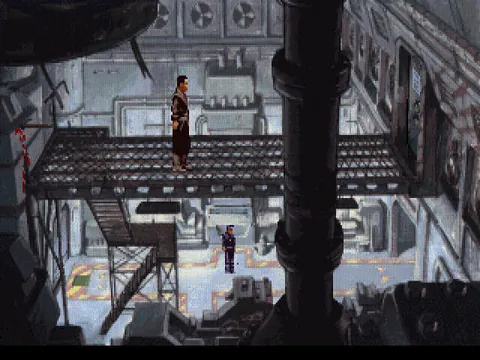
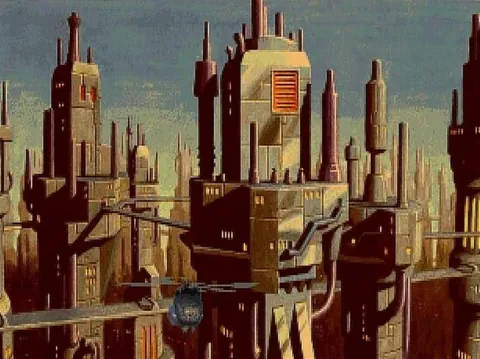
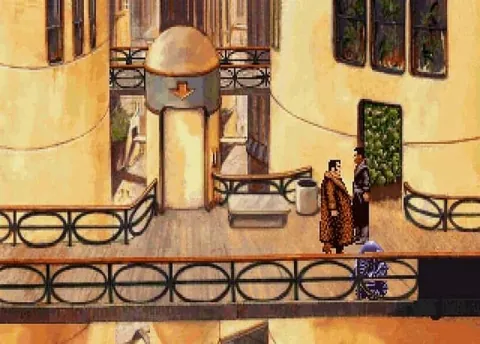
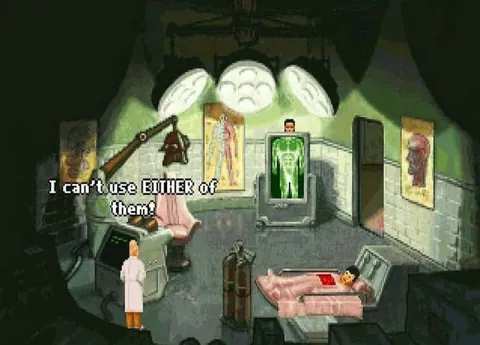
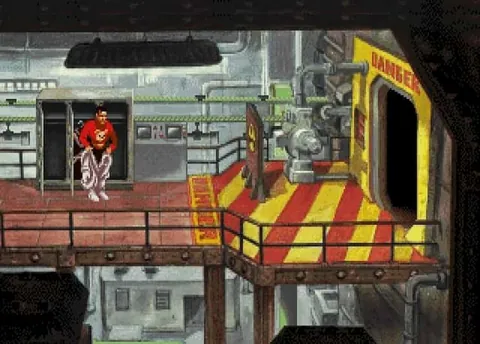
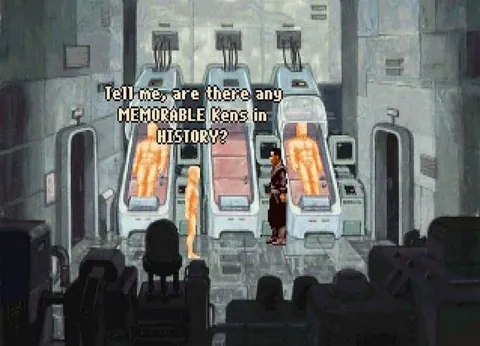
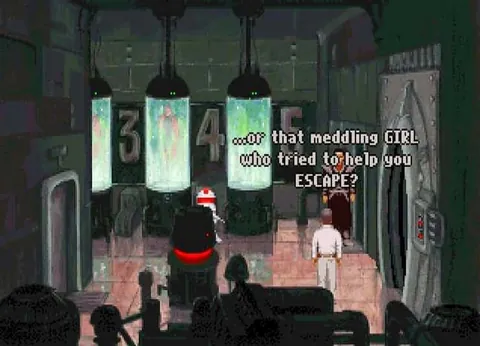
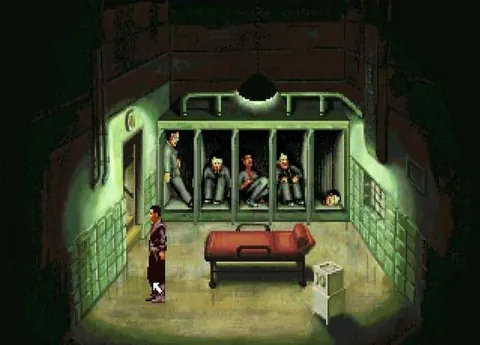
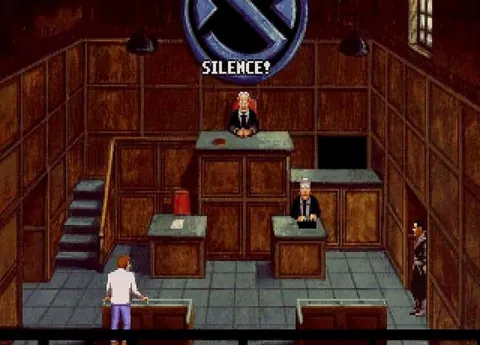
Beneath a Steel Sky is a cyberpunk adventure game that made Revolution Software Europe's leading name in the genre. Robert Foster grew up in the Australian wasteland known as the Gap after surviving a helicopter crash as a child; one day armed men come for him and take him to Union City, a giant vertical metropolis divided into levels by social standing. Foster escapes, and together with his robotic partner Joey, whose circuit board he carries around and swaps into different bodies, sets out to find out why he was being hunted in the first place.
The game is controlled with a cursor and a context menu, the puzzles rest on combining items and above all on Joey: depending on which chassis the robot is plugged into at the time, he can do something different — from welding to cleaning — and many situations are solved precisely by choosing the right body. The world is unusually detailed, full of terminals, elevators, and security systems, and the story of corporate control and artificial intelligence still feels uncomfortably relevant today.
The visuals were created in collaboration with comic-book artist Dave Gibbons, who designed the characters and the opening comic included with the game, and it shows in the result: clean lines, strong silhouettes, and a grim industrial palette in 256 colors. The sound leans on the noise of the big city, the music is used rather sparingly, and it works all the better for it. At the time the game was considered one of the high points of European DOS adventures and was praised for its atmosphere, length, and witty dialogue. Today Beneath a Steel Sky is easy to get hold of and plays wonderfully — it's funny where it wants to be, dark where it needs to be, and its picture of a stratified society has aged remarkably well. A significant part of its charm rests on Joey, whose sarcastic remarks turn an otherwise grim world into a place where you can also laugh. The length is decent for an adventure game of its time, and it never forces the player to repeat sections already completed; getting stuck irreversibly is possible only in rare cases, and the game usually warns of the risk beforehand. As a result it's a title that stands out well above the rest of European production of the nineties.
Game 45 of 204 for PC / DOS (XT až 486)
The same title elsewhere (3)
The key difference between the two versions is sound, specifically the spoken word. The original floppy-disk version for Commodore Amiga had text-only dialogue, since floppy disks simply didn't offer enough space for recorded voices. The Amiga CD32 release exploited the CD medium's capacity to bring fully voiced characters, making the game feel more cinematic and letting the dark cyberpunk city's atmosphere come through far more strongly. The puzzle difficulty, graphics and story stay the same; only the way dialogue reaches you changes. Anyone who prefers the authentic floppy-disk experience with text should pick the Amiga; anyone wanting a fully voiced story should choose the CD32.