Alone in the Dark
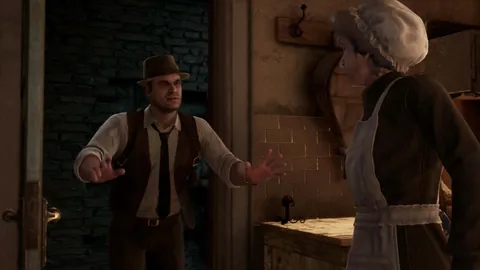
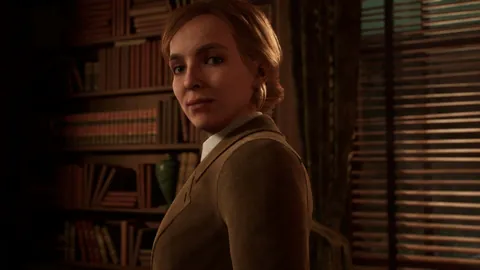
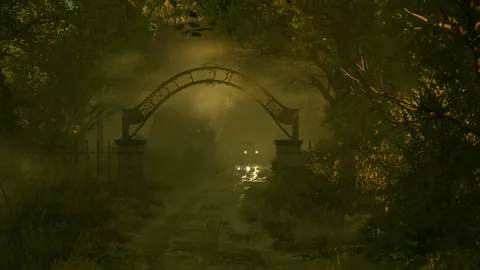
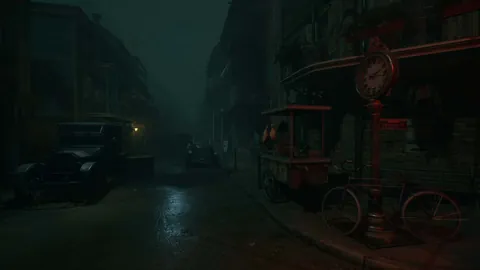
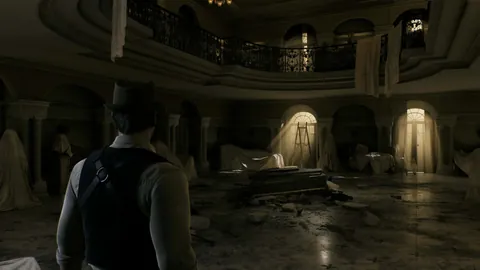
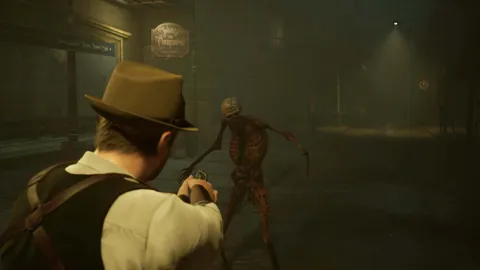
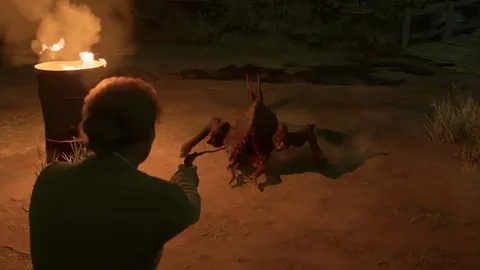
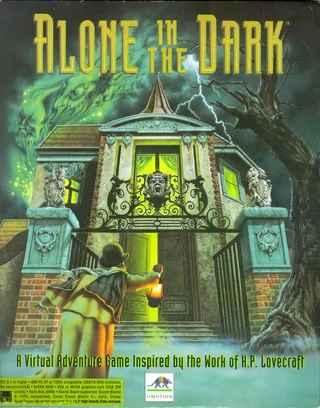
Alone in the Dark from 1992 is usually cited as the first true survival horror and as one of the earliest titles to combine polygonal characters with hand-drawn backgrounds. The player chooses between a private detective and the niece of the deceased owner, entering the Louisiana mansion of Derceto to investigate the circumstances of a strange death. Within minutes it becomes clear that the house is steeped in something that has nothing to do with a rational explanation, and the game turns into a careful crawl through hallways, the attic, the cellar, and a library full of danger.
The gameplay rests on a combination of exploration, puzzles, and very sparing combat. The player searches furniture, reads diaries and books whose contents provide clues on how to defeat individual threats, moves wardrobes in front of doors to keep monsters out, and conserves ammunition, since it's desperately scarce and direct confrontation often means death. The camera sits fixed in the corners of rooms and switches on transitions, letting the developers deliberately play with what the player can't see. The low polygon count looks blocky today, but the rough shapes and dark backgrounds paradoxically strengthen the sense of something unnamable. The sound is sparse, which makes a creak or a sudden musical stinger all the more jarring.
At the time it was a sensation, praised by critics for both its technology and its courage in building a game around fear rather than action. Its influence on the genre is major: the scheme of fixed cameras, limited ammunition, and the house itself as a central character was adopted by the most famous horror series of the following generation. Today, the main obstacles are the controls, with the character turning on the spot and moving stiffly, plus merciless deaths. Anyone who can stomach these hurdles gets a short, dense, and still unpleasantly oppressive Lovecraftian night. Restraint is the game's greatest strength: there are few monsters, even less action, and the tension is sustained more by silence and anticipation. If you set your patience accordingly and accept the rules the house operates by, you get one of the best-aged horror experiences of its time.
Game 28 of 204 for PC / DOS (XT až 486)
The same title elsewhere (1)
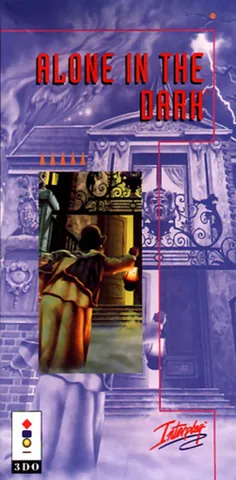
The 1992 PC original ran on computers ranging from XT to 486 and was the first to combine polygonal characters with hand-drawn backgrounds, controlled via keyboard, with graphics limited to the resolution and colour depth the graphics cards of the day allowed. The 1994 3DO version carried the same visual style onto a console with its own CD drive, which allowed for richer audio, but controls had to be adapted from keyboard to gamepad, and the console's weaker processing power compared with contemporary PCs occasionally showed in the smoothness of play. Anyone wanting to experience the historically first version should go for the PC original.