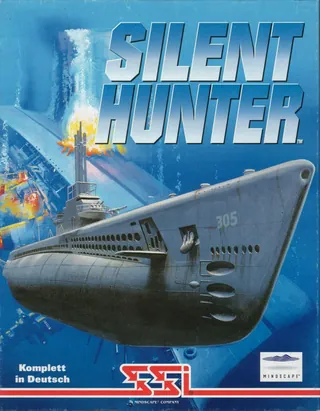
Silent Hunter
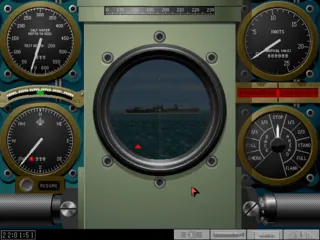
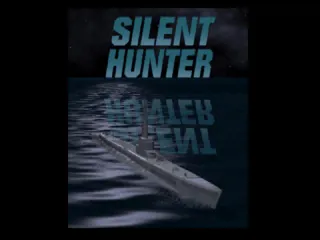
Silent Hunter put players in the chair of the commander of a US submarine fighting in the Pacific during World War II, offering a career spread across the entire years of the conflict, from early patrols with imperfect torpedoes to later phases of the war, when Japanese convoys defended themselves with ever stronger escorts. On the strategic map, players chose an area of operations and plotted a course to likely targets, while the actual engagement with a convoy played out in a detailed simulation mode, where it was necessary to estimate the target's speed and heading, set torpedo angle and depth, and decide whether to attack on the surface at night or instead from underwater cover.
The game placed great emphasis on the tension of waiting and observation - the hydrophone and periscope were the main tools for spotting the enemy before being spotted, and a botched maneuver could end with depth charges from escort vessels. The sound design, with the sparse crackle of sonar, the drone of engines overhead, and the silence between individual explosions, underscored the claustrophobic atmosphere of submarine warfare well, while the music stayed in the background and let these sound effects stand out. The graphical rendering of the seas, horizon, and ship models was quite good for its time and gave surface patrols visual credibility.
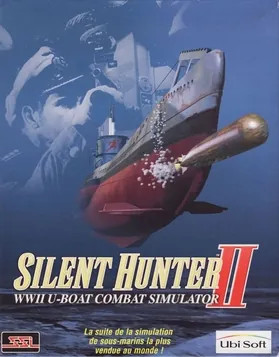
Silent Hunter became one of the titles that significantly popularized the submarine simulator genre on personal computers in the second half of the nineties, directly foreshadowing the later, Europe-focused Silent Hunter II and the entire subsequent series, which has remained faithful to the genre to this day. Even after all these years, the game will be appreciated by players who enjoy a slower, contemplative pace based on patience and tactical decision-making, though the simpler damage model and enemy AI feel archaic today compared to later entries in the series.
Why play: For players who enjoy a slower, contemplative pace based on patience and tactical decision-making, the game is still worth it today, even though its simpler damage model and enemy AI already feel archaic compared to later entries in the series.
Game 139 of 229 for PC / Pentium a Windows 9x