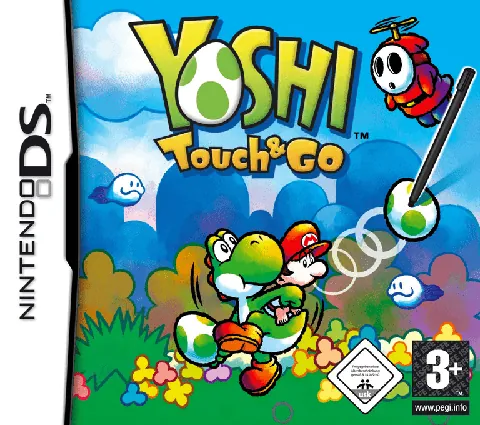
Yoshi Touch & Go

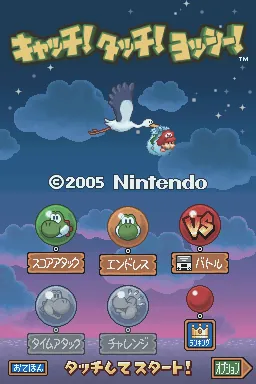
Yoshi Touch & Go was among the launch titles for the Nintendo DS and from the start demonstrated how the touch stylus could be used as the primary control method instead of classic buttons. The player draws clouds and lines across the screen to protect the falling Baby Mario and accompanying Yoshi from enemies and pits, collects coins, and tries to get as far or as fast as possible - the game functions as an endless-runner format emphasizing score rather than classic linear level progression, which sets it apart from most other entries in the series. The second part of the game then shifts into a simpler racing format, where the player races on an egg against opponents, which enriches the game loop and offers a more competitive dimension.
The graphic style is simple, colorful, and clean, which matched the demand for smooth performance right from the console's first days, when developers were still figuring out the possibilities of the new hardware. The music is light and pleasant, complementing the unhurried yet tense pace of play, where precision of stylus strokes matters most. The entire control scheme is purely touch-based - buttons are practically unused, which made the title a showcase example of the new hardware's possibilities for the audience of the time, who were only just getting used to this way of playing.
Contemporary reviews rated the game as pleasant but rather light fare, intended mainly to demonstrate the controls rather than as a full-fledged adventure with deeper content. Today it's seen as a historically interesting launch title that shows Nintendo's early thinking about how the touchscreen would transform the way of playing, even though as a standalone game it remains rather modest entertainment, better suited to shorter sessions than long play in one sitting, and its main contribution is more historical than in terms of gameplay - yet it remains a pleasant demonstration of how a simple idea managed to captivate a broad audience at the dawn of the touchscreen console era.
Game 58 of 150 for Nintendo DS