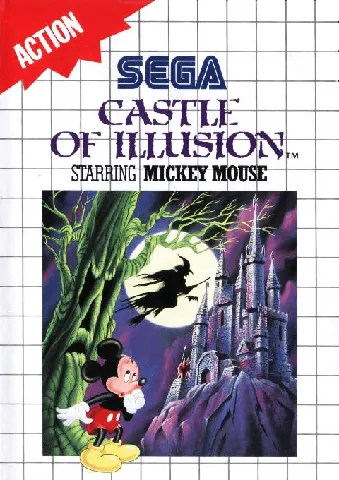
Castle of Illusion
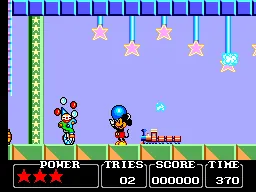
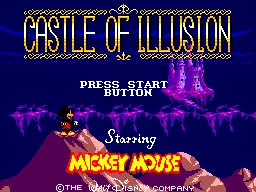
Disney and Sega made a remarkably well-matched pair at the turn of the eighties and nineties, and Castle of Illusion starring Mickey Mouse is a delightful proof of that. What matters — the 8-bit version for the Master System isn't just a trimmed-down port of the famous Mega Drive game, but a standalone game with its own levels and a design built to fit the console's smaller power.
Mechanically it's a classic, clean platformer: Mickey jumps on enemies' heads, collects items and chews his way through varied fairy-tale worlds to rescue the kidnapped Minnie. The controls are welcoming, the pace pleasant and the difficulty tuned so that even younger players can handle the game — while never starting to bore. It's a platformer that above all wants to entertain and enchant, not torment you.
On 8-bit hardware Castle of Illusion looks downright gorgeous. Colorful, imaginatively rendered levels, cute animation of the hero and overall attention to detail were among the finest things the Master System could show off. Disney charm seeps through every screen and makes playing a pleasantly laid-back affair.
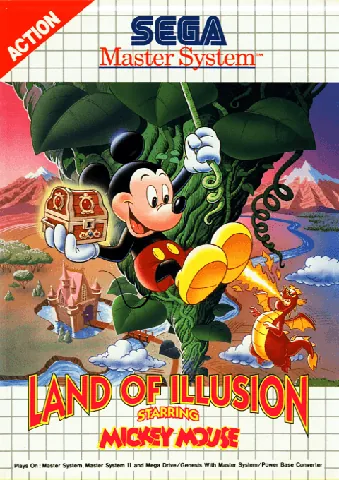
An accessible, pretty and lovely adventure — exactly the kind of title worth showing to someone who is only just discovering retro platformers. Together with the later, larger Land of Illusion it forms a duo that still stands as a model of how a licensed game made with love, and not just for a quick profit from a popular brand, should look.
Why play: A laid-back, charming Disney platformer that looks unexpectedly gorgeous on 8-bit — an ideal ticket into retro for players of every age.
Game 8 of 67 for SEGA Master System
The same title elsewhere (2)
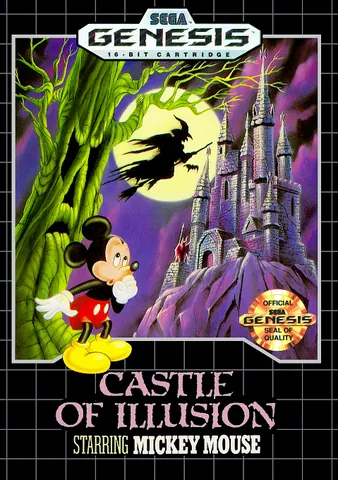
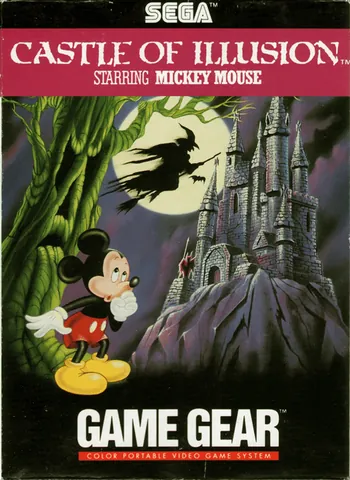
The Mega Drive version is the original and remains the best-known, most visually lavish take on the game, with fluid animation and a memorable score. The 8-bit Master System version, though, is not merely a trimmed-down port — it is a separately designed game with its own level layouts, tailored to the weaker hardware: fewer colours, simpler backgrounds and a thinner soundtrack, yet it still ranks among the finest platformers on that console. The handheld Game Gear edition sits closest to the Master System version, sharing its related Z80 chip and much of its level design, but with a smaller screen resolution and an even narrower colour palette, most noticeable in the background detail.