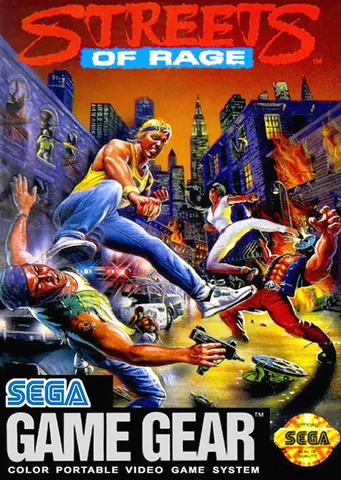
Streets of Rage (GG)
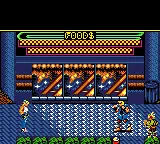
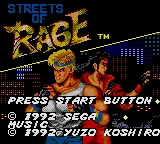
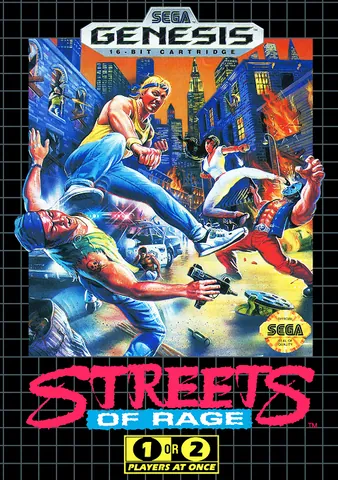
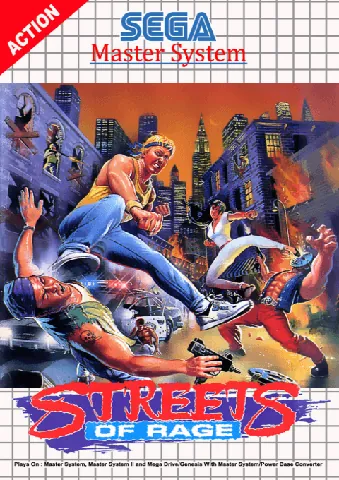
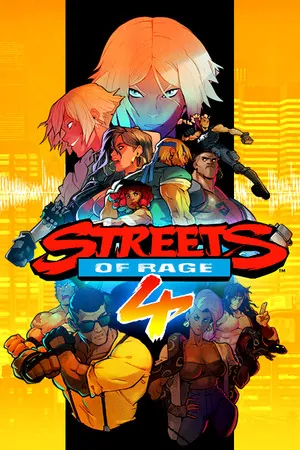
The streets are burning, a gang has seized the city and the only solution is your fists — Streets of Rage is a legend of the beat 'em up genre, and its pocket version brought that rage to the palm of your hand on the Game Gear. The series ranks among the best Sega created in the beat 'em up era, and the name itself still conjures memories of countless hours clearing the streets of thugs.
The principle is clear and satisfying: you move across the screen as waves of enemies come rolling at you, and you dispatch them with combinations of punches, kicks, throws and special attacks. Pipes, knives and bottles lie strewn across the ground for you to pick up and use, and progress ends with a boss fight. It's pure catharsis — a simple concept perfected through responsive controls and the satisfying feedback of every hit.
On the Game Gear, the beat 'em up genre was tough to translate due to the handheld's limitations, but the color display and Sega's craft kept the action legible and playable on the go. The pocket version is necessarily more intimate than the big console originals, yet it preserves the spirit of the series — the adrenaline, the rhythm and the urge to push a level all the way to the boss.
Streets of Rage earned its reputation mainly through the atmosphere of the urban night and an unforgettable soundtrack that, on the big consoles, raised the bar for game music. Even though the handheld couldn't offer the same richness of sound, the brand itself carries an aura of quality matched by few in the beat 'em up genre.
For beat 'em up fans it's a piece of history for your pocket — a reminder of a time when cooperative couch brawling and solo street cleanup counted among the most fun things consoles had to offer.
Why play: A legendary beat 'em up in a pocket edition — instant action where you relish chewing through waves of enemies and pushing it all the way to the boss.
Game 17 of 39 for SEGA Game Gear
The same title elsewhere (2)
The 1991 SEGA Mega Drive version is built on Yuzo Koshiro's iconic music, fully exploited by the console's FM synthesis, and offers two-player co-op. The portable SEGA Game Gear version, due to its smaller screen and weaker hardware, had to cut down the number of enemies on screen and the quality of the music, and reduced the game to single-player only. The graphics are logically simpler and less colorful, matching what the handheld could manage. The Mega Drive version therefore remains the main, most valued form of the game, while the Game Gear offers more of a lightweight version for the road.