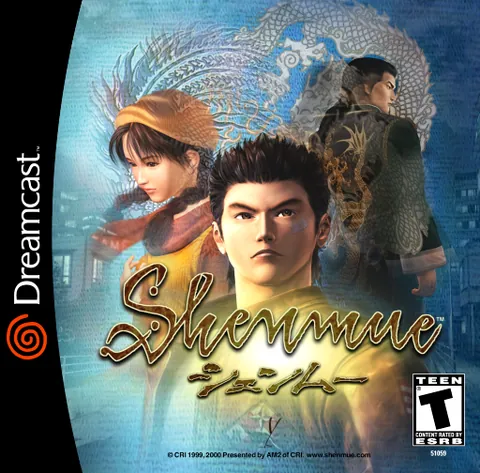
Shenmue
Few games were as ambitious in their day as Shenmue. Sega didn't take the path of fast action with it, but instead tried to create a living, breathing world in which time flows, the weather changes and people live by their own schedules — a vision whose scope outran much of what only arrived years later.
The game combines adventure with action elements and places enormous emphasis on atmosphere and detail. You stroll the streets, talk to the residents, examine objects, follow clues and gradually uncover a story driven by the hero's personal motivation. The pace is deliberately slower, betting on immersion in the environment rather than nonstop action.
It's precisely this striving for a believable world that makes Shenmue a milestone. Characters have their own daily routines; you can drop into an arcade, go shopping or just watch the town's life flow by. Action sequences then spice up the storytelling with combat scenes and hectic moments that break the calmer rhythm of the investigation.
Shenmue became synonymous with ambitious, so-called „immersive" gaming, and its influence on genres focused on open, believable worlds is cited to this day. Many elements we now take for granted — living NPCs, day cycles, small interactive details — were introduced here in a form players of the time had never seen.
Still, it was a title tightly bound to the fate of the Dreamcast, so its vision was fully enjoyed by a devoted minority rather than the masses. That's exactly what turned it into a cult legend, still talked about today as a game ahead of its time.
Why play it: For an uncommon immersion in a living world and ambitions that foreshadowed the future of open-world gaming experiences.
Game 8 of 54 for SEGA Dreamcast