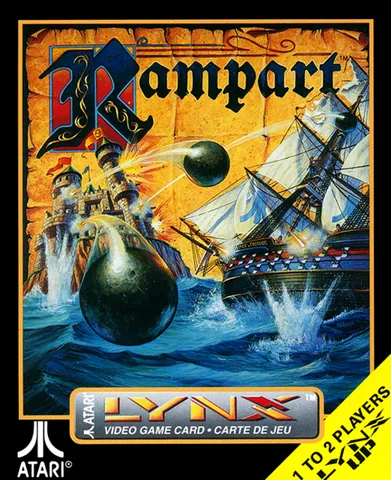
Rampart
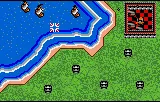
What do you get when you cross Tetris with an artillery duel and a castle siege? You get Rampart, one of the most original gameplay loops of its time, and the Lynx brought its arcade version along for the ride.
The game's charm lies in its rhythm. First comes the building phase: under time pressure you assemble walls around your cannons from falling pieces, exactly as if you were placing Tetris blocks. Once your fortifications are closed off, the game switches into action and you bombard the enemy in real time, whether they're ships or a rival's castle. Then comes another building round in which you have to repair the damage and expand your territory, or it's over.
This loop of building, fighting and repairing is brilliantly simple and at the same time nerve-wracking. It constantly forces you to think ahead about where to place cannons and how to efficiently close off the walls before time runs out. Released by Atari in 1991, Rampart is among those games whose idea survived decades and saw many ports to the most diverse platforms.
On the Lynx the game benefits from the color screen, which helps quickly distinguish what's yours and what's the rival's, crucial in hectic moments. And as the description rightly notes, Rampart is excellent in two-player. Over the ComLynx link a friendly duel becomes a battle of nerves, decided by finger speed as much as tactical thinking.
It is precisely that hybrid nature, half puzzle, half action strategy, that makes Rampart a timeless title. It's not just a quick fix but a game with its own identity, one that still plays superbly today and hasn't aged the way one would expect from a title of the early nineties.
Why play: For an original loop of building walls and bombarding the enemy that brilliantly combines puzzle with action, and above all in two-player it's a small miracle.
Game 23 of 30 for Atari Lynx
The same title elsewhere (2)
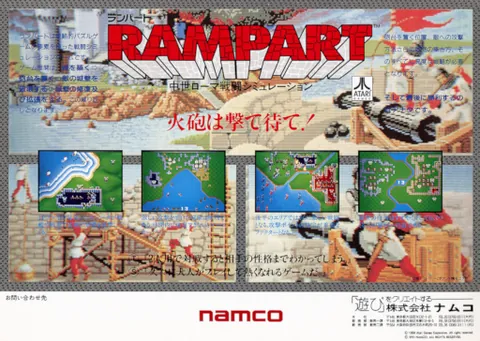
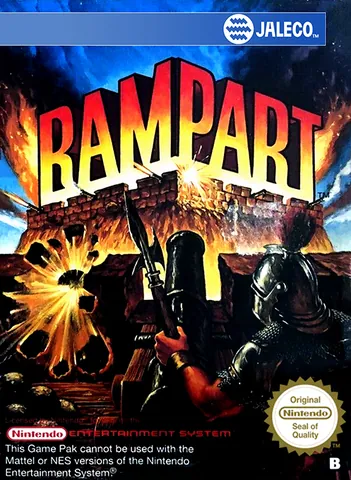
Atari Games' arcade original was controlled with a trackball, letting players aim their cannons smoothly and precisely, and it supported multiple players at a single cabinet. Home ports had to replace the trackball with a directional pad or joystick, making aiming choppier and less precise, though the core loop of building walls, placing cannons and firing remains intact. The portable Atari Lynx version additionally shrank the battlefield to fit the handheld's small screen, which keeps things readable but sacrifices some spectacle. For the most precise way to play Rampart, the arcade original with its trackball is the pick; the Lynx version suits gaming on the go, with compromises in clarity and battlefield size.