Star Trek: Strategic Operations Simulator
You sit down at the console, a starfield flickers on the screen and somewhere beyond the sensor range Klingon ships are creeping up. Star Trek: Strategic Operations Simulator brought to the 8-bit Atari one of those experiences that had people in the eighties getting up early in front of the television: the feeling that you're sitting in the captain's chair of the Enterprise and the fate of the quadrant hangs on your reflexes.
The core is a space battle in first-person view through the main bridge screen. You maneuver the ship, turn it against the enemy, fire phasers and launch torpedoes, all while watching energy, shields and the positions of surrounding threats. Alongside the action shooting there's also a tactical layer - a sector map on which you decide where to fly, where to reinforce and which hotspot to address first. This dual track, sharp reflexes plus cool deliberation, was unusually rich for the space simulator genre of its time.
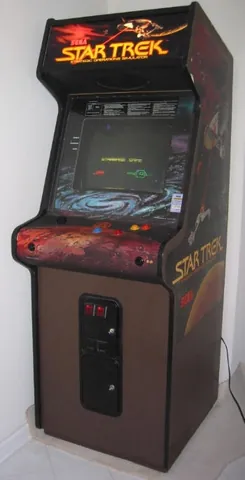
The game comes from an arcade model and brought the atmosphere of the coin-op cabinet into home eight-bit machines. The Atari 800 and its relatives had strong graphics and sound hardware for their time - dedicated chips for graphics and sound gave programmers room that ordinary home computers didn't offer, and cosmic games of this type benefited from it the most. Smooth turning of the view and the handling of the light points of stars were among the things this platform could impress with.
Culturally, Star Trek on Atari fits precisely into the moment when sci-fi licenses were becoming a natural part of the gaming market. Combining a popular brand with arcade action drew in fans of the series as well as players who just wanted a quick, addictive challenge. For many owners of the 8-bit Atari it was one of the first titles where they truly felt they were "piloting a spaceship" rather than just sliding symbols around a grid.
Today the game is interesting mainly as evidence of how the arcade experience was translated into the living room. Don't expect a sprawling campaign or story - it's a focused loop of tension in which the goal is a higher score and longer survival. It's precisely in that directness that a piece of the early gaming era's charm lies.
Why play it: If you want a taste of what the captain's bridge felt like in the eight-bit era, this is a brisk, atmospheric ride, a few minutes to learn and hours to perfect.
Game 42 of 124 for Atari 800 / 8-bit
The same title elsewhere (4)
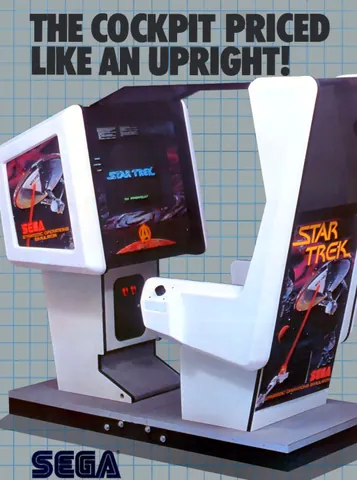
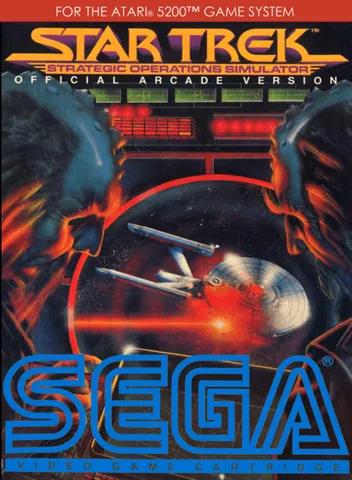
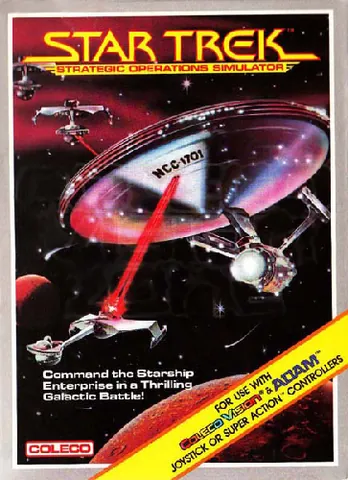
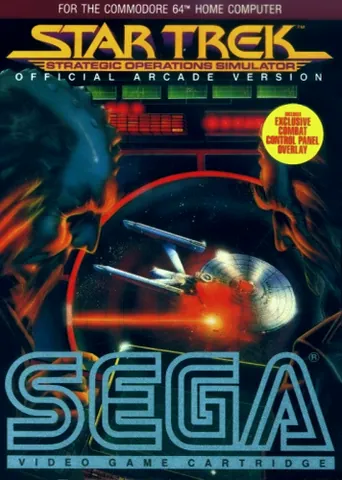
Sega's 1982 arcade original relied on vector graphics with coloured overlay film and a unique cockpit-shaped cabinet with a lever for selecting speed – an experience no home platform could literally reproduce. The conversions for the Atari 8-bit, ColecoVision and Commodore 64 therefore had to replace the vectors with simpler coloured raster shapes, sacrifice some sharpness in the starfield, and settle for an ordinary joystick or keyboard instead of the arcade cabinet's special controls. The differences between the home versions mainly come down to how much detail and smoothness each machine's power allowed – none of them quite matches the performance or atmosphere of the original arcade. Anyone wanting the true shape of the game should reach for an emulation of the arcade cabinet.
From the same series Star Trek →
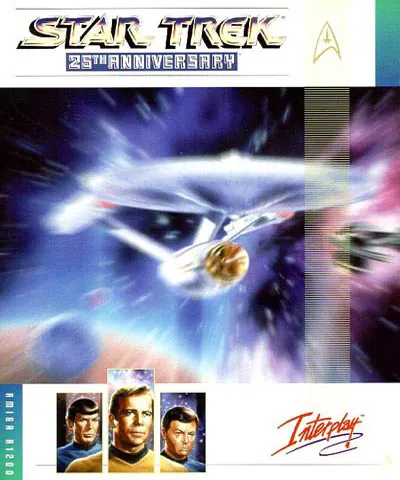 Star Trek: 25th Anniversary Amiga
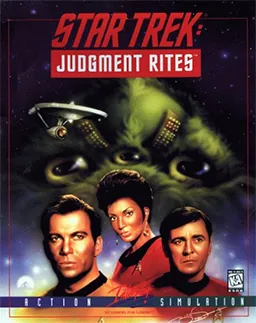 Star Trek: Judgment Rites Amiga
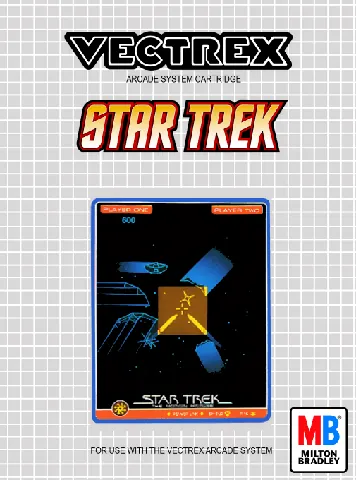 Star Trek: The Motion Picture Vectrex · 1982
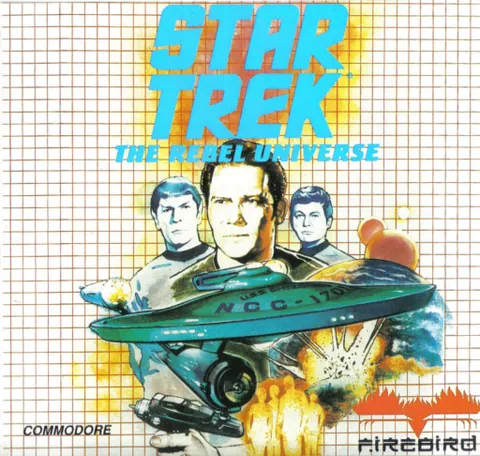 Star Trek: The Rebel Universe C64 · 1987
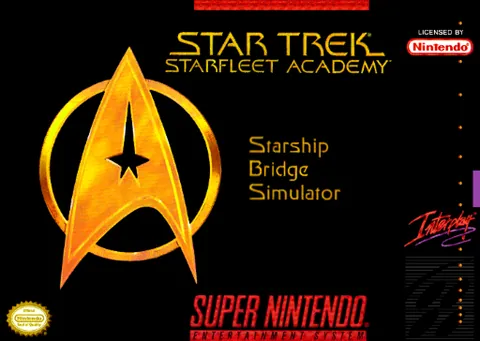 Star Trek: Starfleet Academy – Starship Bridge Simulator SNES · 1994
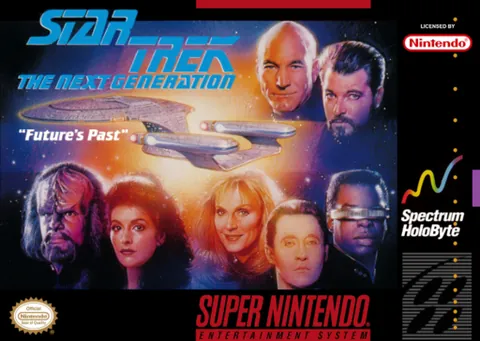 Star Trek: The Next Generation – Future's Past SNES · 1994
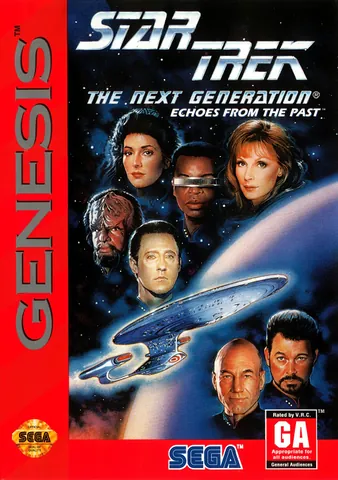 Star Trek: The Next Generation – Echoes from the Past MD · 1994
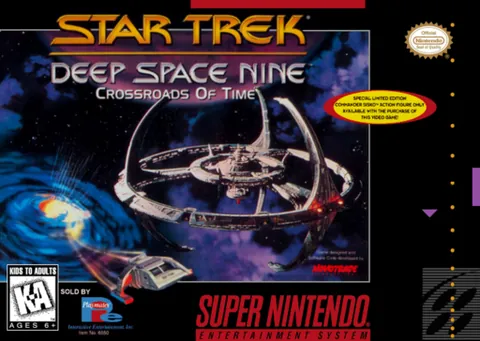 Star Trek: Deep Space Nine – Crossroads of Time SNES · MD · 1995
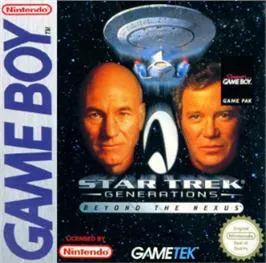 Star Trek: Generations – Beyond the Nexus Saturn · 1997
 Star Trek: Starfleet Academy Win9x · 1997
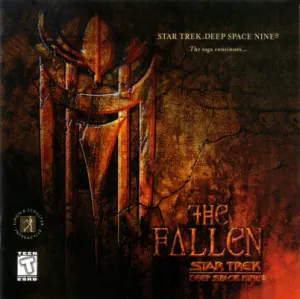 Star Trek: Deep Space Nine – The Fallen PS1 · 1999
 Star Trek: Starfleet Command Win9x · 1999