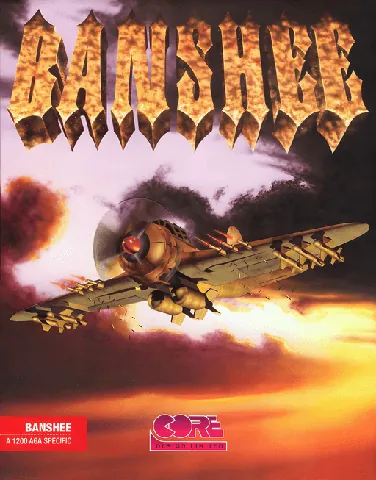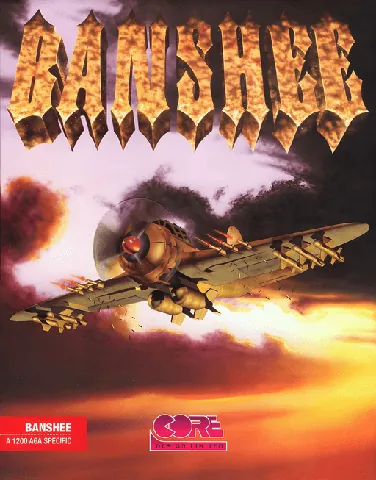
There are precious few genres that embody the dream of flight as faithfully as the vertical scrolling shooter. Banshee, from the Australian studio Core Design, transplants the classic „shmup“ formula into an alternative-reality steampunk Second World War, and from the very first screen makes it clear that it wants to look different from the rival titles of its day.
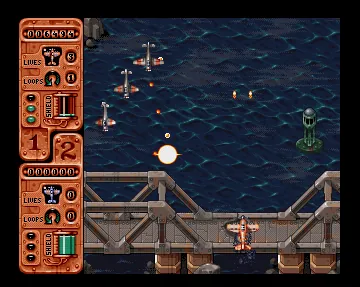
Instead of cold starships, here you pilot a biplane that races over islands, expanses of water and fortified strongholds. The game belongs among the so-called vertical scrolling shooters and bets on a dense palette of enemies, swarms of aircraft and massive bosses that fill the entire screen. An important element is the cooperation of two players simultaneously working side by side on a single screen, which made the game a great choice for two-player couch sessions.
Visually, Banshee benefited from digitised, hand-painted graphics that gave both sky and terrain an unusually organic, picturesque touch. Core Design, a studio known from a range of action and arcade games at the turn of the eighties and nineties, showed a feel for atmosphere and environmental detail here that set it apart from the austere cosmic minimalism of other shooters.
On the Amiga and later on the Amiga CD32 console, a shooter of this kind was a pleasant use of the new medium. As the first 32-bit Amiga-based game console, the CD32 needed titles to show that the platform could do action just as well as the big overseas consoles. Banshee is among those that Amiga fans remember as visually striking pieces of the library.
Today Banshee is a reminder of a time when the European shooter scene competed with the Japanese school of the genre using its own weapons: atmosphere, alternative history and an emphasis on artistic execution. For fans of retro shmups it is an interesting item that shows how varied the genre could be outside the arcades.
Why play it: For brisk vertical action in an unconventional steampunk coat and the chance to have a blast with two players on a single screen.
Game 1 of 10 for Amiga CD32
The same title elsewhere (1)
Both versions were built on the same Amiga foundation, so the graphical difference between them is nothing dramatic, but they differ in how the game is loaded and how it sounds. The original Commodore Amiga version shipped on floppy disks, with music and sound effects handled by a classic tracker module played through the Paula chip. The Amiga CD32 release ran from CD and could afford a higher-quality, longer and more varied soundtrack, since it wasn't bound by floppy disk capacity. Gameplay, pace and difficulty remain practically identical, so choosing between versions is mainly about whether you want the authentic floppy-disk experience or the somewhat richer audio of the CD32.