Game studio
W Industries
W Industries is a British company that, at the turn of the 1980s and 1990s, stood at the birth of one of the first commercially deployed virtual reality systems – the Virtuality arcade platform. While today's players associate virtual reality with modern headsets, W Industries offered a similar experience back in arcades and entertainment centers, in the form of enclosed pods with a helmet and joystick. Inside them, a player found themselves in a simple but fully three-dimensional virtual space where they could look around and move in a way no home console or computer offered at the time. The studio thus ranks among the pioneers who showed that the idea of a fully immersive game is not just a matter of the last decade, but reaches back a generation further, albeit in a much clunkier, more expensive, and technically more limited form than the one we know today.
History
W Industries developed the Virtuality arcade system, which combined a display helmet, a spatial joystick, and, in some versions, even a moving platform on which the player stood. The goal was to transport players into a three-dimensional virtual space in a way that home consoles of the time did not come close to offering. These pods appeared in arcades and entertainment centers mainly in the United Kingdom and the USA, where they attracted attention as an attraction rather than a common gaming product, partly because of the high purchase price of the individual machines.
Among the titles created for this platform was the action shooter Dactyl Nightmare, in which the player faced a prehistoric bird and other opponents in an abstract three-dimensional environment, and which became, in effect, the flagship showcase of Virtuality's capabilities. Thanks to its simple yet inventive presentation, the game became what people most often picture today under the term "the first public virtual reality," and it also appeared in period reports and TV showcases of new technologies. Other games followed, such as Legend Quest, Grid Busters, and Zone Hunter, which expanded the offering across genres from action to racing and combat simulations. Over the years, titles such as VTOL, Boxing, Buggy Ball, and Total Destruction were added, trying to make use of the specific controls and spatial perception the system offered, whether in aerial dogfights, sporting contests, or destruction arenas.
The Virtuality system went through several hardware revisions during the first half of the 1990s, with newer pods offering better image quality and smoother response, which was also reflected in the second generation of titles, such as Dactyl Nightmare 2. The company tried to license its technology beyond classic arcades as well, toward entertainment centers and promotional events, where it served as an attraction demonstrating the possibilities of emerging virtual reality to the wider public.
Despite its technological head start, Virtuality never became a mass phenomenon – the high cost of manufacturing and operating the pods, the limited graphical fidelity of the hardware of the time, and the need to run the system in specialized venues limited its spread. Even so, this platform remains an important chapter in the history of virtual reality, proof that the idea of immersive gaming was being tested in commercial operation long before modern VR headsets became available.
Today
The Virtuality system and W Industries' arcade pods are today historical curiosities remembered mainly by collectors and enthusiasts of video game history rather than casual players. Surviving pods turn up at gaming expos and retro events as a demonstration of how developers imagined the future of gaming even before 3D accelerators became widespread in arcades. The company, in the form in which it operated this arcade network, no longer exists on today's gaming market, but its attempt at commercial virtual reality is still cited as one of the first experiments of its kind in the history of the industry and is often mentioned alongside later attempts at mass adoption of VR technology.
Games by the studio (10)
- VRTY
Dactyl Nightmare · 1991
- VRTY
Grid Busters · 1991
- VRTY
Legend Quest · 1991
- VRTY
-
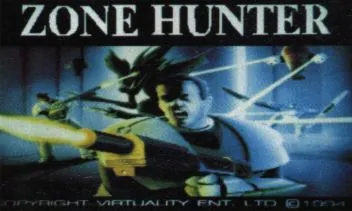
Zone Hunter · 1993
-
- VRTY
Buggy Ball · 1994
- VRTY
Dactyl Nightmare 2 · 1994
- VRTY
Total Destruction · 1994
- VRTY