Franchises
Wild Arms
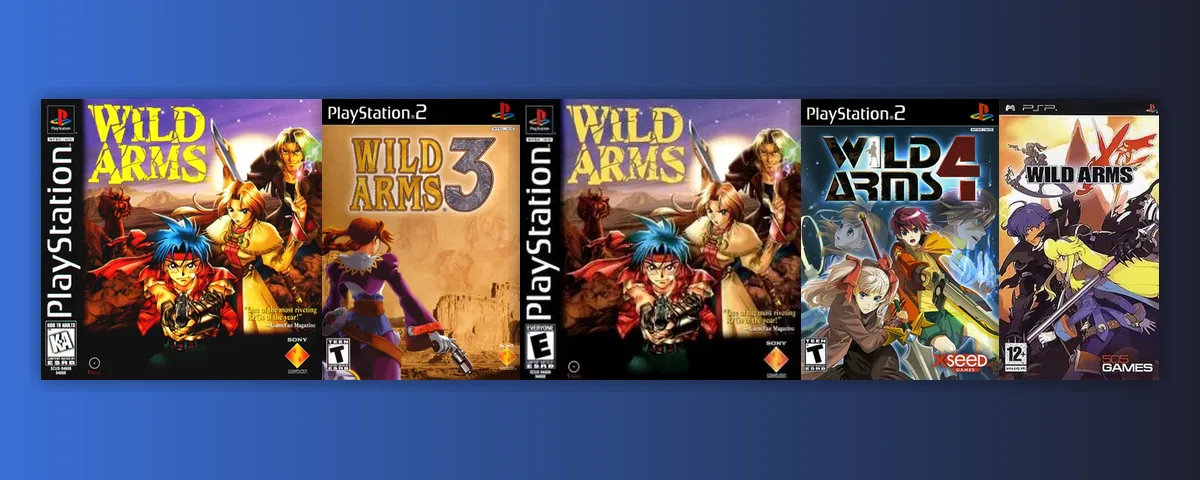
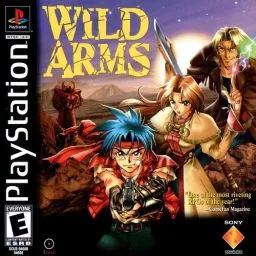
Wild Arms (1997) was among the first JRPGs on PlayStation, and it stood out from the start through its setting: instead of a fantasy or sci-fi world, it offered a western set on the dying planet Filgaia, where magic mixes with the remnants of a vanished civilization's advanced technology. Heroes wielded ARMs, part revolver, part magical weapon, and much of the game revolved around solving field puzzles with special tools, closer to a Zelda-style action-adventure than a typical RPG. Composer Michiko Naruke's music contributed heavily to the atmosphere and stayed with the series throughout its development. That genre blend made Wild Arms a distinctive alternative to the then-dominant Final Fantasy VII.
Wild Arms 2 (1999) pushed the story toward politics and religion, adding more elaborate systems and a darker tone, while Wild Arms 3 (2002) on PlayStation 2 leaned into the western even harder, with a desert atmosphere of wandering through the ruins of civilization, memorable characters like Virginia Maxwell and the robot Jet Enduro, and a reworked battle system built on a hexagonal grid that replaced the classic turn-based layout. Many fans consider this third entry the series' peak for its atmosphere, storytelling and soundtrack.
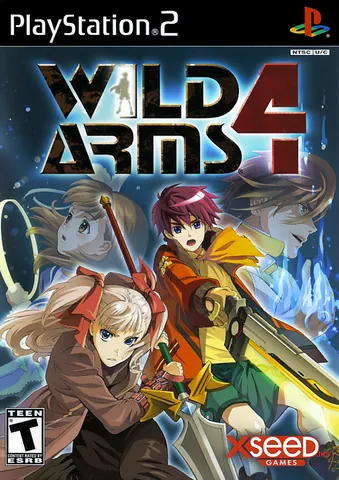
Wild Arms 4 (2005) brought a bigger shift: the hex-grid battle system turned vertical, the traditional overworld map gave way to a more linear path between locations, and the cast skewed younger. That drew mixed reactions from part of the longtime fanbase, even though the game still leaned on the series' western atmosphere. The series continued with further entries beyond this period, but it was this first quartet on PlayStation and PS2 that defined its identity as a puzzle-laced western JRPG.
Entries in the series (7)
-
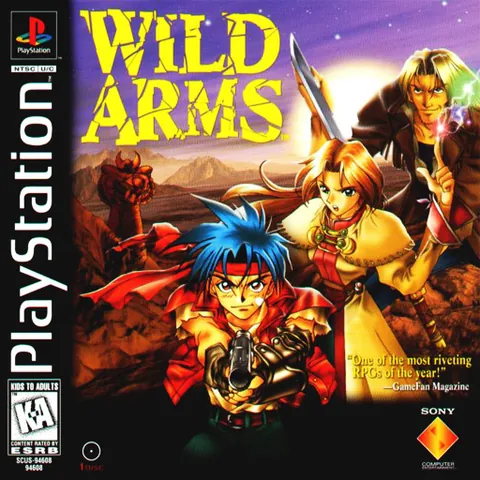
-
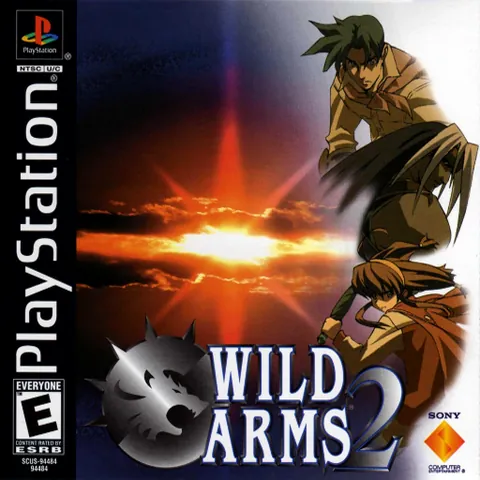
Wild Arms 2 · 1999
-
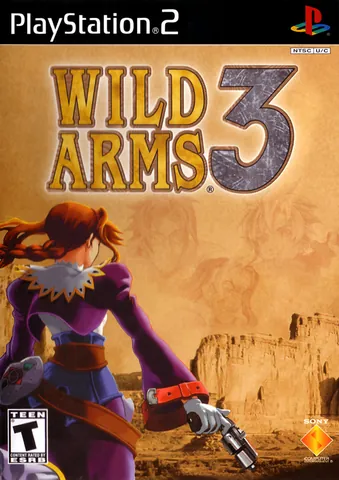
Wild Arms 3 · 2002
-
Wild Arms: Alter Code F · 2003
-
Wild Arms 4 · 2005
-
Wild Arms 5 · 2006
-
Wild Arms XF · 2008