Franchises
Contra
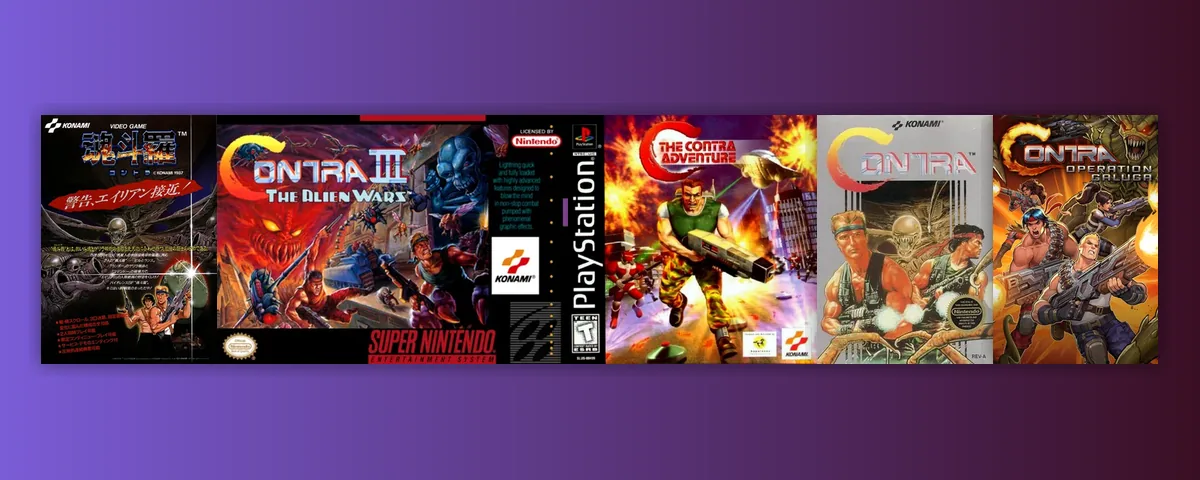
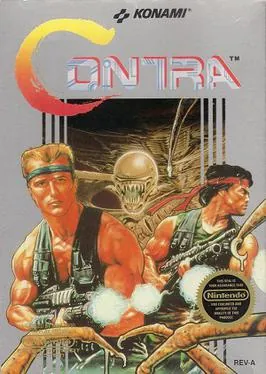
Contra arrived in 1987 as a Konami arcade machine and immediately defined the run-and-gun genre: a pair of soldiers, Bill Rizer and Lance Bean, fight their way through waves of an alien invasion by the organisation Red Falcon across platforming levels packed with enemies, explosions and giant bosses. Central to it all was two-player co-op, a limited number of lives, the iconic Spread Gun that fanned bullets out in a cone, and a punishing difficulty that demanded pixel-perfect jumps and memorising enemy patterns – traits that became synonymous with the whole series. In Europe the arcade and home versions were released under the different title Gryzor, and home-computer ports for machines such as the Amstrad CPC and ZX Spectrum were handled by Ocean Software.
The home port for the NES (1988) made the game even more famous and gave it a cultural footprint far beyond the game itself: the so-called Konami Code (up, up, down, down, left, right, left, right, B, A), which granted the player thirty lives instead of three, became one of the best-known Easter eggs in gaming and still turns up as a reference in other games and outside the medium entirely. The sequel Super Contra / Super C (1990) largely repeated the formula with new weapons and settings rather than trying to reinvent it, and the game also reached the Game Boy as Operation C (1991), which reworked the level order for single-player, on-the-go play.
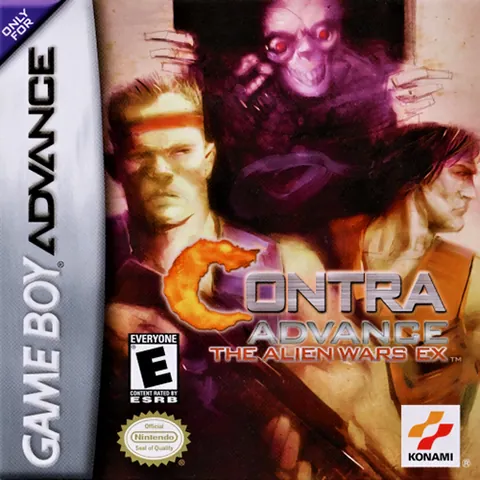
The high point of the series for much of its audience and critics alike is Contra III: The Alien Wars (SNES, 1992), which added Mode 7 top-down sections to the platforming stages, allowed dual-wielding two weapons and wall-climbing, and pushed its boss encounters to even grander scale. In Europe it was released as Super Probotector: Alien Rebels with the soldiers redrawn as robots, since Nintendo of Europe's policy at the time restricted depictions of violence against human characters – earlier entries had received similar treatment. The game is still cited as proof that the run-and-gun genre matured on 16-bit consoles without losing its raw difficulty; a decade later Konami re-released a reworked version for the Game Boy Advance as Contra Advance: The Alien Wars EX.
A more experimental detour followed: Contra: Hard Corps (Mega Drive, 1994), developed by a different in-house Konami team, pushed the tone toward grittier science fiction with several playable characters, a branching storyline and multiple distinct endings depending on choices made mid-game – in many ways the hardest and most experimental entry of the classic era, released only on Sega hardware and never ported to Nintendo consoles of that generation. With the arrival of 3D graphics the series went quiet for a while and searched for a new direction, as the run-and-gun genre as a whole receded in favour of 3D action games.
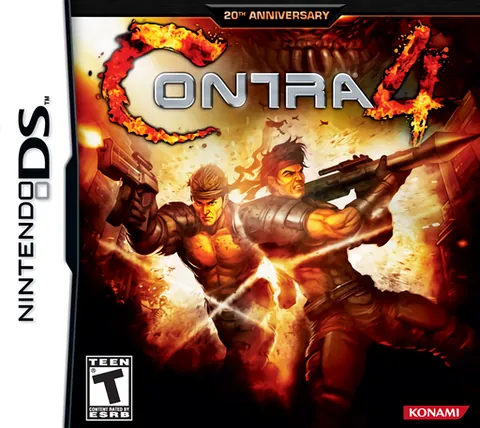
The comeback came with Contra: Shattered Soldier (PlayStation 2, 2002), which rewrote the series' story into a darker, more serious tone with a strict scoring system, and the lighter Neo Contra (2004) with robots, mechs and a breezier feel. To mark the twentieth anniversary, Contra 4 (Nintendo DS, 2007) was developed by WayForward and deliberately returned to purely two-dimensional run-and-gun action in the spirit of the earliest games, with art combining NES- and SNES-era styles across the handheld's two screens. Alongside Metal Slug, Contra helped establish run-and-gun as its own platforming subgenre – the spread gun, endless waves of enemies and unforgiving difficulty became its defining traits, and the Konami Code lives on today as one of the most widely recognised symbols in all of gaming.
Entries in the series (15)
-
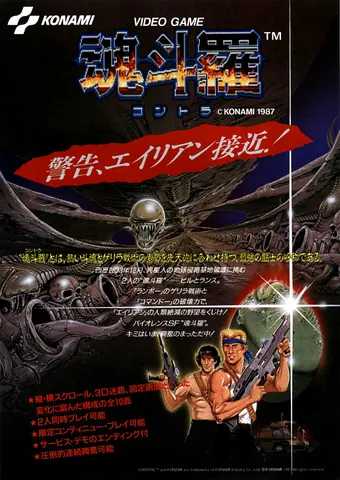
Contra (arcade) · 1987
-
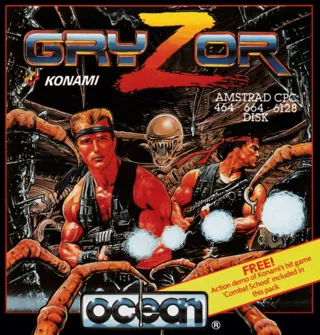
Gryzor (Contra) · 1987
-
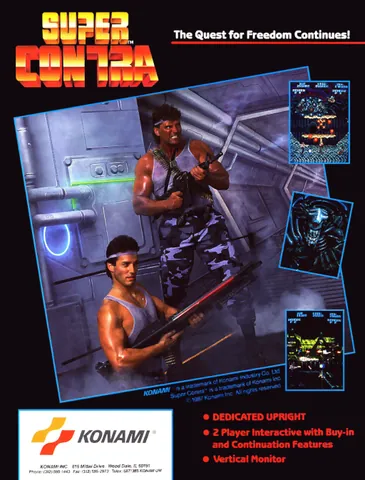
Super Contra · 1988
-
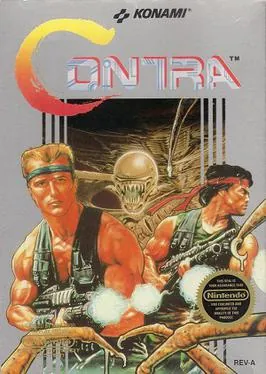
Contra Force · 1992
-
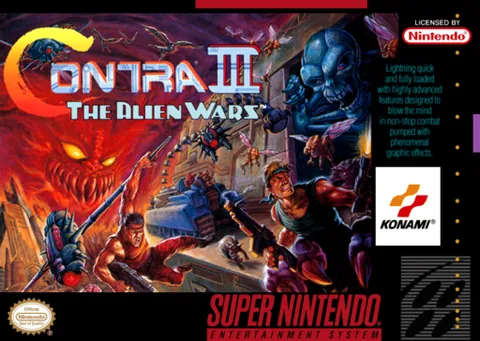
Contra III: The Alien Wars · 1992
-
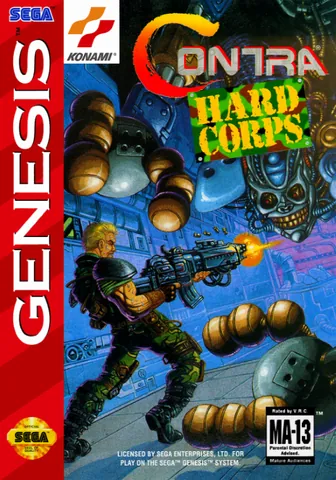
Contra: Hard Corps · 1994
-
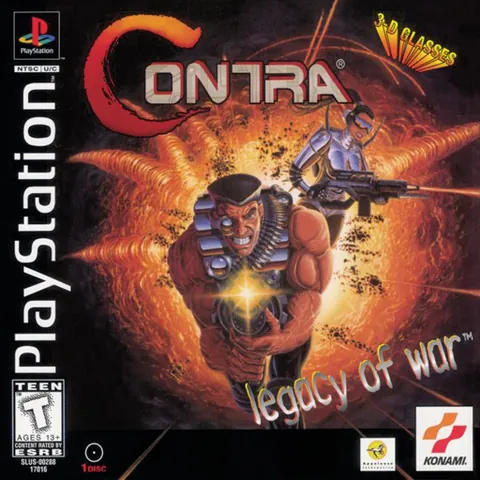
Contra: Legacy of War · 1996
-
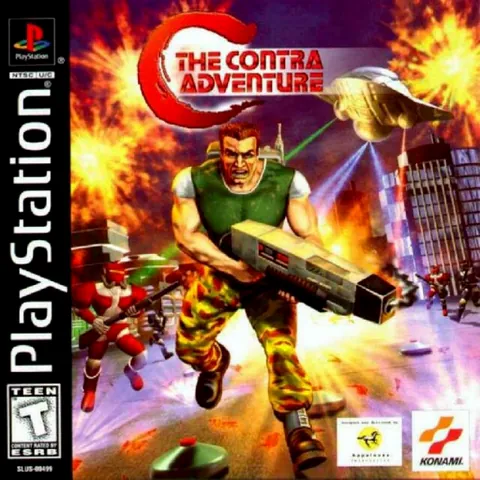
C: The Contra Adventure · 1998
-
-
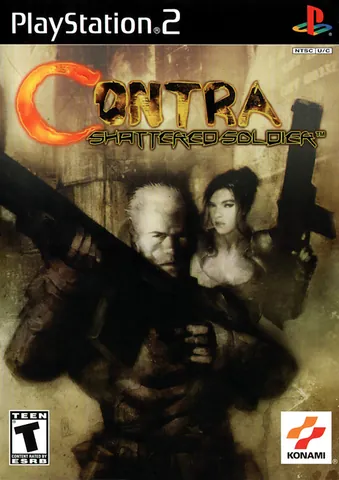
Contra: Shattered Soldier · 2002
-
Neo Contra · 2004
-
-
Contra ReBirth · 2009
-
Contra: Rogue Corps · 2019
-
Contra: Operation Galuga · 2024