 Sinclair · 1981
Computers
Sinclair ZX81
History & context
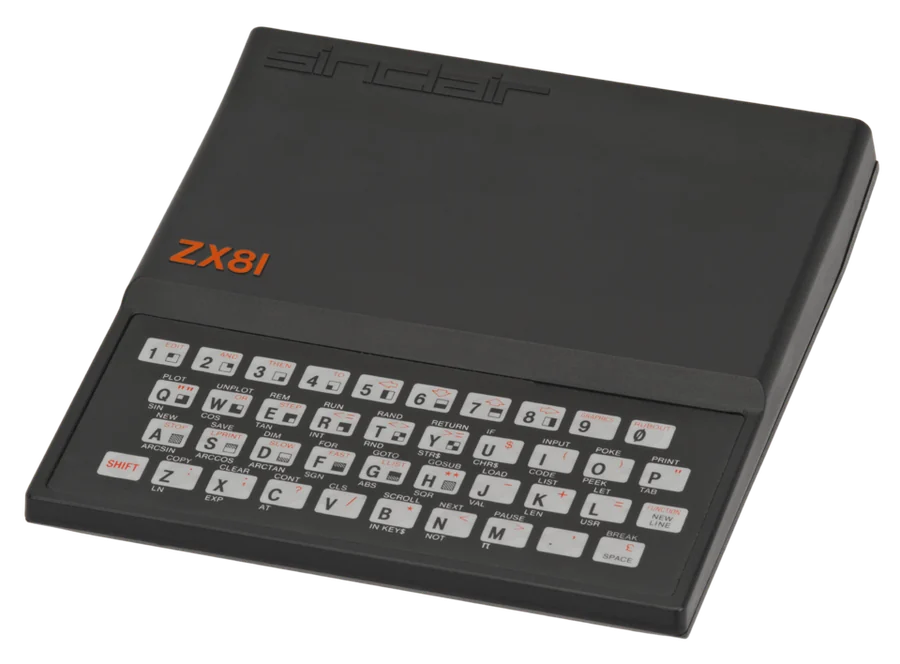
When Clive Sinclair unveiled the ZX81 in March 1981, it was one of the boldest attempts yet to put a computer into every home. It cost just 69.95 pounds as a ready-built unit, and even as little as 49.95 pounds as a kit that the owner soldered together at home. A flat black plastic box the size of a book, with a membrane keyboard without moving keys, it became a phenomenon: in under two years it sold more than 1.5 million units, and for an entire generation, especially in Britain, it was the very first computer they ever touched. It built on the older ZX80, but thanks to clever simplification of the circuitry it was both cheaper and more capable.
The key to that incredible price was the brutal frugality of its construction. Sinclair had most of the logic that elsewhere required dozens of chips integrated into a single custom ULA (Uncommitted Logic Array) circuit, manufactured by Ferranti. At the heart of the computer was an eight-bit Zilog Z80A processor clocked at 3.25 MHz, and the machine shipped with a laughable 1 kB of RAM (expandable via an add-on module to 16 kB and more). The ROM hid a BASIC interpreter that let you enter keywords with a single keypress.
Technology: graphics and sound
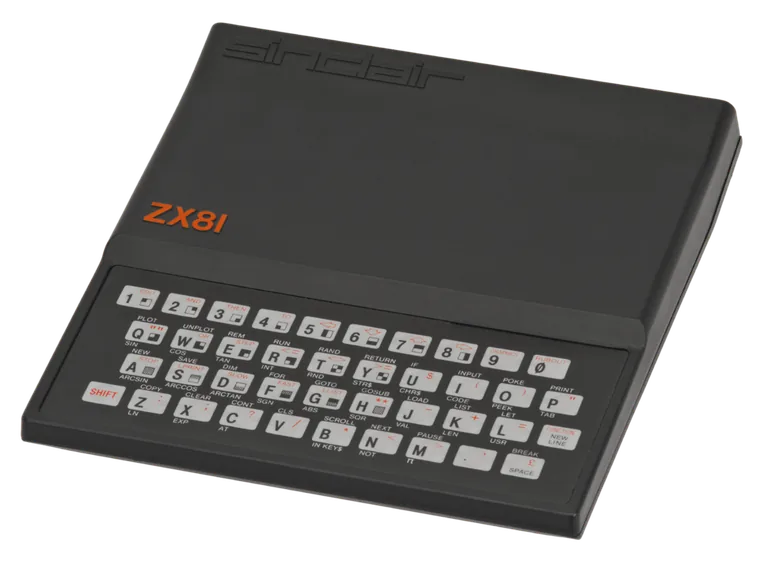
The ZX81 was spartanly stingy with graphics and sound, because every transistor saved meant a lower price. The picture was exclusively black and white and worked in a text mode of 32 columns and 24 rows. There were no true pixel bitmaps: the "graphics" consisted of block characters in the character ROM set, so the effective resolution was only 64 x 48 coarse blocks. The machine knew neither sprites nor hardware scrolling; the CPU itself had to handle everything.
Its most notorious feature was its two display modes. In the basic SLOW mode the processor computed and generated the picture at the same time, so during calculations the screen flickered and the program run slowed down. The faster FAST mode turned the picture off completely during calculation and lit it up only with the result. This curiosity stemmed from the fact that generating the video signal was largely handled by the Z80 itself in cooperation with the ULA. The ZX81 had no sound at all — the computer had neither a sound chip nor a speaker, so games were silent, or their creators helped themselves along with the interference it radiated into a nearby radio.
Connectivity and peripherals
Input and output were likewise minimalist. The picture was sent via an antenna (RF) output to an ordinary television, programs were saved and loaded via an ordinary cassette recorder at around 250 baud, which meant long and fault-prone loading. On the rear edge was an edge bus connector into which modules were plugged.
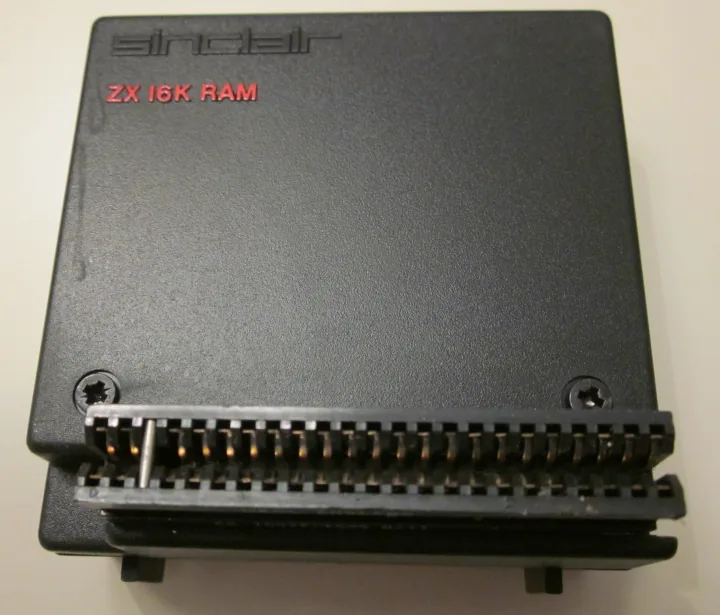
The most important accessory was the 16 kB RAM pack, without which most more serious software was unthinkable. It had an unfortunate reputation, however: a mere bump against the desk was enough to shift the module in its connector, which crashed the machine and wiped out your work in progress (this was nicknamed the "RAM pack wobble"). Sinclair later also offered the ZX Printer thermal printer, which printed on narrow aluminium-coated paper. Classic joysticks could only be connected via add-on interfaces from other manufacturers.
Models and variants
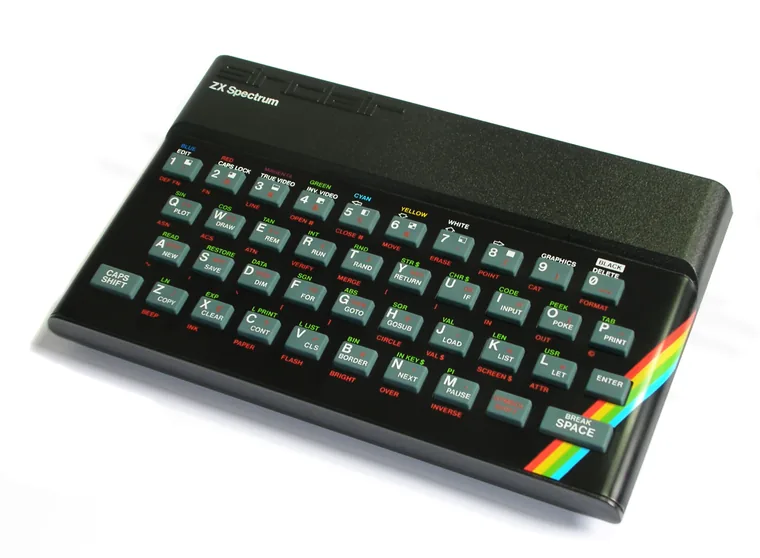
In terms of hardware the ZX81 went through several minor board and ULA revisions during production, but outwardly it stayed the same. For the American market, the Timex company, which assembled Sinclair's machines, released it as the Timex Sinclair 1000 — essentially an identical computer, but with 2 kB of RAM on board, adapted for the local television standard. The follow-up Timex Sinclair 1500 got a better rubber keyboard and 16 kB of RAM in a more elegant case reminiscent of the later ZX Spectrum.
Clones and variants
The ZX81 spawned a number of official and unofficial variants around the world. In Brazil, licensed and unlicensed machines such as the Microdigital TK82 and TK85 were created, supplying the local market, which was protected against imports, with compatible computers. Clones existed in other countries too, often built around the same combination of the Z80 and ULA logic.
For the Czech and Czechoslovak reader it is interesting that, unlike the famous ZX Spectrum, whose domestic clone was the Didaktik, the ZX81 does not have such a strong home footprint — in Czechoslovakia it was reached mostly by enthusiasts through imports or by building it from schematics. The main wave of domestic computer creation here came only with sixteen-bit colour machines a few years later.
Today's scene
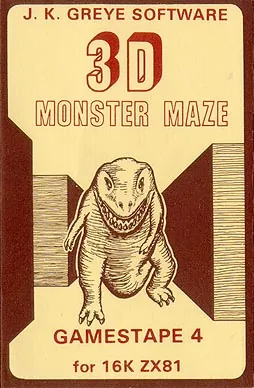
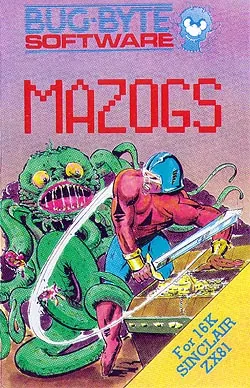
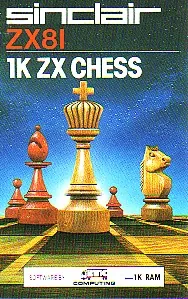
Despite its modesty, the ZX81 has kept a loyal community. There are a number of emulators — to name a few, EightyOne for Windows or the cross-platform sz81 — which faithfully reproduce even the flickering in SLOW mode. Enthusiasts still create new games and demonstration programs to this day, modern replicas of boards and keyboards are being made, and the so-called ZX81 high-resolution trick is popular too — by which skilful programmers coaxed out of the original hardware pseudo-graphics at a resolution that Sinclair's engineers had never even dreamed of. The legend of machines like 3D Monster Maze with its terrifying tyrannosaur, the maze game Mazogs, or the incredible 1K ZX Chess, which fit into a single kilobyte, lives on thanks to that.
Games on this platform (3)
No game in this genre.