Axiom Verge
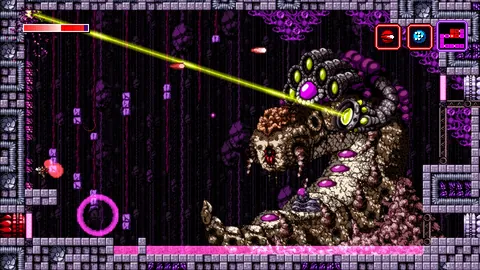
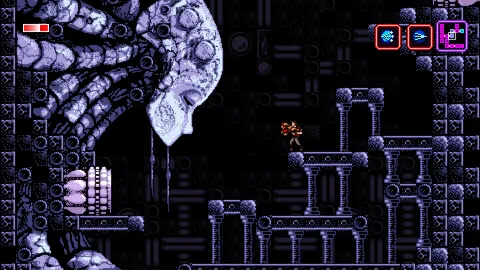

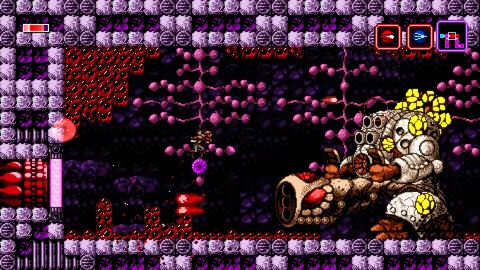
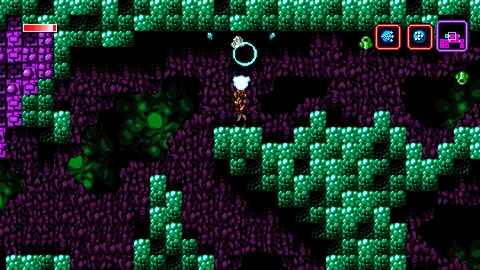
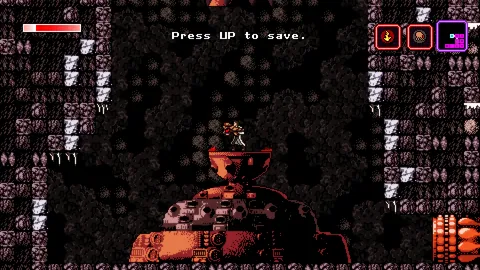
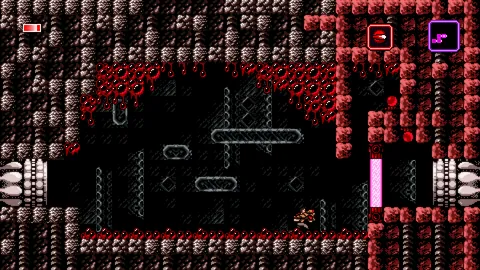
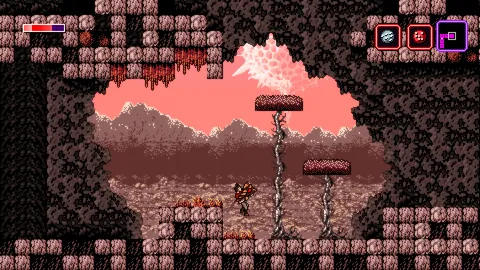
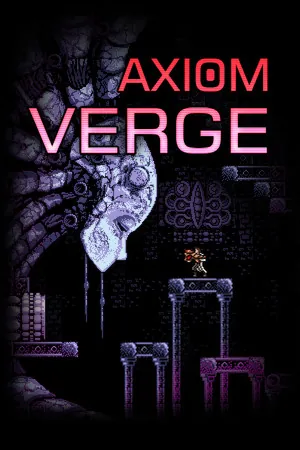
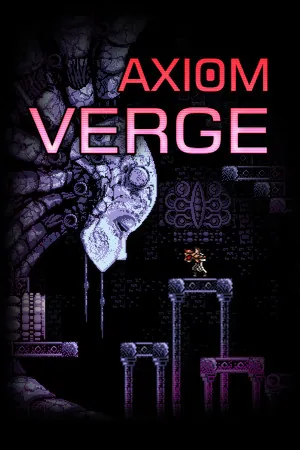
Axiom Verge is a rare case of a game created almost entirely by a single person, and yet it feels like a full-fledged successor to the classic metroidvanias of the sixteen-bit era. The player takes on the role of a scientist named Trace, who, after a lab accident, wakes up in a foreign world full of organic machines, silent giants, and messages from beings whose motives stay unclear for a long time. The storytelling is fragmentary and oppressive, and it deliberately leaves plenty of questions open, so the atmosphere of isolation lasts all the way to the end.
The foundation is classic exploration of an interconnected map, where new equipment unlocks previously inaccessible paths. There's an unusually large number of weapons, differing not just in power but also in the shape of their fire, so it's worth switching between them depending on the situation. The truly original element, though, is a tool that can damage reality itself: aim it at an enemy or a piece of the environment, and the game starts generating visual and logical glitches, textures vanish from walls, enemies change behavior, and passages appear in the damaged blocks. Where other games treat a graphical bug as a problem, Axiom Verge turned it into its core mechanic. On top of that, the world is scattered with modifications that alter weapon properties, plus a good number of well-hidden secrets.
The visual side deliberately imitates the limitations of old machines, including color palettes and flicker, which lets the damaged areas blend naturally into the overall picture. The music is dark, synthetic, and industrially cold, offering more of a bleak sonic backdrop for exploration than melody. Critics praised the game mainly for the courage to build its whole concept around one strong idea and for its expansive, densely designed world. On Vita the title has an ideal home, since it suits both short and long sessions, and the smaller screen serves the sharp pixel art well. The game also reached a wide audience thanks to a PlayStation Plus subscriber offer, which helped it break out beyond the circle of old-metroidvania enthusiasts. To this day, Axiom Verge is regularly mentioned among the best the genre has produced since 2010.
Game 48 of 122 for Sony PlayStation Vita