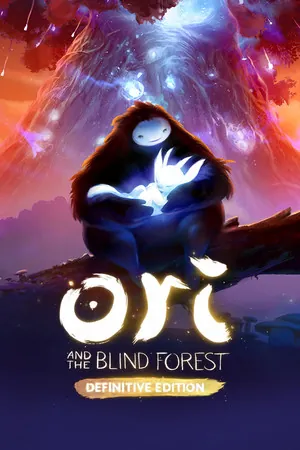
Ori and the Blind Forest

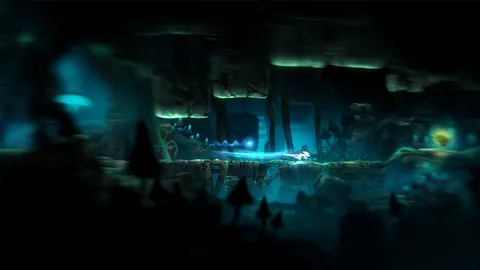
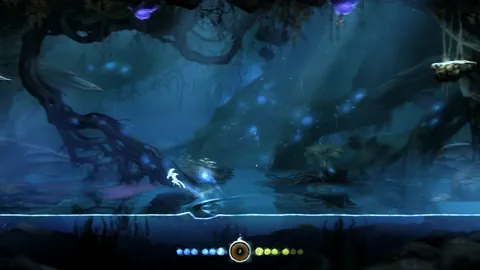
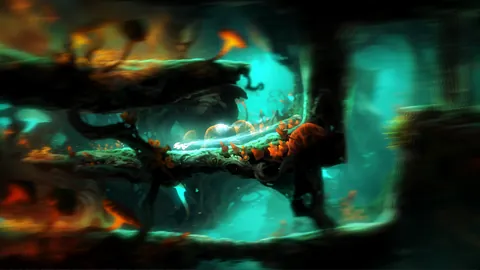
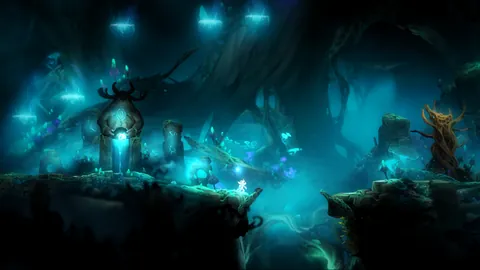

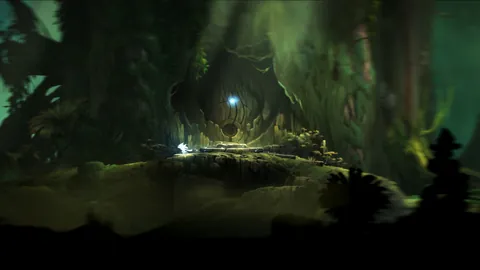

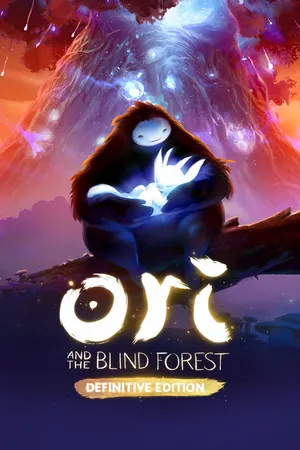
Ori and the Blind Forest is a platformer about a small creature of light trying to save the dying forest of Nibel. The story opens with a quiet, purely visual prologue about loss, and from that moment the game regularly alternates calm, melancholic passages with action sequences in which you flee from rising water or a raging inferno. The structure follows the metroidvania genre: the world is interconnected, many paths are initially closed off and only open once you gain a new ability, whether that's a double jump, the ability to bounce off enemy projectiles, or the power to break through walls.
The heart of the gameplay is movement. Ori is remarkably agile, and the core ability, which lets you bounce off a flying projectile or enemy while launching it in the opposite direction, turns both combat and platforming sections into one continuous, fluid dance. The combat system is more of a side feature; the real focus lies in precise jumps and in searching for hidden nooks containing upgrades. The game also uses an interesting save system where you create your own recovery points from limited energy, forcing you to choose between safety and pressing forward. The difficulty is fair but can get genuinely tough during the escape sequences.
Technically, it's one of the most beautiful 2D games of its generation. Hand-painted backgrounds, layered scene depth, and subtle lighting effects shine on PC at high resolution, and the game runs smoothly even on weaker hardware. The orchestral music is an integral part of the experience and carries most of the emotion that the narrative only hints at. The release was praised for its audiovisual craft as well as for its sensitive storytelling without unnecessary words. The Definitive Edition later added new areas and abilities. Today, Ori and the Blind Forest stands as proof that an independent game can offer production values on par with big studios while keeping its own intimate tone. It's best played with a gamepad, since the precise bounces in the escape sequences require very sensitive directional control, and the reward is one of the best-tuned movement systems in 2D gaming.
Game 48 of 583 for PC / moderní (64bit a GPU)