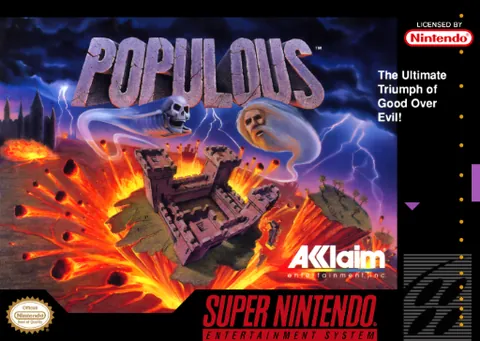
Populous: The Beginning
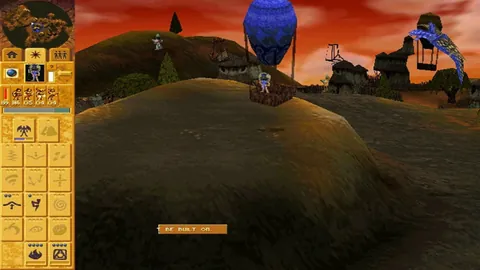
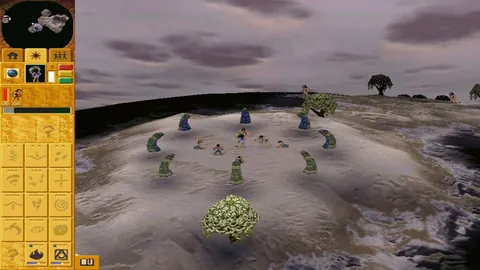
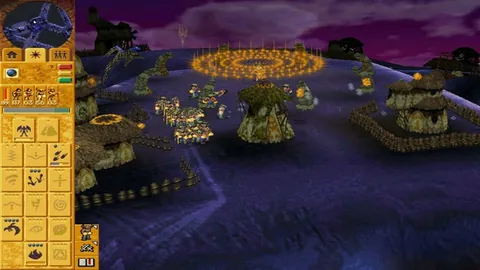
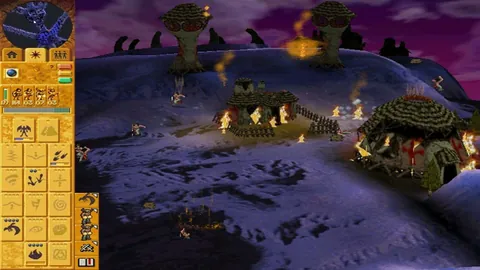
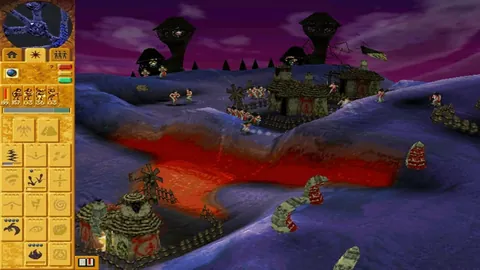
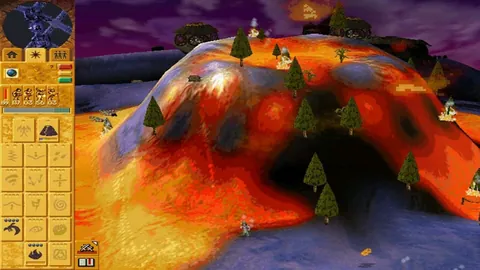
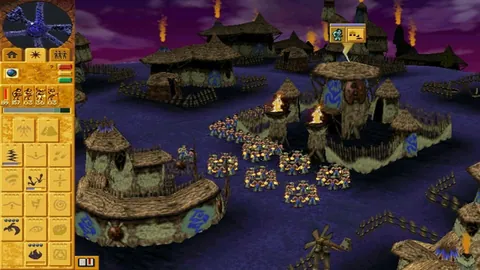
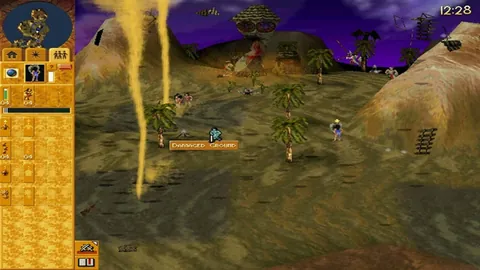
Populous: The Beginning took the old god-game brand and moved it into a fully three-dimensional world that is, quite literally, round. Each level takes place on a small planet you can rotate all the way around, and the goal is usually to conquer it entirely and move on to the next. This time the player isn't just an invisible deity but commands a specific shaman who walks the surface, casts spells, and whose loss is a real problem, so the game sits somewhere between strategy and directly controlling one hero character.
A tribe grows by having somewhere to live, so the first concern is always flat terrain and building huts. Trained braves, warriors, fire warriors, and spies then fill their roles, ships and balloons can be built, and distant islets can be occupied. But the most fun comes from spells: earthquakes, volcanoes, mudslides, or a massive wave that sweeps an entire enemy village into the sea. The terrain is fully shapeable, it can be raised or lowered, which makes the landscape both a weapon and a building material at once. Enemy tribes are led by their own shamans and do exactly the same thing, so matches often end as a duel of two divine powers over a broken planet.
Technically, in 1998 this was an impressive affair with hardware acceleration, smooth terrain deformation, and an enjoyable view whether close up or from a distance; the atmosphere is held together by tribal, drum-driven music and a ceremonial pace between disasters. Critics of the time received it warmly and praised especially the courage of bringing the familiar gameplay into three dimensions, even though some missed the playful simplicity of earlier entries. Today it's a pleasantly distinctive title with few real successors, which is exactly why it's worth trying; anyone who wants to see what the British game-design school looked like at the end of the nineties is in the right place. The campaign also keeps a decent pace, and individual planets can be finished in one sitting.
Game 38 of 229 for PC / Pentium a Windows 9x