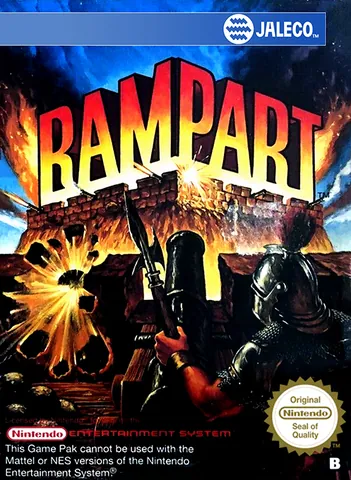
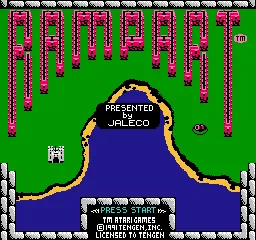
What if a classic castle siege were combined with a puzzle game and cannon fire all at once? This crazy combination is exactly what stands behind Rampart by Atari Games, one of the most original arcade games of the turn of the 1980s and 1990s, which also found its way to the NES.
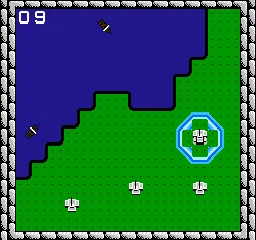
Rampart mixes genres in a way that is hard to file under a single label. The game unfolds in three recurring phases. First you enclose your castles with walls, which you lay down like Tetris pieces. Then comes the combat phase, when you fire from your positioned cannons at enemy ships and fortresses and try to smash them to bits. And finally, under the pressure of the ticking clock, you must frantically repair the damaged walls to protect your cannons. If you fail to enclose at least one castle with a wall, you are done for.
This loop between strategic planning, action shooting, and speed puzzling created incredible tension, especially in multiplayer, where players competed against each other for the same territory. Atari Games, the maker of many legendary arcade machines, came up with a concept here that had no equal and to this day counts as one of the most imaginative genre hybrids of its time.
In terms of development, the game was created at the beginning of the 1990s for arcades, and its success carried it to a range of home platforms including the NES. Porting the more complex controls, originally designed for a trackball, to a classic gamepad was a challenge, but the NES version preserved the essence of that frenzied game of building and demolishing.
Culturally, Rampart remains a textbook example of how mixing seemingly incompatible genres can result in something entirely fresh. The Tetris-like laying of walls under fire and against the clock makes it an unforgettable game, and its idea of defending and repairing a fortress influenced later tower defense titles.
Why play: An ingenious hybrid of strategy, artillery action, and Tetris-style wall building that in multiplayer unleashes properly heated battles for territory.
Game 78 of 120 for Nintendo NES
The same title elsewhere (2)
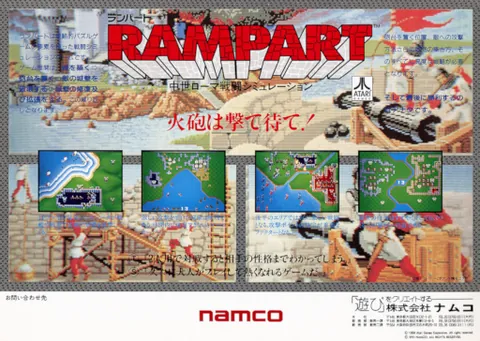
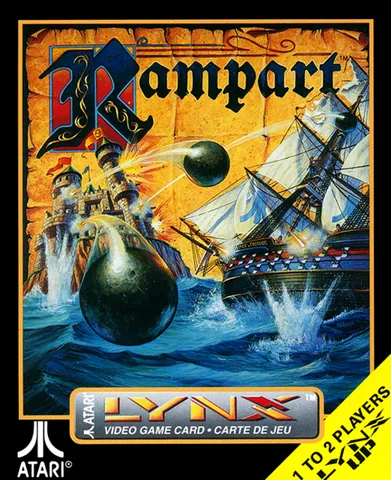
Atari Games' arcade original was controlled with a trackball, letting players aim their cannons smoothly and precisely, and it supported multiple players at a single cabinet. Home ports had to replace the trackball with a directional pad or joystick, making aiming choppier and less precise, though the core loop of building walls, placing cannons and firing remains intact. The portable Atari Lynx version additionally shrank the battlefield to fit the handheld's small screen, which keeps things readable but sacrifices some spectacle. For the most precise way to play Rampart, the arcade original with its trackball is the pick; the Lynx version suits gaming on the go, with compromises in clarity and battlefield size.