Gorogoa
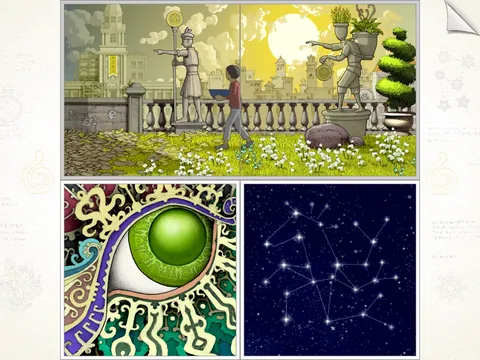
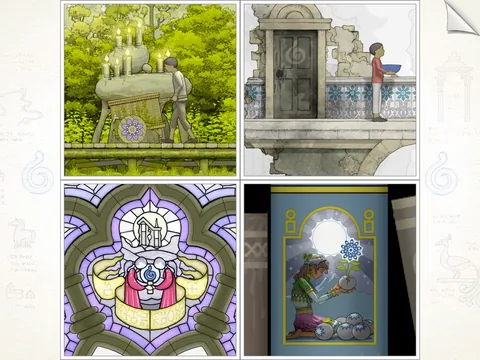
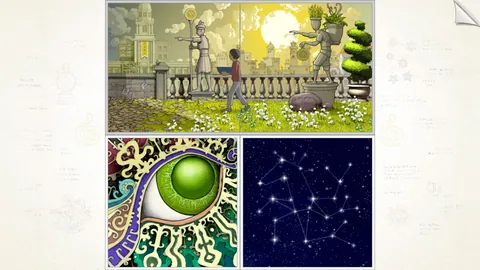
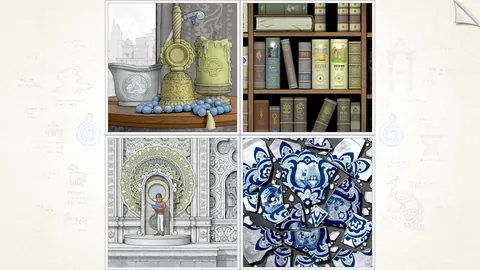
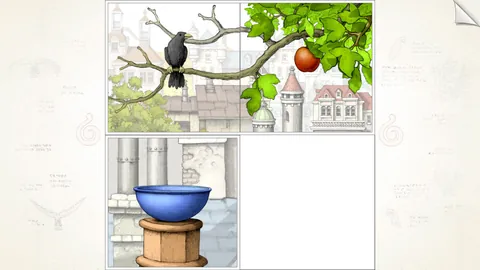
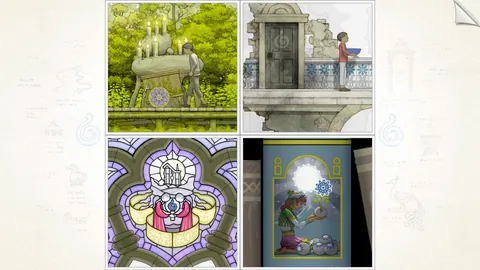
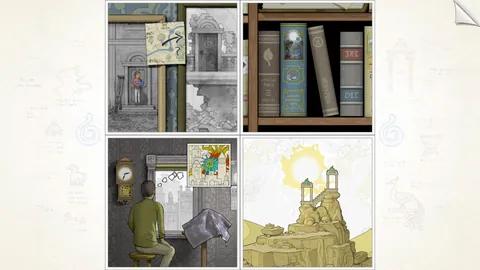
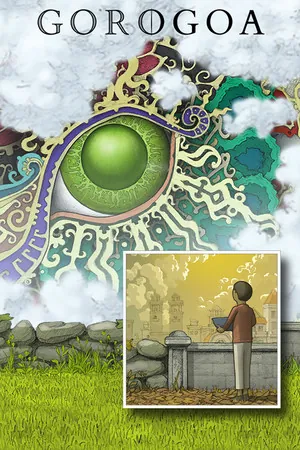
Gorogoa is a puzzle that can only be described as a picture puzzle: the player has four square panels on the screen, each running a piece of a scene, and the task is to move, zoom, and overlay them until details from one window connect with another and form a new, previously invisible image. The controls are purely touch-based – dragging with a finger, moving panels, zooming with a gesture – and the game deliberately never explains the rules anywhere, because the logic arises from observation, not from instructions, and the player learns the system simply by noticing what repeats where.
The game was created by a single author who worked on it for several years and hand-drew every frame of the animation; the result is a visual style that resembles an illustrated book more than a video game, full of warm colors and architectural detail. The story follows the aging of a nameless character and their lifelong obsession with a giant dragon, but it is told exclusively through images – without a single line of text or dialogue, so each player pieces together the timeline in their own way based on how they connect the panels. This unbound form made Gorogoa one of the most frequently cited examples of how mobile can tell a story purely visually, and it openly inspired a number of puzzle games that came after it.
The short runtime and paid price without ads or microtransactions fit the fact that this is an artistic piece, not a product for long-term time-filling, and this one-time purchase without hidden payments was more the exception than the rule on mobile at the time of release. After release, Gorogoa received awards for its artwork and is often held up as an example of what touch controls are capable of outside the usual genres, even years after release.
Why play it: For anyone looking for a short, visually unique experience without text and without extra payments – a perfect demonstration that mobile can handle even an introspective art puzzle.
Game 49 of 363 for Mobil (iOS a Android)