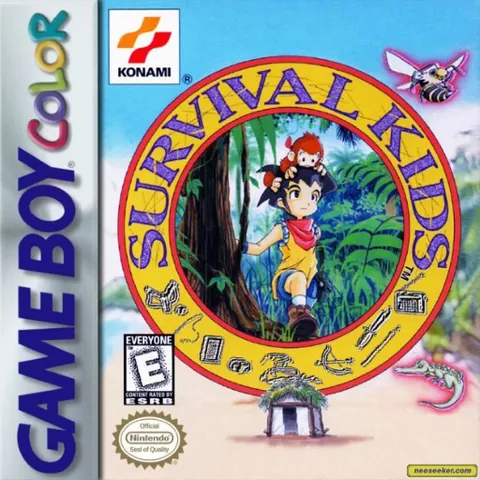
Survival Kids
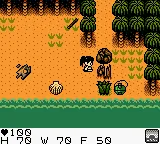
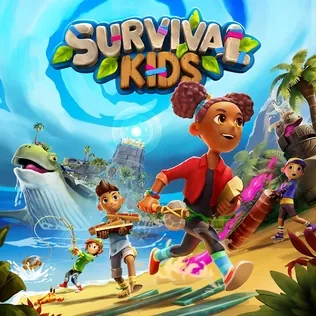
Long before survival games became a genre evergreen topping the sales charts, Konami's handheld quietly received a title that already did almost everything we expect from survival today. Survival Kids from 1999 drops you on a deserted island and leaves you to fend for yourself — and the Game Boy Color is its home, color platform.
Mechanics you now take for granted were already at work here, years before the genre's big wave. You have to watch your hunger, gather food and water, combine found items and craft new ones from them — simple but functional crafting that makes you think about what to combine with what. The island isn't just a backdrop but a web of problems to solve so your character can survive into the next day.
The most interesting thing, though, is how the game handles its story. Survival Kids branches according to your decisions and offers several different endings. What you do, where you go and how you behave all shape how your adventure ends — giving the game unexpected replay value. It isn't just about surviving, but about which path to rescue (or another fate) you choose.
On a console most people associate with platformers and RPGs, it was a refreshing oddity. Survival Kids blends adventure, puzzles and resource management into a compact whole that suits a handheld perfectly — short sessions, a clear goal, and yet enough depth to keep coming back and trying for a different ending.
Today it's remembered mainly as a forerunner of a genre that would conquer the gaming world a decade later. Survival Kids showed that the idea of surviving on a desert island, crafting and making choices with consequences works even in a modest two-dimensional package. For retro lovers and fans of modern survival games alike, it's a fascinating glimpse into the past, where it all sort of began.
Why play: Crafting, hunger and a branching story with several endings — survival mechanics years before the genre's wave, wrapped in a compact handheld adventure.
Game 8 of 129 for Game Boy Color
The same title elsewhere (1)
Both versions came out the same year, 1999, and offer essentially the same survival game on a deserted island — the main difference lies in the graphics. The classic Game Boy version runs only in shades of gray, while the Game Boy Color release adds color, making it easier to spot plants, materials and hazards around you at a glance. The gameplay mechanics, island size and difficulty stay the same, so it's more of a cosmetic than a content difference. Anyone who prefers a clearer picture should reach for the color GBC version, while players chasing the authentic 1999 experience can happily stick with the original Game Boy.