Monopoly
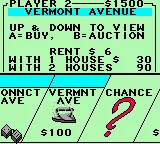
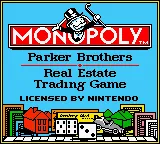
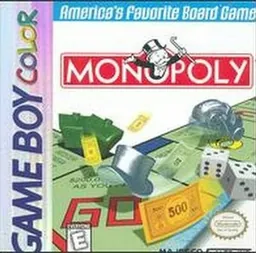
Monopoly arrived on the Game Boy Color as a digital version of the famous board game about buying property, collecting rent, and driving opponents into bankruptcy one round at a time. The player moves around the classic board, buys plots of land, builds houses and hotels, and tries to gradually wear down opponents financially - a principle that stays the same as in the paper original, just simplified by automatic accounting of finances and rule-keeping in the background. That way the player doesn't have to deal with disputes over rule interpretation, which occasionally accompanied longer games between siblings or friends in the board version.
The handheld version lets you play against computer-controlled opponents with varying levels of difficulty, which solves the board game's age-old problem - the need to gather enough players around the table at the same time and hold their attention through what is often a lengthy game. The port to the GBC's small display manages to clearly show both the board and important information about finances and property ownership, albeit with the necessary simplification compared to the large paper board and the piles of colorful paper money spread across the table.
For many players, this was the first chance to play Monopoly without a physical set of fellow players and without needing paper money and property cards scattered across the table. The game faithfully replicates the rules and atmosphere of the original, including iconic spaces like Jail, Go, or Chance, and even with the passage of time it remains a functional, if modest, port of the beloved family classic into a handheld format suited to long car or train journeys. The faster pace of the digital version also made it possible to finish a whole game in the time it would take a classic board game to still be far from over. The port of the economic board game classic to a handheld console thus fit well into the broader wave of licensed family games that appeared increasingly often on handhelds during the second half of the nineties.
Game 121 of 129 for Game Boy Color