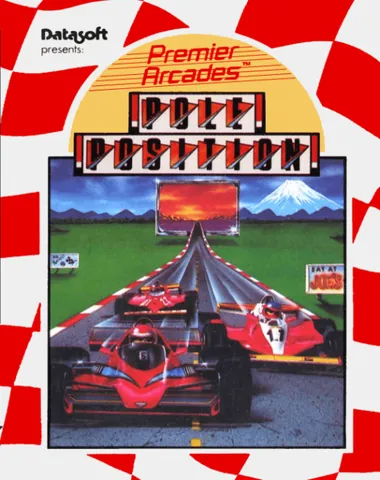
Pole Position
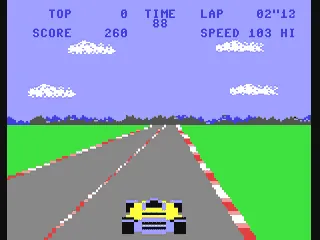
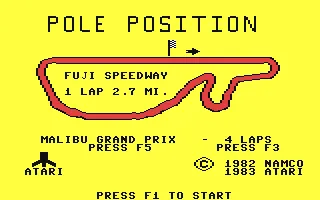
Pole Position was one of the first big arcade hits to find its way onto home computers, and it arrived on the Commodore 64 in the mid-1980s as a conversion of the legendary Atari and Namco machine. The player sits behind the wheel of a Formula car, and the task is first to drive a qualifying lap in order to earn a spot on the starting grid, then to run the actual race on the Fuji Speedway circuit against computer-controlled rivals. The controls are simple — accelerator, brake, and steering left and right — but the game demands precise avoidance of other cars and the track barriers, since every collision costs precious seconds and, at worst, causes the car to explode, followed by a brief animation and a loss of valuable time.
The graphics on the C64 use the familiar view from behind the car and a smoothly rushing track lined with advertising billboards, which was a notable technical feat for its time, even though a conversion to an eight-bit computer logically couldn't fully match the smoothness of the original arcade machine. The music and engine sounds are spare but functional, lending the game an arcade pace whose main goal was to faithfully recreate the feel of the arcade hall, where players at the time would go to play the real cabinet machine for a few coins. The time limit, which extends as the player passes checkpoints, forces constant pushing on the accelerator and risk-taking, while points awarded for placement at both the start and the finish motivate repeated attempts at a better result.
Pole Position helped popularize the racing game genre on home computers and became the benchmark against which later titles were measured, whether for the behind-the-car viewpoint or for the very principle of qualifying before the race. Today the game feels more like a historical curiosity — simple, short, and repetitive — but it holds an irreplaceable place in understanding the development of the racing genre on eight-bit machines, and it still offers brisk, easily grasped fun for a few minutes, ideal for a quick play without a long learning curve.
Why play: For its brisk, easily grasped fun that lasts a few minutes and its irreplaceable place in the history of the racing genre, it's worth a quick play even today.
Game 98 of 121 for Commodore 64
The same title elsewhere (4)
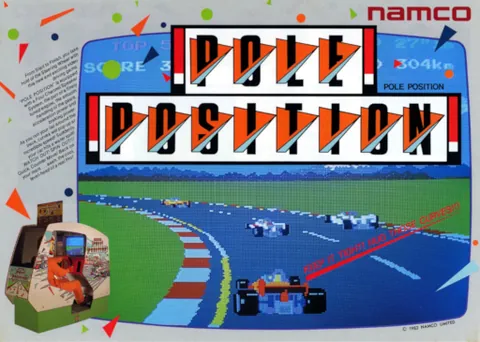
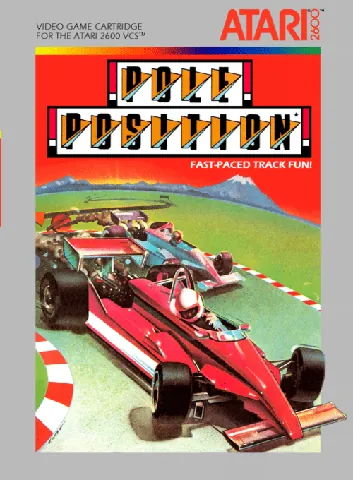
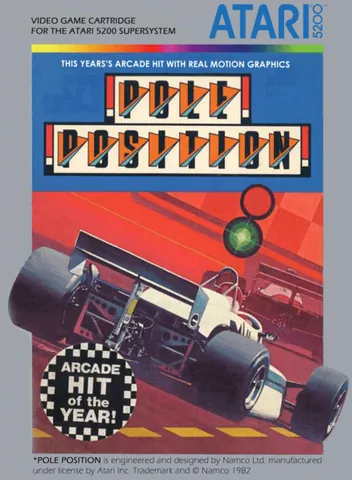
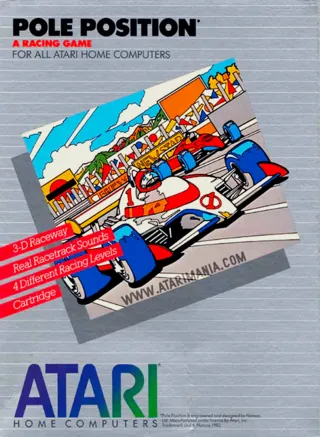
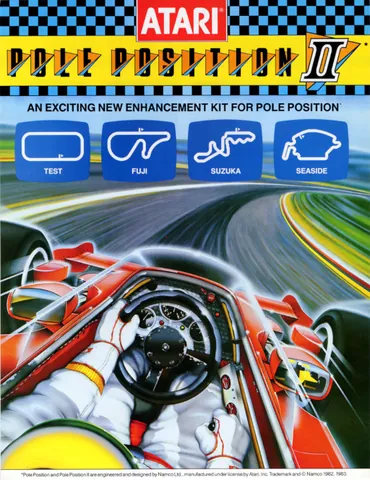
The Pole Position arcade cabinet ran on Atari's own custom graphics board and defined what cockpit-view racing should look like. The Atari 800 home computers and the Atari 5200 console shared a similar chip family with the arcade board (GTIA and POKEY), which makes their conversions among the more faithful ports of the era — capturing a similar sense of speed and engine sound, though with lower track resolution and simpler background graphics than in the arcades. Differences between the Atari 800 and 5200 versions are mostly cosmetic, since both draw on the same hardware family. For Pole Position at its best, go for the arcade cabinet; for a solid home experience, either Atari version delivers.