Dig Dug
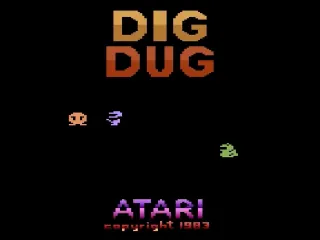
Danger lurks underground and all you have in hand is a pump and a pickaxe. That is roughly how you could sum up one of the most inventive arcade ideas of the golden age, which found its loyal audience on the Atari 2600. Dig Dug is neither a shooter nor a classic maze game, but something in between: you dig through the dirt, create your own tunnels, and try to get rid of enemies in a way no one had ever seen before.
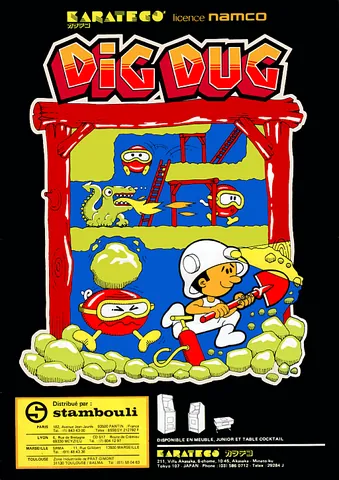
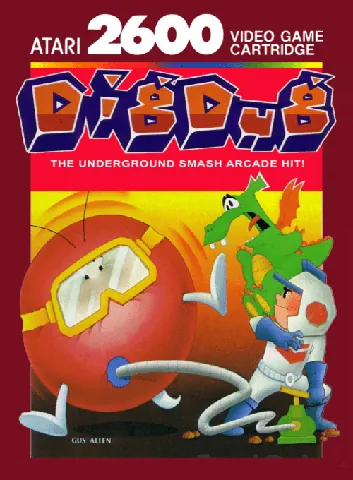
At the core of the fun is a brilliantly simple mechanic. Your opponents are the inflatable creatures Pooka (the one with the glasses) and the fire-breathing dragon Fygar. Instead of shooting at them, you stab them with a hose and pump until the enemy bursts like a balloon. The other option is to dig under a boulder and let it drop onto enemies — which is not only more effective but also worth more points. This dual strategy gives the game surprising depth, because the riskier approach always promises a higher score.
The original arcade machine was created by the Japanese company Namco and arrived in the arcades in 1982. It was one of the titles that helped establish Namco as a leader in the field after the Pac-Man phenomenon. The Atari 2600 version was made under the Atari banner and was among the home conversions players reached for to bring the arcade experience home. With its limited memory and color palette, the console naturally could not offer a completely faithful copy, but the essence of the gameplay was preserved.
Dig Dug's cultural footprint is unmistakable. The character Dig Dug (named Taizo Hori) became one of Namco's icons and appeared in a number of other games and crossovers. The game gave rise to sequels such as Dig Dug II and Dig Dug Arrangement and to this day is included in retro collections and compilations. Together with titles like Pac-Man and Galaga, it represents an era when the arcades were full of simple but irresistibly addictive concepts.
That very addictiveness is why Dig Dug still works decades later. You grasp the rules in a few seconds, but mastery in combining pumping and falling boulders requires practice and a cool head. It is the pure essence of arcade design: no frills, just you, the score, and ever-faster creatures.
Why play: If you want to taste a brilliantly simple arcade idea that was ahead of its time, Dig Dug is a timeless classic ready to play right away.
Game 24 of 69 for Atari 2600
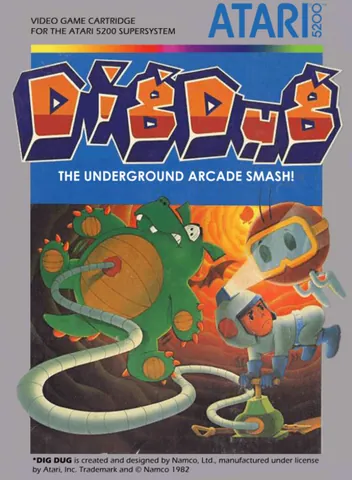
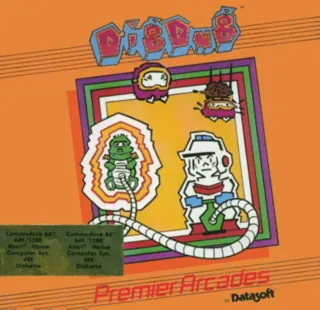
The same title elsewhere (3)
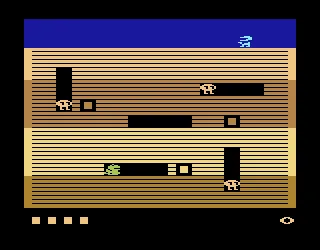
The arcade cabinet relied on bold, saturated colors and smooth animation for Dig Dug and his enemies, something home conversions struggled to match. The Atari 2600, limited by its hardware, had to settle for simplified graphics, a narrower color palette and blockier animation, so the pace and feel of tunneling come across noticeably stiffer than in the arcades. The Atari 5200 had more capable chips than the 2600, and its version offered richer colors and smoother movement, closer to the arcade original. Anyone after the truest experience should pick the arcade version, while the Atari 5200 stands as the sturdier home alternative compared to the older 2600.