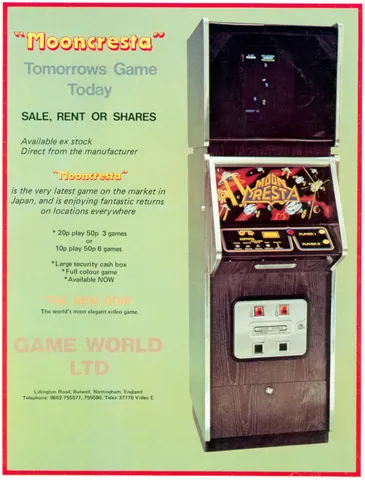
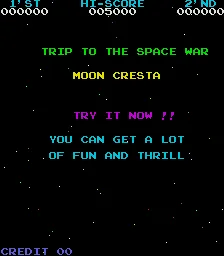
Moon Cresta from 1980 belongs among the early vertical shooters that followed the success of Space Invaders and Galaxian, and from studio Nichibutsu it brought one remarkable extra idea to the genre that set it apart from the dozens of similar clones of the time. The player controls a ship advancing against waves of alien enemies forming into attack patterns, which must be shot down before they reach the screen or crash into it and end the game.
The game's most distinctive element is its docking system – after clearing the first phase, the ship joins with another section of hull waiting on screen, giving the player a stronger and more resilient craft for the next section of the game, provided the docking maneuver is timed precisely and doesn't collide with its own waiting segment. This three-stage docking progression was a technical and gameplay novelty in 1980 and later inspired similar mechanics in other shooters that tried to enrich the otherwise straightforward genre with an additional layer of strategy and risk.
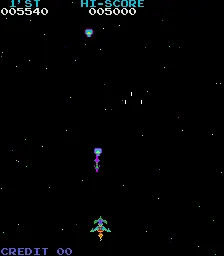
The graphics remain stark, with simple sprites on a black background, as was typical for the early eighties, but the game's speed and difficulty made it a demanding challenge for players of the time seeking high scores and a spot on the leaderboard right on the cabinet. Thanks to its docking idea, Moon Cresta still holds a place in retrospectives of the most influential early space shooters decades later and is often mentioned as one of the technical forerunners of later series.
Why play it: The progressive ship-docking system brought a mechanic to the early era of space shooters that no other cabinet of the time offered.
Game 112 of 258 for Arcade