Game studio
Sunsoft
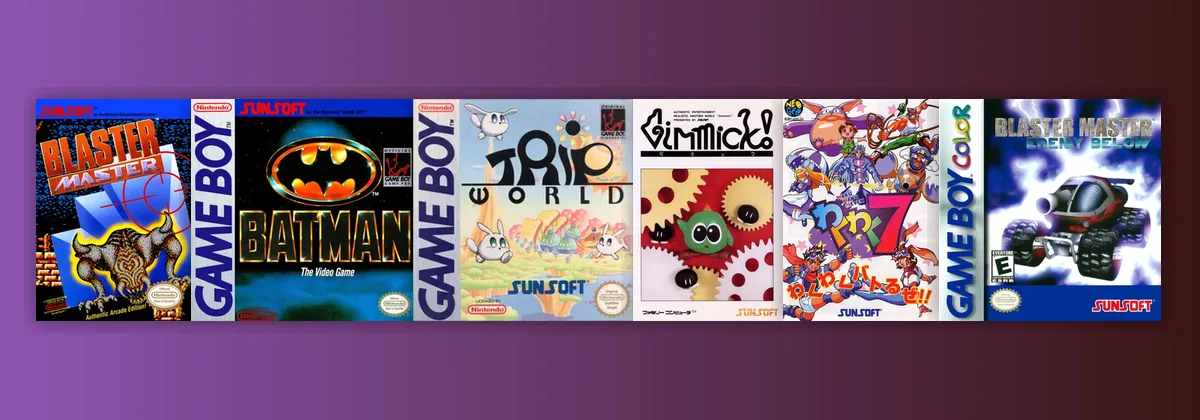
There are studios that flooded the market with dozens of titles, and then there are companies like Sunsoft — a Japanese brand whose catalog may not be endless, but whose best games rank among the most finely crafted the 8-bit and 16-bit eras had to offer. Retro players didn't fall in love with Sunsoft for its quantity, but for a peculiar craftsmanly integrity: this brand knew how to squeeze graphics, animation and, above all, music out of the limited NES or Game Boy hardware that the competition took a long time to catch up with. When the name Sunsoft comes up today, fans think of the bombastic bass sound of the Famicom chip, playful animations, and a handful of games that have over time attained near-cult status.
History
The company's roots reach further back than one might expect. The parent company Sun Electronics (Sun Denshi in Japanese) was founded as early as April 1971 in Aichi Prefecture as a manufacturer and seller of electronics. It entered the gaming business in October 1978, when its first arcade machines arrived in the arcades. The real breakthrough, however, came only in the mid-1980s, when the company threw itself into home consoles — above all the Nintendo Famicom. It was then, around 1985 and the title Super Arabian, that the Sunsoft brand was born, under which games for players at home and abroad have been released ever since.
The second half of the 1980s and the start of the 1990s were a golden period for Sunsoft. In 1988, Blaster Master was released on the NES — a genre hybrid that combined driving a battle vehicle with on-foot action segments viewed from above and from the side, and became one of the studio's most acclaimed games ever. Sunsoft also built a reputation as a reliable license holder: it ported a number of Sega titles like Fantasy Zone and After Burner to Nintendo consoles and later acquired prestigious licenses such as Batman and The Addams Family.
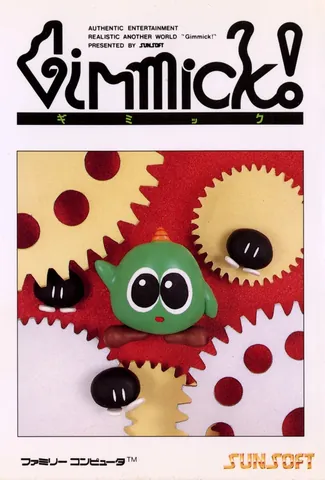
The pinnacle of craftsmanly virtuosity is the now-legendary Gimmick! from 1992 — a late NES title with the adorable sprite Yumetaro, the ingenious physics of the star the player launches, and a soundtrack that used an add-on sound chip and remains one of the most frequently cited examples of what the Famicom could do. Two years later, in 1994, the tender platformer Trip World came out on the Game Boy, where the hero Yacopu transforms into various forms; for its beauty, calm and rarity it became a sought-after collector's gem.
Key figures
Sunsoft became renowned as a studio where composers stood out. The name Naoki Kodaka is inextricably linked with the era of NES titles — he is behind the music of games like Blaster Master, Batman and Journey to Silius, and his bass lines became a hallmark of the brand. Alongside him, composers such as Nobuyuki Hara and Shinichi Seya also contributed to the sound, helping to develop the characteristic "Sunsoft" sound that made full use of the sound hardware's capabilities.
In the more recent era, the face of the brand became Yuichi Ochi, general manager of Sunsoft, who in 2021 announced the company's return to the gaming scene and became the voice of the entire reborn brand.
Transformations and transfers
Sunsoft was never an independent company in the true sense of the word — it always operated as the gaming division of the Japanese Sun Corporation (Sun Denshi). A fundamental turning point came in 1995, when the American branch Sun Corporation of America found itself on the brink of bankruptcy and was dissolved; overseas operations thereby practically ended. The Japanese headquarters, however, survived, and in the following years it reoriented itself toward pachinko, mahjong, RPGs and mobile games, often in cooperation with partners like NTT DoCoMo. Sunsoft thus withdrew from the limelight of big console hits into the background for many years, without ever completely disappearing.
The present
To the delight of fans, Sunsoft has revived in recent years. In August 2021 the company announced its rebirth under the slogan "Sunsoft is Back," and since then it has consistently cared for its classic legacy. Earlier, in 2017, the successful Blaster Master Zero series launched in cooperation with the studio Inti Creates, which revived the NES legend in a modern way and saw three installments. Other projects followed — for example Ikki Unite from 2023, a playful reworking of an old Famicom game into a form close to the modern "survivors" genre.
Sunsoft also returned to its treasures: in cooperation with Limited Run Games, a remaster of Trip World was released with a full-color version for the Game Boy Color, on which the game's original creator collaborated. In 2024 the collection Sunsoft is Back! Retro Game Selection arrived, which for the first time made several early Famicom titles available outside Japan with an English translation. As of 2026, then, Sunsoft continues to exist as part of Japan's Sun Corporation, and after years of silence it once again ranks among the brands the retro community follows with genuine hope — because a studio that once created Gimmick! and Blaster Master certainly deserves the attention.
Games by the studio (7)
-
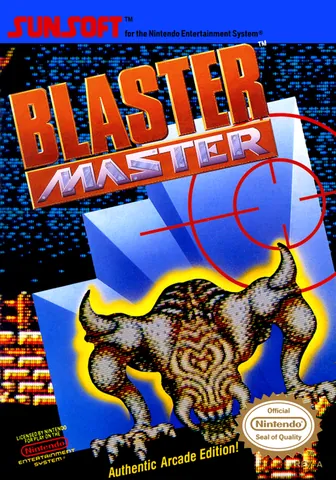
Blaster Master · 1988
-
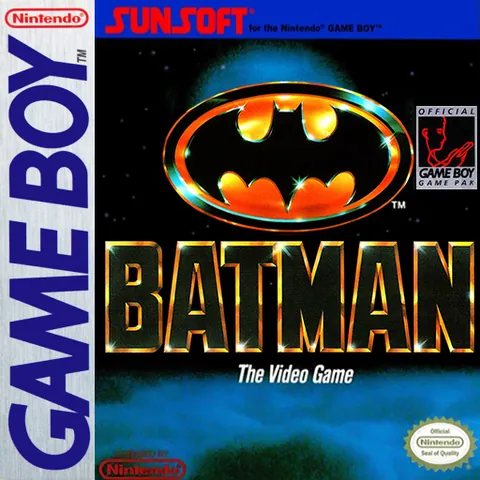
Batman: The Video Game · 1990
-
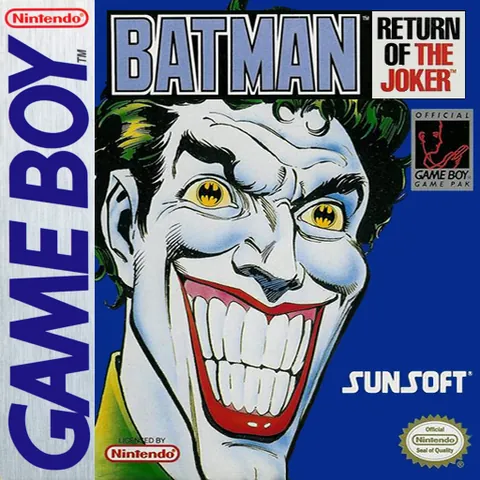
Batman: Return of the Joker · 1992
-
-
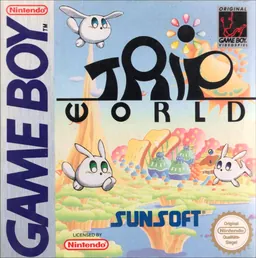
Trip World · 1992
-
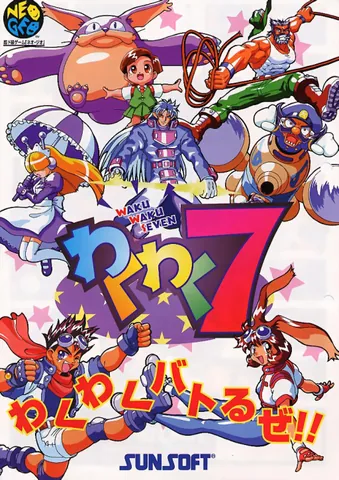
Waku Waku 7 · 1996
-
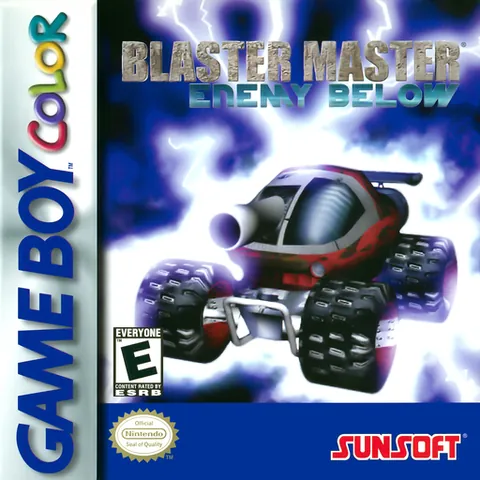
Blaster Master: Enemy Below · 2000