Fez
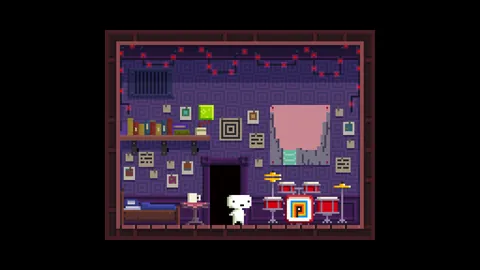
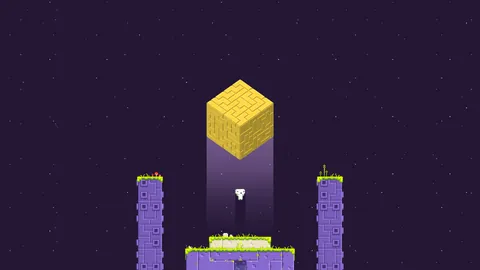
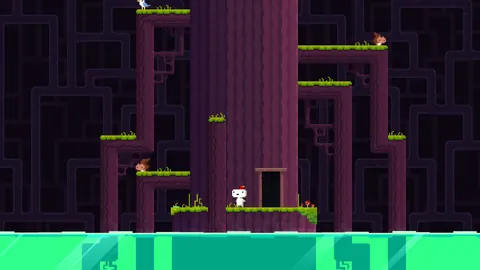
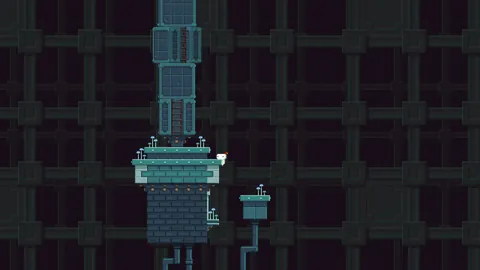
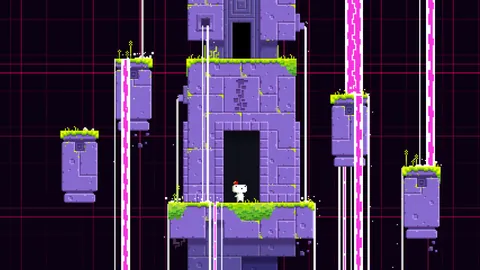

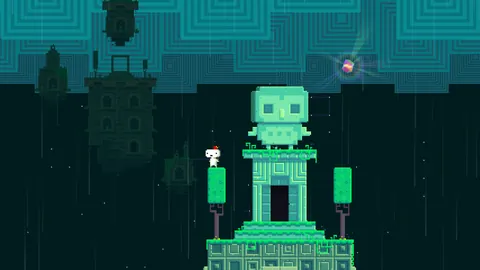
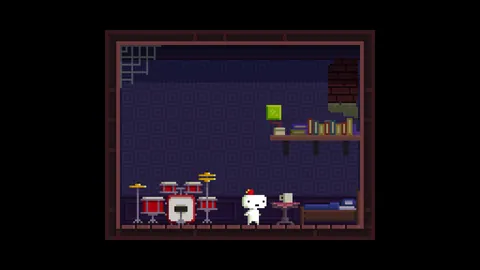
Fez rests on a single idea that changes everything: the world looks like a two-dimensional pixel-art platformer, but is actually three-dimensional, and the player can rotate it by ninety degrees. Platforms that seemed miles away turn out, once the view is rotated, to be right next to each other; a chasm disappears, and a path leads where nothing was before. The hero Gomez receives a magical cap that grants him this ability and sets off to collect the fragments of a shattered cube that hold his world together.
The jumping itself is calm and forgiving; the game never punishes you for falling, and enemies barely exist. The real substance lies elsewhere: in observation, mapping, and figuring out everything hidden within the world. Alongside the usual collectible tasks, there is an entire layer of puzzles built on its own alphabet, number system, hidden patterns and signals that the game never explains anywhere. Anyone who wants to reach all the way to the very end really does have to take notes on paper. This second half of Fez is still cited today as one of the most ambitious attempts to turn an entire audience into one big puzzle-solving community.
The visuals combine nostalgic pixel art with spatial effects and, above all, with a gradually expanding scale that manages to surprise even after hours of play. The audio is one of the strongest elements; ambient electronica with echoes and gentle melodies creates a dreamlike, slightly melancholic mood rarely found in platformers. The release on Sony's consoles came with cross-buy across platforms, so the game could be carried over to the Vita, where the smaller screen and the ability to pause at any moment suit it well. Critics received Fez very warmly, and it is still discussed today as one of the titles that, in the first half of the last decade, defined what an independent game could mean. So many discussions grew up around its creation and around the author himself that Fez became part of a wider narrative about how small teams were making their mark at the time. But the game holds up on its own merits too, and nobody has repeated its central trick better since.
Game 53 of 122 for Sony PlayStation Vita