Garou: Mark of the Wolves
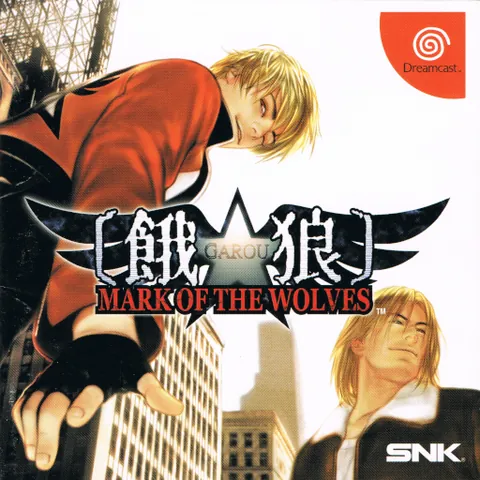
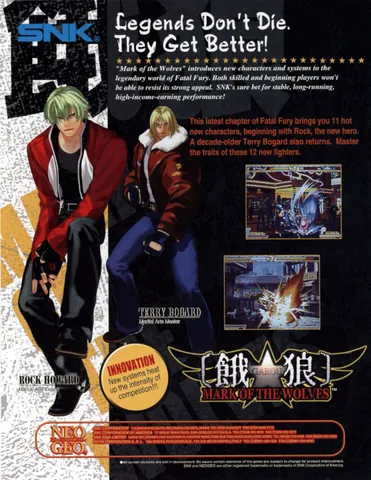
Few 2D fighters look as gorgeous and play as finely tuned as Garou: Mark of the Wolves from 1999 — SNK's swan song at the peak of its powers and, for many connoisseurs, an almost sacred title. As the culmination of the long Fatal Fury line, it brought a new roster, fresh design, and one of the most elegant combat systems of its era.
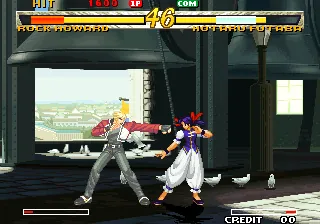
The key novelty is the „Just Defend“ mechanic. If you block an attack at the precise moment, you gain small advantages — such as replenishing health or room for an instant counterattack. This single mechanic gives fights unexpected depth and rewards the player for courage and precision instead of passive defense. Together with the finely tuned pace, this creates a fighter that flows like butter.
Visually it's one of the pinnacles of the hand-drawn 2D era. The character animation is fluid and full of personality, the backgrounds carefully drawn, and the overall style elegant without needless flamboyance. The new fighter roster also brought fresh faces and opened a new chapter for the series, even if fate ultimately didn't allow it to fully develop.
The historical context adds another dimension to the game. Garou was one of the last great SNK fighters before the company's crisis, so it carries a whiff of a final masterpiece — everything the studio knew about the genre, brought to a brilliant form. Among fans it therefore enjoys almost cult reverence.
Anyone looking for a beautiful, technically rich, and gorgeously balanced 2D fighter will find in Garou one of the genre's absolute gems, one that doesn't age and still keeps its elegance.
Why play: A gorgeously animated and brilliantly tuned 2D fighter with the „Just Defend“ mechanic — the peak of the Fatal Fury line and one of the most beautiful SNK fighters ever.
Game 26 of 35 for SNK Neo Geo
The same title elsewhere (1)
The 1999 Neo Geo original was SNK's high point in 2D fighting games — an expensive cartridge that, thanks to the arcade and home systems sharing the same MVS/AES hardware, delivered identical graphics and play to what you'd find in an arcade, just at a steep purchase price. A port to the SEGA Dreamcast followed a year later, and because the Dreamcast shared its lineage with the NAOMI arcade board, the game carried over essentially unchanged, now on a far cheaper CD medium than the pricey Neo Geo cartridges. Visually and audibly the two are near-identical experiences, so today's choice comes down mostly to hardware availability — the Dreamcast tends to be the easier, cheaper route into this fighter for modern players, while the Neo Geo version remains the collector's legend.