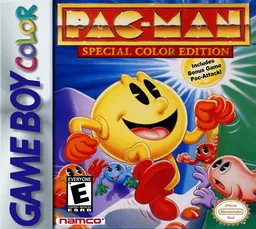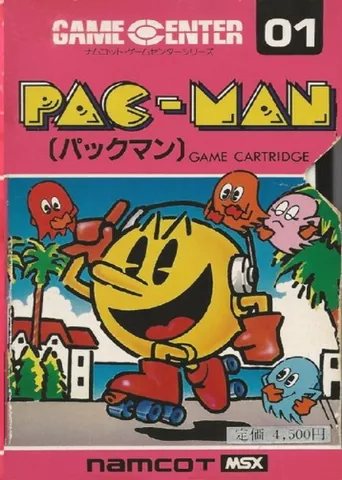
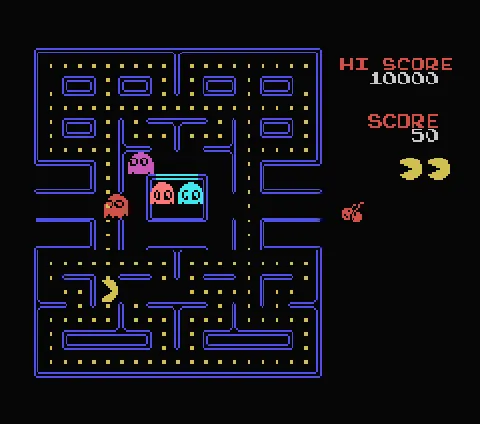
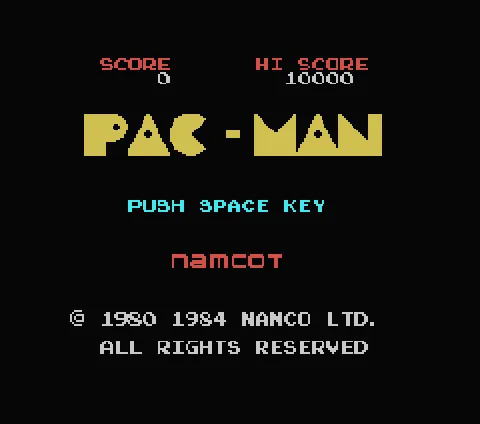
A yellow circle with an insatiable appetite, four ghosts and a maze full of dots – Pac-Man is quite possibly the most iconic video game in history, and its presence on the MSX platform shows just how deeply this craze burrowed into the home computers of the 1980s. The moment that unmistakable pellet-munching sound rings out, it's clear you're sitting down to one of the games that defined the very concept of a video game.
The mechanics remain a model of elegance to this day. The player navigates Pac-Man through a maze, eating dots and dodging four ghosts, each with its own distinct movement personality. The key element is the large energizers in the corners – eat one and the roles reverse, letting you hunt the ghosts for a short while yourself. This simple loop of tension and reward proved so addictive that it laid the foundations for the design of countless later games.
The original was created by the Japanese company Namco and designer Toru Iwatani, who released the game in 1980 with the goal of appealing to a female audience too, in arcades still dominated by shooters. Pac-Man came to the MSX – the standard of Japanese home computers from the first half of the 1980s – as a natural choice: the MSX was close to the arcade world and maze games suited it well. The home version offered the comfort of playing on your own screen without having to keep feeding coins into a cabinet.
Pac-Man's cultural impact is almost unprecedented. He became the first video game character to break into the mainstream, adorning T-shirts, cartoon series and even a hit song, and to this day serves as a universal symbol of the entire medium. He laid the groundwork for a whole line of sequels, and his silhouette ranks among the most recognizable icons in all of pop culture.
On the MSX, Pac-Man is exactly what it should be – an accessible, instantly graspable classic that anyone can pick up and that, even after decades, rarely gets boring. Whether you're an old-timer or a curious newcomer, it makes for the ideal gateway into video game history.
Why play: To encounter the very bedrock of the whole medium – a game whose simple perfection holds up even after more than four decades.
Game 24 of 29 for MSX / MSX2
The same title elsewhere (5)
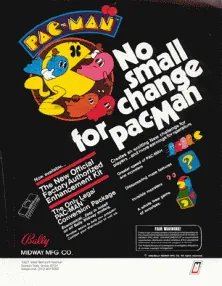
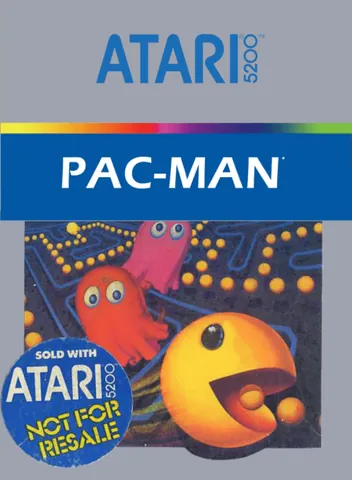
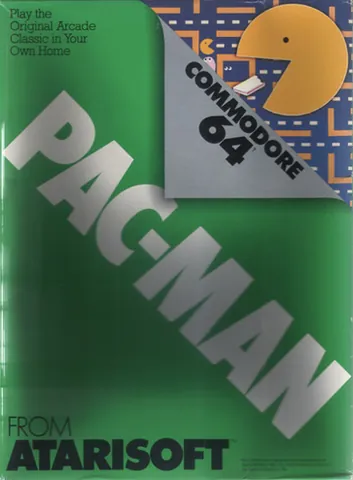
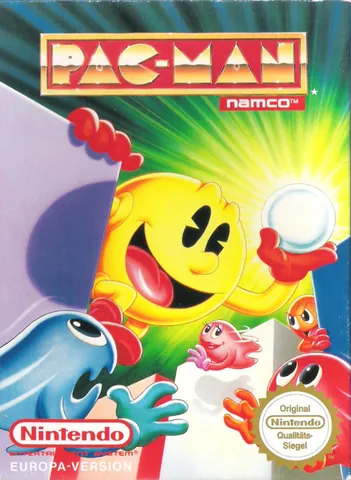
Namco's 1980 arcade original defined the maze genre with bright colors, smooth ghost movement, and its instantly recognizable opening jingle. The Atari 5200 version fared far better than the notoriously poor Atari 2600 port, coming reasonably close in maze layout and color. On the Commodore 64 and MSX, the game came with simpler chiptune music and slightly blockier graphics, but the maze itself stayed intact. Namco's own NES version ranks among the more faithful conversions, with steady pacing and clearly distinct ghosts. Still, no home version fully replaces the feel of the original cabinet.