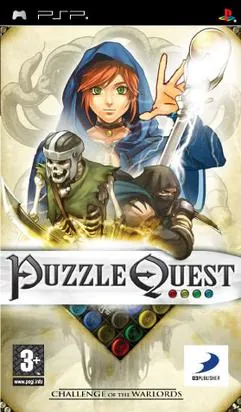
Puzzle Quest: Challenge of the Warlords
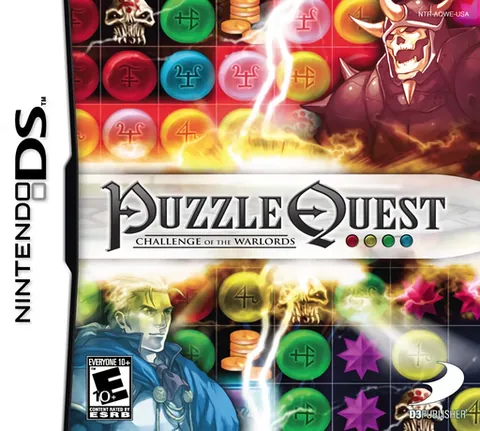
Puzzle Quest: Challenge of the Warlords combined genres that at first glance seemed incompatible - a match-three puzzle game and a fantasy RPG with character progression, equipment, and story. The combat system is built on a game board full of colored gems: the player and opponent take turns, matching gems to generate mana of individual colors, damage, and experience points, with the right choice of move deciding victory just as in a classic turn-based RPG. Besides the main battles, side activities such as forging weapons, training mounts, or capturing fortresses can be resolved in a similar way, further expanding the game beyond its simple combat core.
On Java and Symbian the game ran surprisingly smoothly, since the game board itself didn't place heavy demands on the hardware and focused mainly on clarity and fast response to touch or keypad input. Story progress unlocked new settlements, skills, and mounts, so despite its simple puzzle framework the game delivered a sense of RPG development - collecting items, improving the character, and working through a storyline full of quests from local factions. The world map gradually opened up as the game progressed, revealing new locations, which gave the player a clear sense of progress even between individual battles.
Puzzle Quest became one of the most successful examples of genre-crossing of its time, and its mobile version let people who would not otherwise have bought the console or PC version play this concept too. To this day, many players and developers consider it proof that a cleverly designed match-three game can carry as much weight as a full-blooded RPG, and its influence is visible in many later mobile titles combining puzzles with heroic progression. It's precisely the combination of two genres that seemed incompatible at first glance that remains its most valuable legacy and the main reason the game is still talked about long after its release.
Why play: For fans of genre-crossing who will appreciate how a cleverly designed match-three game carries as much weight as a full-blooded RPG, even in a mobile form accessible without a console.
Game 44 of 69 for Java a Symbian (telefony před smartphony)